 In early April, BBS reported that lane discipline violations in Thimphu had risen for three consecutive years, from 88 cases in 2023 to 266 last year. Now, emerging figures show the problem is accelerating faster than those annual figures suggested. According to the Thimphu Traffic Division, the issue is no longer just about reckless drivers. Faded road markings, lack of stricter legislation, and a city that has simply run out of space to expand are combining to make Thimphu’s roads increasingly difficult to police, and equally unsafe for those using them.
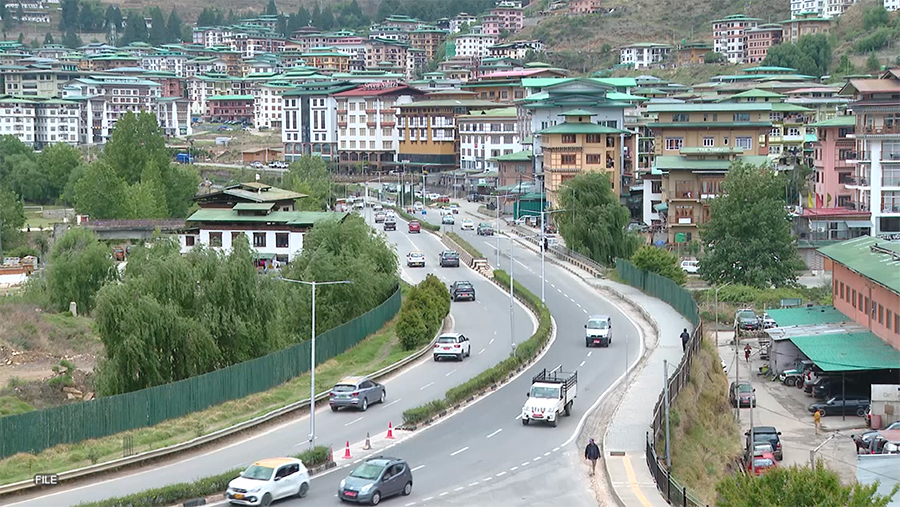 Between April and May, the Traffic Division recorded 315 lane discipline violations, more than last year’s total of such violations. Seventy six of those cases were on the expressway, the city’s primary high-speed corridor.
Since our earlier report, the Traffic Division has escalated its response. Officers say surveillance through CCTV has been expanded, patrols have been intensified, and a pilot enforcement phase is now underway, with motorists fined during targeted operations. Additional traffic personnel are also being planned for deployment along the expressway and key city corridors.
The public reporting channel remains active: residents who witness violations can contact the Traffic Division via its Facebook page, or call the toll-free numbers 111 or 1010, with photographs and videos accepted as evidence.
While the traffic police attribute the increasing number of cases to more active monitoring, they also point to structural limits as one of the reasons. The Superintendent of Police heading Thimphu’s Traffic Division identifies three interconnected problems behind the numbers.
Colonel Chencho Gyeltshen, SP of Thimphu Traffic Division said, “First, I would say faded road markings. Probably due to sub-optimal paint quality, most of the area — like core areas and the expressway — road markings are faded. This leaves motorists with no clear visual guidance and sometimes makes enforcement very difficult. And another is complacent motorist behaviour. There is a heavy reliance on the physical presence of the traffic officer along the highway.”
Beyond the physical condition of roads, the Superintendent underscores a gap in legislation. The offence is not classified as a major traffic offence. This means the offence carries no demerit points or license cancellation, leaving offenders or repeat offenders with little consequence beyond a fine.
Under Section 333 of the Road Safety and Transport Regulations 2021, drivers on double-lane roads must change lanes only where broken lines are drawn, use indicators, ensure safety, and give way to vehicles already signalling a lane change. Drivers who violate these rules can be fined Nu 700 per instance.
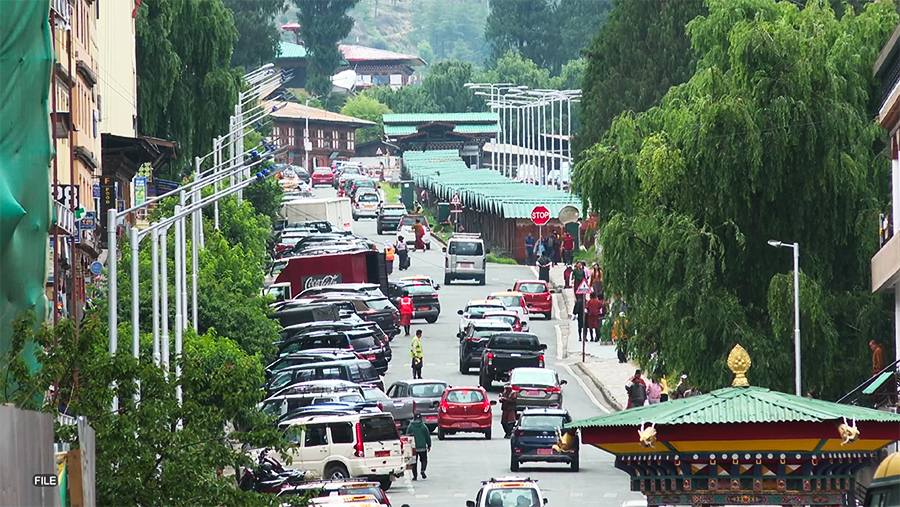
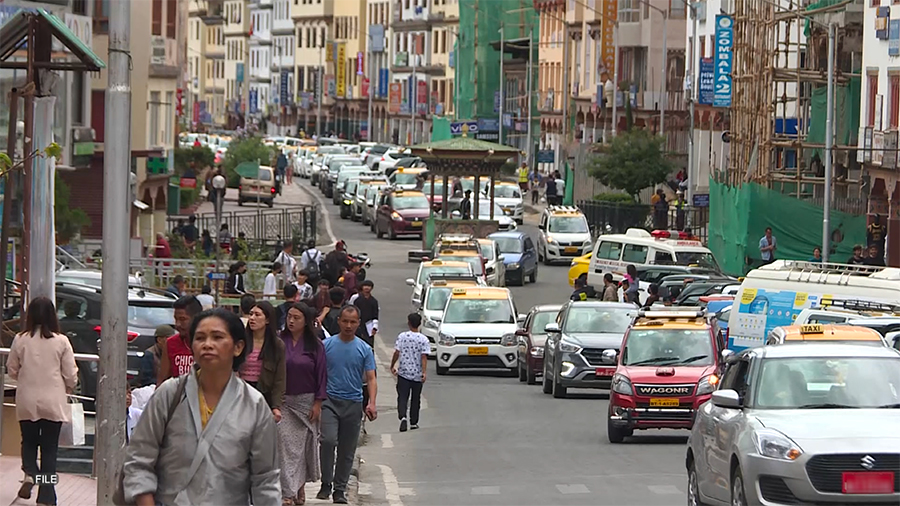 The third constraint is the most immovable of all: the city itself. Thimphu’s central road network was built when the capital was a fraction of its current size. Densely developed buildings line both sides of its primary routes, leaving little or no room for road widening.
Colonel Chencho Gyeltshen said, “The Thimphu route is narrow and heavily built up, leaving no space for expansion, creating permanent bottlenecks almost everywhere. Furthermore, there are no dedicated U-turn bays or waiting posts for vehicles trying to do a turn or U-turn for the moving vehicle. So even with good lane rules, the infrastructure itself causes congestion.”
Those on the road daily say the experience of driving in Thimphu reflects both problems. Taxi drivers, among the heaviest road users in the capital, identify the lack of traffic signal systems at pedestrian crossings as a particular pressure point, and call for infrastructure investment to match the enforcement effort.
Tshering Dorji, a taxi driver said, “The road markings and signs are all clear, but people don’t know how to use them because many new drivers are not well aware of giving indicators before changing lanes. The traffic jams are mainly caused at zebra crossings. I would suggest a traffic light system, which would benefit greatly during school and office hours.”
For those on foot, the conversation about lane discipline connects directly to personal safety. Commuters say narrow roads and erratic driving have made crossing busy streets a calculation, not a routine.
Khamsum Lhadra, a commuter said, “Many of the roads out here are very narrow. I feel safe when I travel in groups. As a large group it’s easier for drivers to spot us. Nowadays some drivers become very reckless and do not care about other people. That’s a very risky thing when crossing busy roads.”
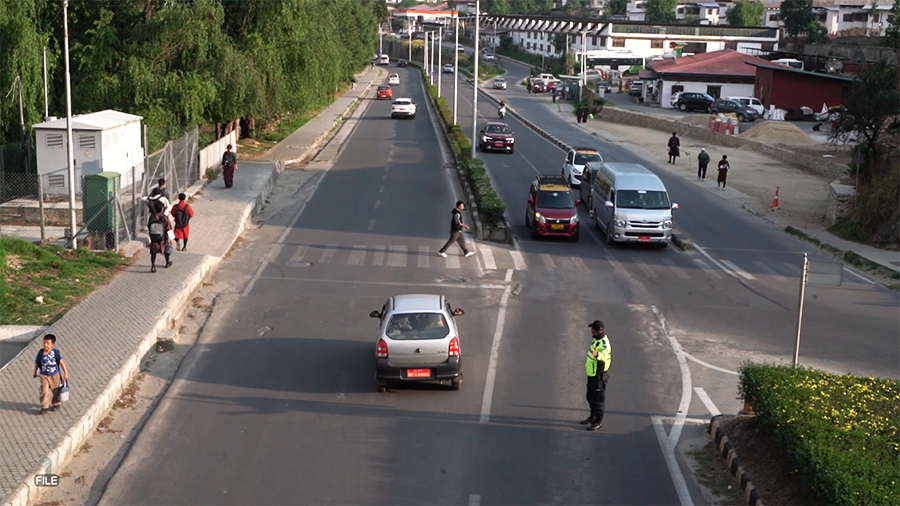 Authorities acknowledge the gap between what enforcement can achieve and what the situation demands. With the RSTA Rules and Regulations 2026 set to take effect in July, the next few months will test whether updated subsidiary rules can meaningfully shift driver behaviour, or whether the deeper legislative and infrastructure reforms will need to move to the front of the policy agenda.
For now, police are urging the public not to wait for systemic fixes. Anyone witnessing a violation can report it via the Traffic Division Facebook page or the toll-free lines 111 and 1010.
Achal Darjee & Tenzin Lhadon, Interns
Edited by Sonam Wangdi