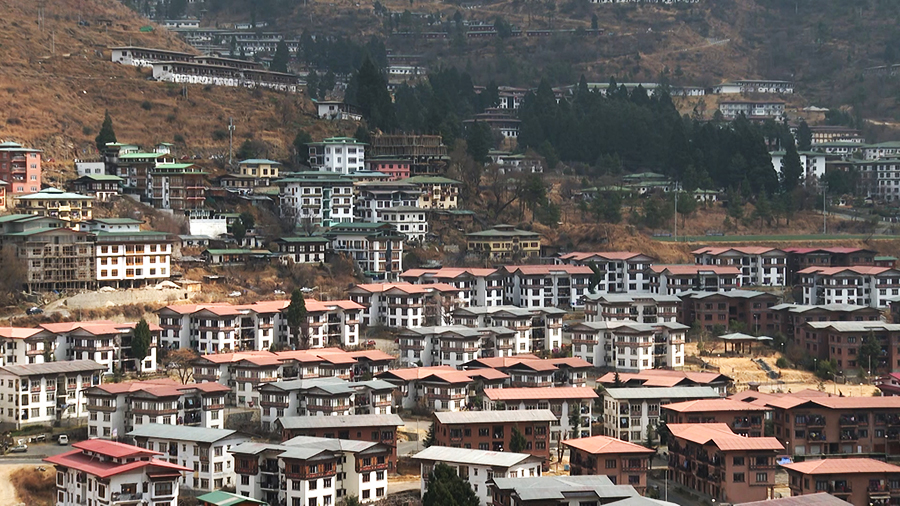
 Housing affordability remains a growing concern in Bhutan’s urban centres, with many households spending a significant portion of their income on rent. During the National Council’s Question Hour session today, members sought updates on the implementation of the National Housing Policy 2020 and questioned the government on its plans to increase affordable housing across the country.
Almost six years after the National Housing Policy 2020 was approved, concerns remain over whether enough progress has been made to improve access to affordable housing. The Policy was first adopted in 2002.
Today, tenants in Thimphu spend approximately 42 percent of their household income on rent, exceeding the 30 percent affordability threshold set in the National Housing Policy 2020.
Against this backdrop, eminent member Kesang Chuki Dorjee questioned the Infrastructure and Transport Minister on the implementation of the Policy, particularly on measures to increase affordable housing stock, streamline land allocation, and introduce fiscal incentives.
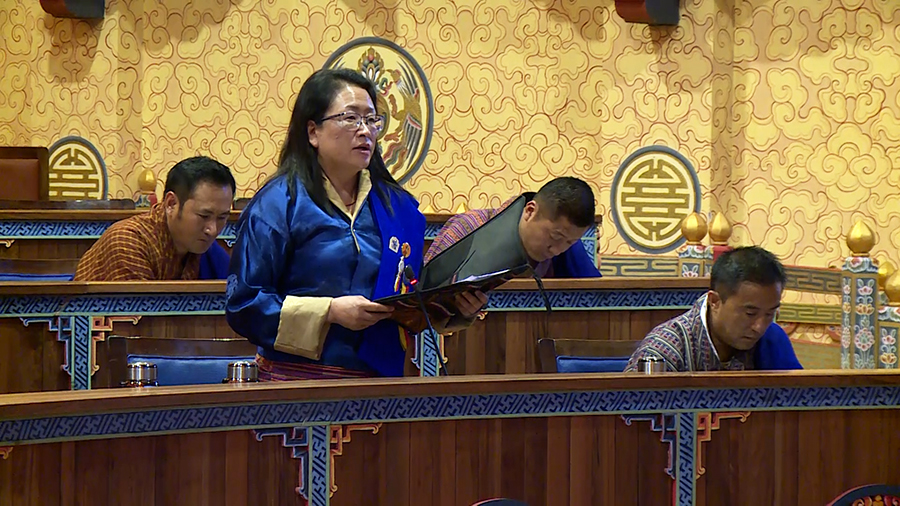 “Five years on, only 64 units have been completed. What is the Government’s time-bound plan to fulfil the NHP 2020’s housing supply objectives and what discussions and actions have taken place between MoIT and other relevant stakeholders to this end? The NHP 2020 (Section 8.1.1) requires the National Land Commission to allocate state land for affordable housing in human settlement plans. How many plots have been identified and allocated for public affordable housing in Thimphu, Phuentsholing, Samtse, and Mongar since 2020?”
She also questioned the government on the number of civil servants owning homes after retirement, and incentives or provident fund housing loan schemes introduced since 2020 to support home ownership.
Minister Chandra Bahadur Gurung said housing remains a complex issue involving multiple stakeholders. Moreover, rapid urbanisation and rising land prices have only added to the already challenged situation.
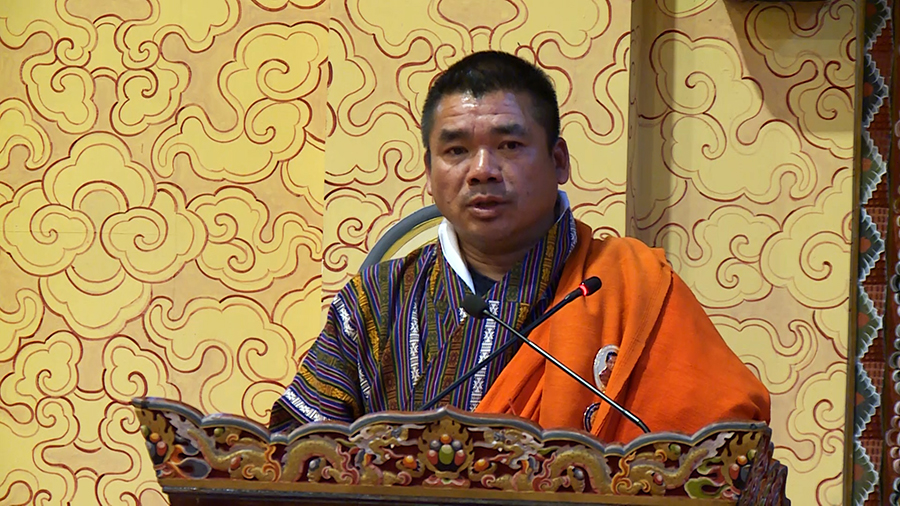 “To address these challenges the government initially allocated ngultrum 1.5 billion from the ESP, Economic Stimulus Plan. The government acknowledged the challenges and we kept the budget. But as it is well known, the war escalated and caused the fuel price to increase. So, we had to put the allocated budget there.”
He added the government is drafting a National Housing Bill, expected to be tabled in the parliament in the next session or the following one. The bill is aimed at addressing major challenges related to affordable and adequate housing.
Meanwhile, the discussion also highlighted housing shortages in border towns.
Eminent Member Phuntsho Rapten said, “According to the RIGSS report, as of August 2020, there were 2,171 Bhutanese households, comprising 5,677 people, living in the border town of Jaigaon. Of these, 40 percent were below 24 years of age. The main reason cited was that 61 percent stated their salaries could not afford accommodation in Phuentsholing, while 29 percent said there was a shortage of housing in Phuentsholing even though they could afford it. I am highlighting this issue because similar challenges exist across all districts in general. However, I am specifically referring to border areas because housing issues can lead to several other concerns as well.”
Another member raised concerns that restrictions on building heights in some parts of Thimphu may be limiting housing supply at a time when demand continues to grow.
Leki Tshering, Thimphu MP, NC said, In areas like Gangchay in Babesa, Gabjakha, and Simtokha, buildings that were previously 5 to 6 storeys have been reduced to 3 to 4 storeys due to policy changes, contributing to the housing shortage. Restoring earlier limits could help address the issue. Additionally, rising rents in Thimphu are largely driven by high housing loan interest rates and the Tenant Act, which permits a 10 percent increase every two years. Has the Government discussed measures with the Royal Monetary Authority to reduce these interest rates?
The Minister said that the government is developing strategies, including the National Housing Strategy, to improve housing access through collaboration, financing mechanisms, and policy reforms. The forthcoming Housing Bill is expected to provide legal framework to support these efforts.
Ensuring access to adequate, safe, and affordable housing is one of the goals under the 2030 Agenda for Sustainable Development.
Sonam Yuden/Namgay Wangdi