
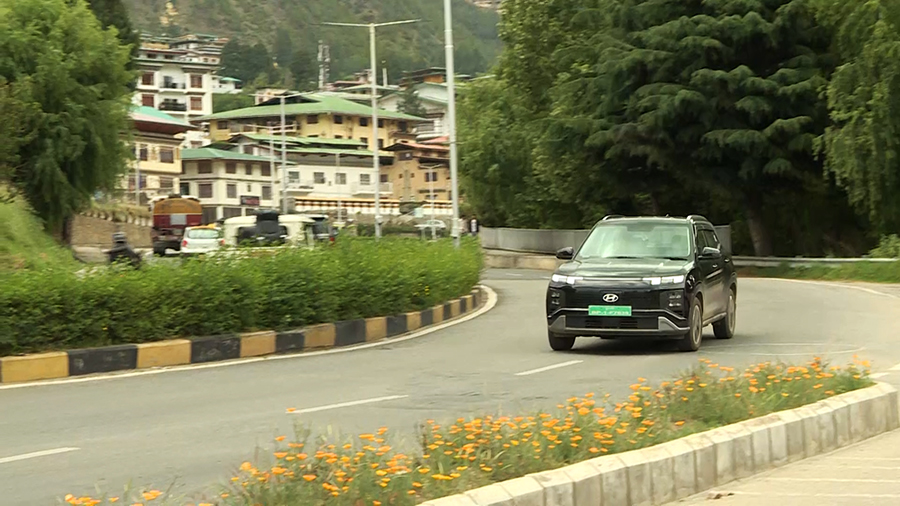
 Rising fuel prices are driving more Bhutanese to consider electric vehicles, with dealers reporting a sharp increase in inquiries and, in some cases, record monthly sales. But high upfront costs and gaps in the national charging network continue to slow the transition.
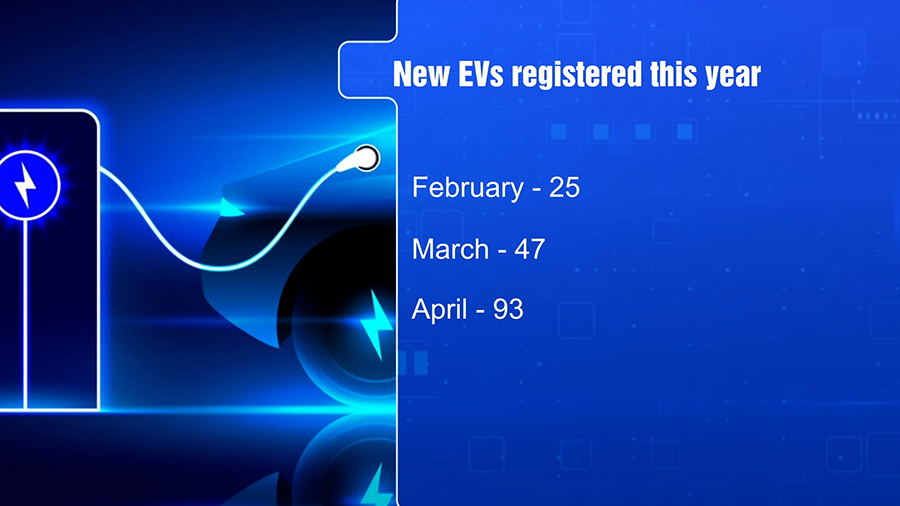 Records from the Bhutan Construction and Transport Authority, BCTA, show that electric vehicle registrations increased by 165 between February and April this year, taking the total number of electric vehicles in the country to 1,343. This accounts for a little over one per cent of the total number of vehicles in the country.
In April alone, 93 new EVs were registered.
 ST Motors, one of the country’s major EV dealers, said sales have increased significantly this year.
In the first four months alone, the dealer sold 40 EVs, which is nearly 30 per cent of last year’s total sales.
“Normally, in a month, the maximum we sell would come to around 10 to 15 EVs. However, due to the increasing fuel prices, we sold 26 cars last month,” said Ugyen Phuntsho Rabgay, the director of operations with ST Motors.
He added that rising fuel costs are encouraging more people to seriously consider switching to electric vehicles.
Beyond private consumers, the government is also making the shift. Last week, the Prime Minister announced plans to procure 99 additional electric vehicles and 45 electric buses to reduce the country’s dependence on fuel imports.
ST Motors also reported a surge in demand for electric vehicle rentals, prompting the dealer to expand its fleet. The company plans to add 20 more electric vehicles next month, bringing its total rental cars to 52.
BBS tried to contact other major EV dealers on the issue but not all of them were available for comment.
One of them, who asked not to be identified, said public enquiries have risen sharply over the past few months but have yet to translate into sales due to a couple of factors.
The dealer said cost remains a key barrier. Many potential buyers are put off by the price, with EVs still beyond the means of most middle-income households. At ST Motors, the cheapest EV costs more than 1.3 million ngultrum.
The Ministry of Infrastructure and Transport said the introduction of the Goods and Services Tax has pushed prices up. Electric vehicles previously enjoyed exemptions from sales tax and customs duties. Now, GST is uniformly applicable to such vehicles as well.
“For petrol vehicles, because they are more affordable, it is easier to repay the loan. As for EVs, if any mishap occurs, it can take months to get the car fixed. Vehicles like ours that run on petrol can usually be repaired within a month at most, whereas EVs can take around three to four months,” said Pelden, a taxi driver in Thimphu.
“EVs are very convenient, especially these days with the increase in fuel prices. Cars like this are no longer very profitable to run. But having said that, EVs are expensive. For someone older like me, if I fall sick for a week or two, I worry that I may not be able to repay the loan. With cars like this, if we do not use them, we also do not need to spend on fuel. We can simply lock them away. However, the loan still has to be paid every month, and if the payment is delayed, we have to pay interest. For younger people, I would advise them to drive EVs because they are convenient,” said Tashi Tshering, another taxi driver.
Beyond pricing, EV dealers cite limited charging infrastructure – particularly outside urban areas- as another factor dampening demand.
At present, 75 EV charging stations operate across 43 locations nationwide.
Thimphu currently has the highest concentration of charging stations, including facilities at Changlimithang, Lungtenzampa taxi parking, Bhutan Post Corporation parking, and RTC Junction. Other charging points are spread across towns such as Phuentsholing, Paro, Punakha, Mongar, Samdrupjongkhar, and Bumthang.
Last year, the government announced plans to install additional charging stations across the country. If implemented as planned, Bhutan will have one charging station for every 15 electric vehicles by 2030.
Authorities are also encouraging private individuals to set up EV charging stations. Under a recently approved initiative, operators can receive government support for maintenance, operations, and electricity costs.
Besides, the Department of Surface Transport (DoST) is working on developing an EV Strategy for Bhutan.
Previously, Bhutan implemented a targeted subsidy programme for 300 taxis with support from UNDP-GEF funding. Under the scheme, beneficiaries received a 70 per cent loan repayable over seven years, along with a subsidy of up to 20 per cent or 5,500 US dollars, whichever was lower.
Looking ahead, Bhutan’s EV Roadmap calls for 70 per cent of new vehicle sales to be electric by 2035. With EVs currently representing around one per cent of the national fleet, the growing interest triggered by fuel prices may be the nudge policymakers have been waiting for.
However, to achieve the goal, Bhutan will require a dramatic acceleration of the current trend, alongside major investment in charging infrastructure and financing support for buyers.
Samten Dolkar
Edited by Sangay Chezom