
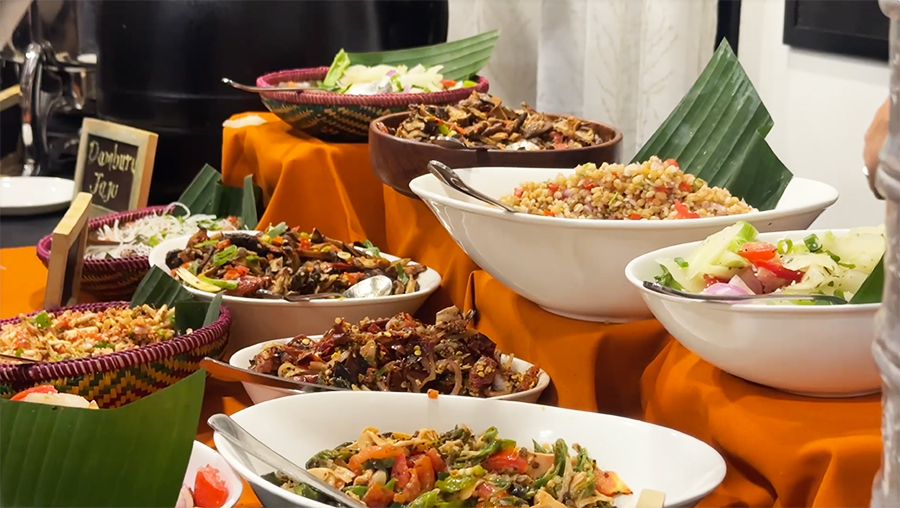
 Tourists visiting Phuentshogling may soon discover that Bhutanese cuisine offers much more than ema datshi and kewa datshi. A new culinary initiative is helping hotels and restaurants serve authentic vegetarian dishes while creating opportunities for local farmers and the hospitality industry.
Hotels and restaurants in Phuentshogling are being encouraged to expand their menus with traditional Bhutanese vegetarian dishes to give visitors a rich culinary experience.
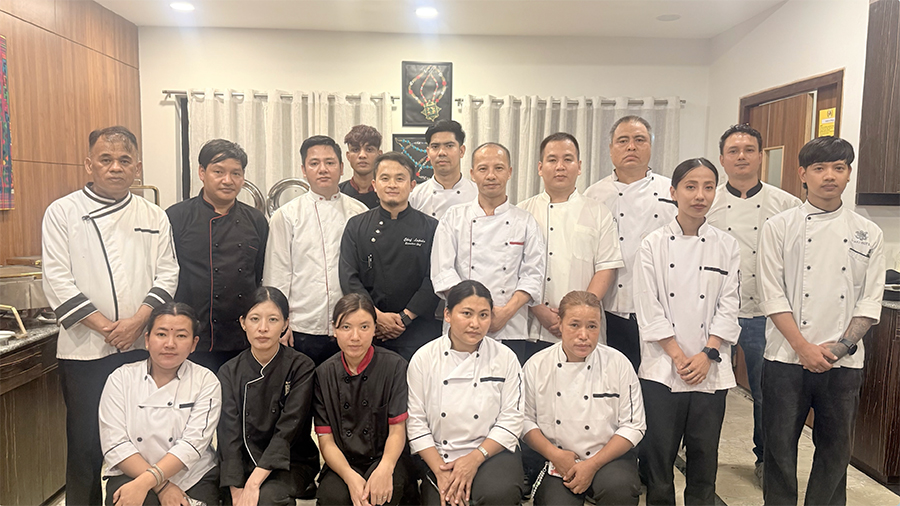 As part of the initiative, 15 chefs from hotels, tourist restaurants, and eco-tourism establishments completed a week-long training on authentic Bhutanese cooking. Their recipes have been compiled into a new cookbook titled ‘Bhutanese Vegetarian Cuisine of Phuentshogling’.
“In Phuentshogling, it’s not that hotels and restaurants don’t serve Bhutanese dishes. They do. But over time, many of our traditional dishes have evolved with modern influences and fusion styles, and in the process, they have lost their authenticity. We should allow our guests to experience authentic Bhutanese cuisine, something they have never tasted before, so they can take home a genuine memory of Bhutan,” said Kelzang, Regional Secretary, BCCI Regional Office, Phuentshogling.
“We have not seen many traditional dishes like these being served in Phuentshogling. That is why the BCCI approached us with the idea of introducing an initiative like this. It is a welcome effort. As a border town, Phuentshogling receives many tourists, and this initiative will not only allow them to experience authentic Bhutanese cuisine but also contribute to the local economy,” said Chorten Dorji, Executive Director, Handicrafts Association of Bhutan.
The programme is part of the Destination Phuentshogling campaign, which promotes the town’s culture, heritage, and cuisine.
Tourism stakeholders from across the border also welcomed the initiative, saying visitors are increasingly interested in trying local food beyond Bhutan’s best known dishes.
“Usually what happens is when tourists come to Bhutan, they only see ema datshi and red rice. But today, as we explored, there are more than 20 vegetarian items that can be tried by guests, and they are also organic. Indians, when travelling, also prefer trying food that is local to that place. That is why we always encourage guests to try local food of Bhutan,” said Harish Morwani, Secretary, Jaigaon Travel Association, India.
The chefs were trained in traditional cooking techniques, sustainable kitchen practices and presenting authentic Bhutanese dishes for international visitors.
“We want to explore Bhutanese vegetarian dishes beyond ema datshi and kewa datshi. We encourage hotels and restaurants to expand their menus by offering a wider variety of traditional Bhutanese vegetarian cuisine to tourists. For this, the training focused on preparing authentic dishes using locally available ingredients,” said Krishna Lepcha, Executive Chef, Mani Ratna Resort, Thimphu.
The Bhutan Chamber of Commerce and Industry’s Regional Office in Phuentshogling, in collaboration with relevant agencies, conducted the training.
The participating chefs have now formed a hospitality sub-association under the Hotel and Restaurant Association of Bhutan and will continue working together to preserve and promote traditional recipes.
A standardised menu featuring the newly developed dishes will soon be introduced in participating hotels across Phuentshogling.
Kinley Dem, Phuentshogling
Edited by Sonam Pem