
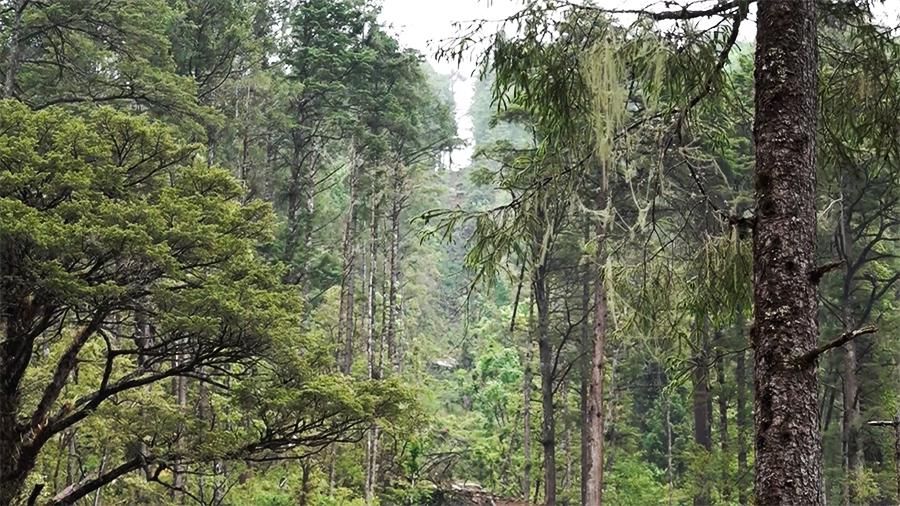
 Bhutan is working towards ensuring that the country’s forests meet international standards and receive certification from the globally recognised Forest Stewardship Council. The certification will help Bhutan promote sustainable timber production and gain better access to global markets. The pilot initiative, launched in Paro yesterday, is also expected to support the demand for locally sourced timber for major projects under the Gelephu Mindfulness City initiative.
With the launch of the pilot initiative, the Department of Forests and Park Services will begin the Forest Stewardship Council (FSC) certification process in selected forest areas across the country.
The pilot phase will cover 50,000 hectares of forest management areas in Paro, Bumthang, Wangdue Phodrang and Thimphu. Officials say forestry activities in these areas must meet FSC standards before they can receive certification.
FSC certification is a globally recognised system that ensures forests are managed responsibly and sustainably.
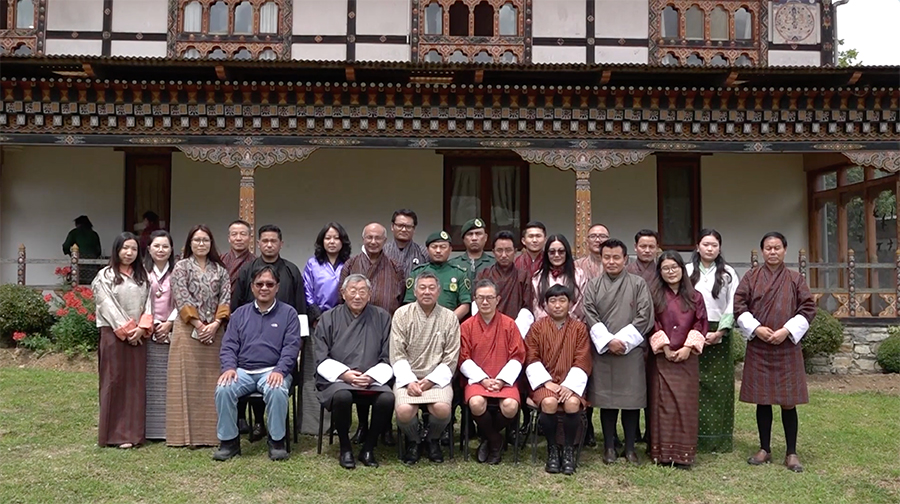 Bhutan Ecological Society, along with the council, will assess timber extraction systems, compliance systems and timber traceability systems to ensure forest operations meet international sustainability standards.
Once certified, timber from these forests will gain better access to international markets and help expand opportunities for Bhutanese forest products.
“Now it’s time for Bhutan to actually align ourselves to international standards, global requirements, especially as we pursue this export of forest resources, especially timber. Currently, we are doing a lot of exports of timber. So, as we pursue these initiatives, it’s going to be very important for us to align with international standards to get premium prices for our forest products,” said Tashi Norbu Waiba, the principal forestry officer with Forest Resources Planning and Management Division, DoFPS.
Officials said Bhutan Shingzo Limited, a private company, will supply timber from certified forests, along with timber produced through scientific thinning operations across the country, for major projects under the Gelephu Mindfulness City initiative.
However, officials say the programme may face challenges in meeting strict international standards and securing sustainable financing.
“Their standards are extremely stringent. While Bhutan already maintains high standards in forest management, failing to meet FSC requirements could put us at risk of not obtaining certification. If that happens, especially when supplying timber for projects under the Gelephu Mindfulness City initiative, questions could arise about the sustainability and credibility of the way the timber was extracted,” said Sherub Gyeltshen, the project manager, RNR Jobs Project.
Tashi Norbu Waiba said, “One of the main challenges that we foresee going forward is the technical and professional capacity to implement this programme. So, that would be one of the challenges. Another challenge that we also see is in terms of the sustainable financing for this certification program. So, the certification programme, it involves a lot of costs. So, going forward, securing sustainable financing for this certification programme is one of our objectives and also a challenge for the department.”
Yesterday, the Renewable Natural Resources (RNR) Jobs Project signed an agreement with the Bhutan Ecological Society to provide consultancy services and technical support for the pilot forest certification initiative.
The initiative is backed by around Nu 400 M under the World Bank-supported RNR Jobs Project.
The programme is expected to expand gradually to other forest management areas across the country as Bhutan strengthens its certification systems and gains more experience.
Karma Samten Wangda, Paro