 Farmer groups and agribusinesses struggling to expand their production may soon get a helping hand. The government is introducing a grant scheme that will fund half the cost of eligible agricultural and livestock projects to improve production and market access. Officials from the RNR Jobs Project with the Ministry of Agriculture and Livestock are now travelling across the country to explain how farmers and lead partners can apply for grants.
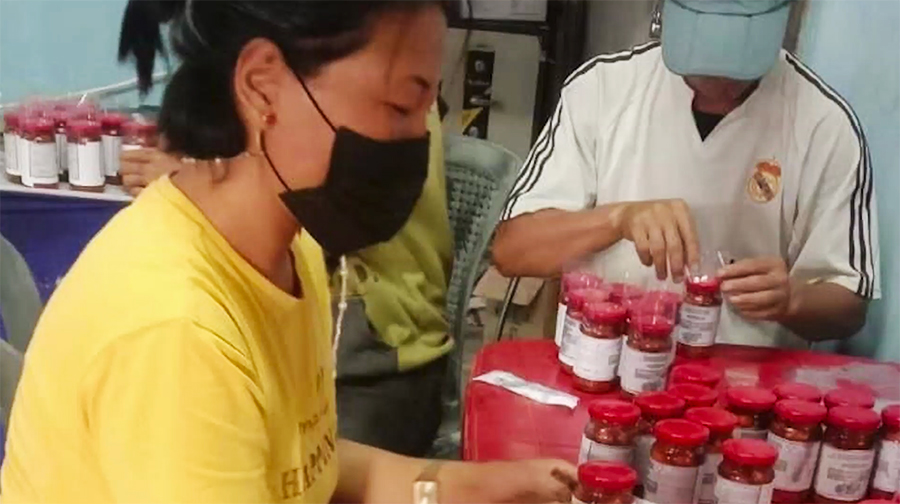 For more than two decades, the Palukha Kuenphen Yargay Tshogpa in Rubisa Gewog, Wangdue Phodrang, has been producing Dalle chilli pickles.
The group has fourteen active members and a steady supply of chillies from local farmers. However, limited facilities and a lack of technical support have prevented it from producing higher-quality products and expanding its business.
The group’s chairperson says they operate from a single room that serves as both the processing unit and meeting hall.
Without enough funds to improve the facility or train members, production has slowed. Earnings are barely enough to cover basic expenses, leaving little to pay farmers or invest in the business.
“Our group does not have the budget to construct a separate processing house. In fact, we do not even have sufficient funds to continue pickle production at present. The small amount of money we receive is spent on the group’s essential expenses. Therefore, we have been unable to improve our group or upgrade our processing unit even today,” said Nim Dem, the chairperson of Palukha Kuenphen Yargay Tshogpa.
Now, the group hopes to turn things around.
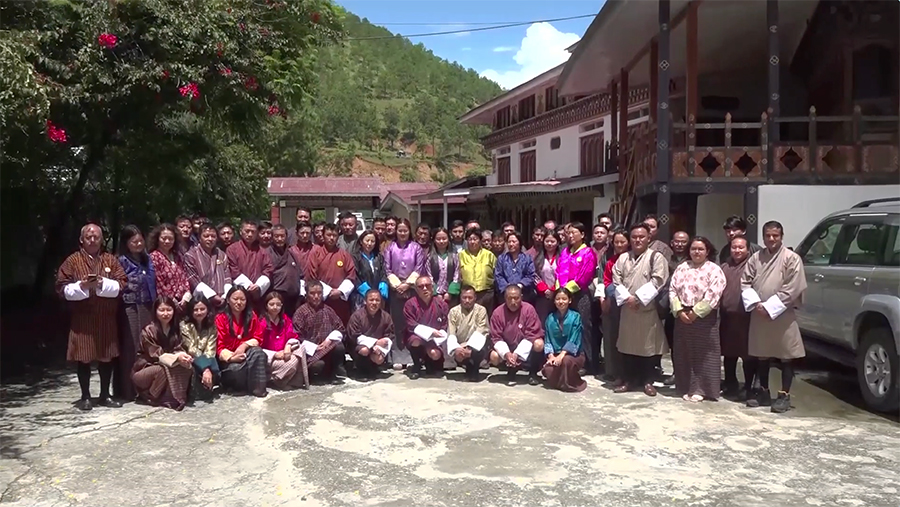
Nim Dem was among more than sixty participants, including farmer groups, entrepreneurs and agriculture extension officials, who attended an awareness programme organised by the RNR Jobs Project.
The workshop introduced the Productive Partnership initiative, which encourages farmer groups and lead partners to work together to improve production, processing and marketing.
Under the scheme, eligible partnerships can receive a grant covering up to half the cost of their proposed project.
Project Officials said each proposal must involve at least one lead partner working with a farmer group of five or more members.
Applicants must also sign a formal agreement outlining how they will use the grant and what they aim to achieve.
An independent evaluation team will assess every proposal before the Project Management Unit approves funding.
“Our Productive Partnership initiative aims to bring together farmer groups and entrepreneurs to jointly develop proposals and access grant support. This initiative is intended to strengthen businesses while creating better market opportunities for farmers to sell their products more easily. As a result, it will improve business development, enhance market access, and provide mutual benefits to both entrepreneurs and farmers,” said Karma Wangchuk, the productive partnership coordinator for RNR Jobs Project.
The participants are now planning to apply for the grant to upgrade their processing unit, revive production and expand their operations.
“If this workshop is successful, we plan to increase the number of hybrid (Jersey) cows for farmers, procure additional machinery for our dairy firm, and expand our milk processing unit. We also plan to increase the number of workers from the current five to ten or fifteen,” said Dophu, Milk Processing Unit, Khotokha, Wangdue Phodrang.
Successful applicants will receive the grant in phases, with payments tied to project progress and performance.
The Productive Partnership component is part of the five-year RNR Jobs Project, which began this month with World Bank support worth USD 9.4 M.
For many farmer groups, the funding could mark a turning point, transforming businesses that have been on the brink of closure into enterprises with the confidence and capacity to grow again.
Changa Dorji, Wangdue Phodrang
Edited by Sangay Chezom