
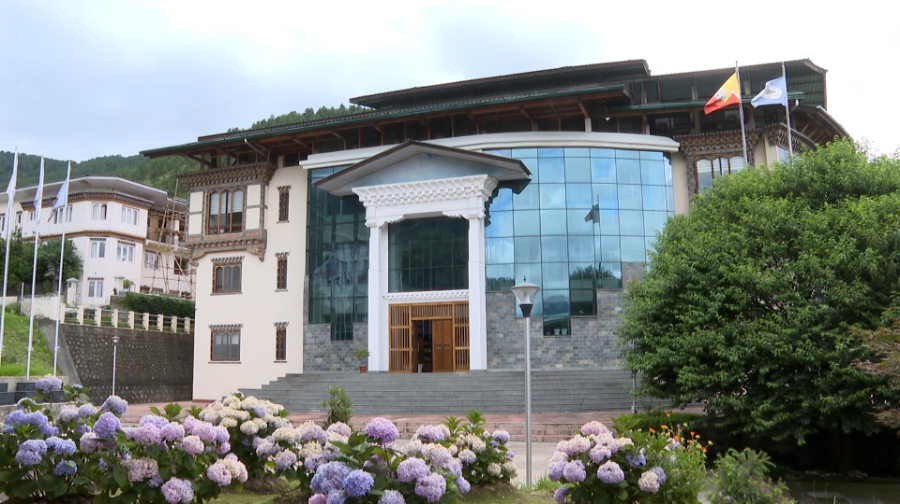
 More than a thousand students have accepted places at colleges and later withdrawn over the past five years, leaving university seats unused and budgets wasted. From next year’s admission cycle, the Royal University of Bhutan, RUB will introduce stricter rules, including financial penalties, to discourage students from backing out after accepting admission. The university has recently revised the 2021 Admission Policy.
Every year, some students accept a place at a college but later decide not to join. Others enrol and then withdraw soon afterwards, leaving seats vacant after the admission process has already closed.
As a result, other eligible students miss out on opportunities that can no longer be offered.
According to the vice chancellor, the university can admit only about 23 per cent of Class 12 graduates each year.
Vice Chancellor Chewang Rinzin said, “There are thousands of Class 12 graduates looking for admission every year. When students accept admission but later do not join, it disrupts our planning because our intake numbers are based on certain policies, requirements, and projections. By the time they withdraw, the admission process is already closed, so we cannot offer those vacant seats to other students who may have been interested.”
He added that the government resources already invested in their education go to waste.
Under the 2021 Admission Policy, students who withdrew after accepting admission twice became permanently ineligible for admission to any RUB college.
The university replaces that rule with financial penalties.
From the 2027 academic session, students who dishonour admission will have to pay a penalty of Nu 5,000 if they apply again for any colleges under the University.
The Vice Chancellor says the University will not give back the Nu 5,000 security deposit paid upon confirming admission.
RUB Vice Chancellor Chewang Rinzin said, “We hope this will act as a deterrent so that fewer students back out after accepting admission. This isn’t about collecting money through penalties. It’s about encouraging students to honour their admission offers because when someone withdraws, it comes at a cost and can take away opportunities from other deserving students.”
Students on government scholarships who leave their course early will also have to repay part of the public money spent on their education.
Those who withdraw before completing their first semester must pay one semester’s tuition fee. Students who leave later must repay the tuition fees for the semesters they completed, along with the stipend they received.
Self-financed students will lose the tuition fee they have already paid for that semester.
However, the College Academic Committee may waive these penalties in exceptional cases if students provide supporting documents.
Alongside the stricter rules, the university is also developing a centralised admission system. It aims to give students more time to decide which course and college best suit them before accepting an offer.
The Vice Chancellor said, “Under the new system, students won’t be selected based only on their Class 12 results. Those results will still carry significant weight, but we’ll also use entrance examinations to assess students more holistically. The new system is also designed to give students enough time to discuss their options with their families and friends before deciding which college and programme to choose.”
He added that the university-wide entrance examination will be conducted online to ensure a more robust, fair, and transparent admissions process.
The university believes the new admission system, together with stricter penalties, will help reduce last-minute withdrawals, make better use of limited university places and give more students a fair chance to study.
Sonam Yuden
Edited by Sangay Chezom