
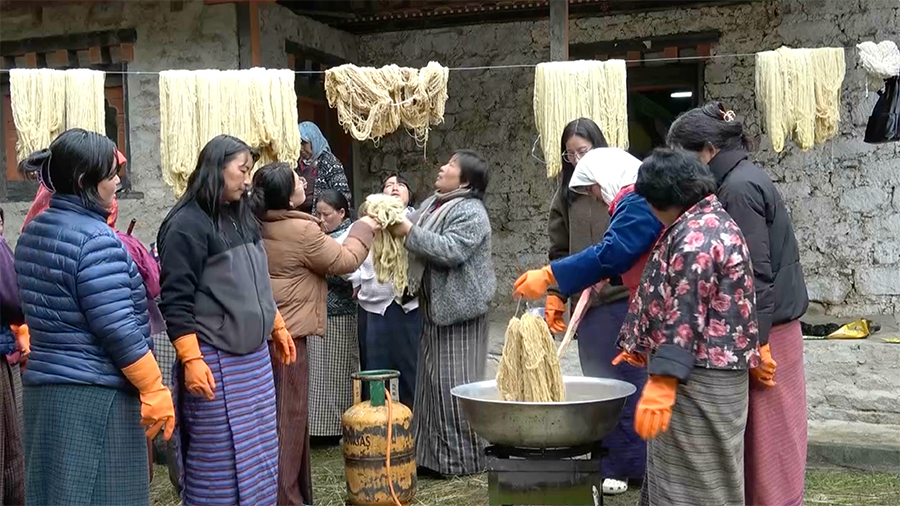
 The declining sheep-rearing culture in Bumthang is not just about a loss of livelihoods. It is putting a centuries-old art form at risk. Without the sheep, natural dyeing of wool, essential to the Yathra weaving culture in Chhumey Valley, is fading. But now, women weavers in the community are being trained in traditional dyeing techniques to revive the craft using natural and locally sourced materials.
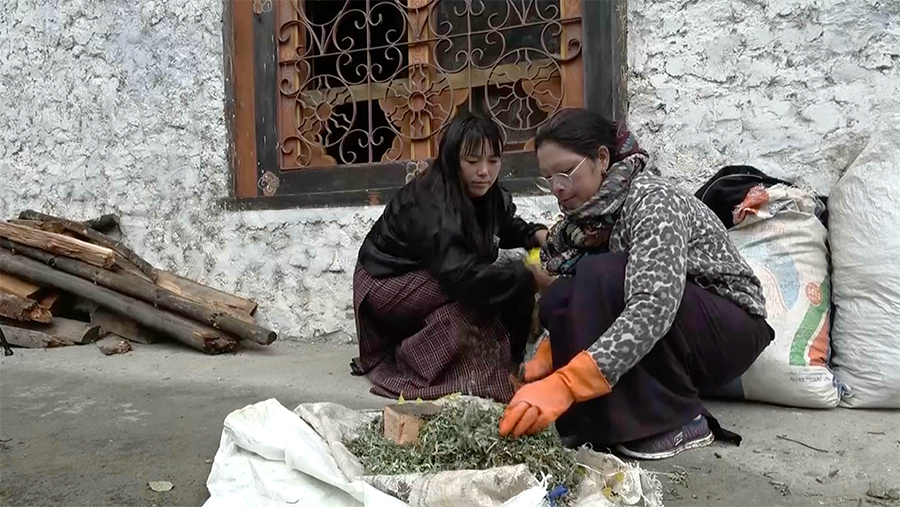 Local weavers in Chhumey valley use mugwort plants as a natural dyeing material.
The technique is not new to the community. Not long ago, weavers relied entirely on these native plants to breathe colour into their famous Yathra textiles.
However, with the gradual decline of sheep rearing and changing production practices, the tradition of natural dyeing slowly disappeared from many villages.
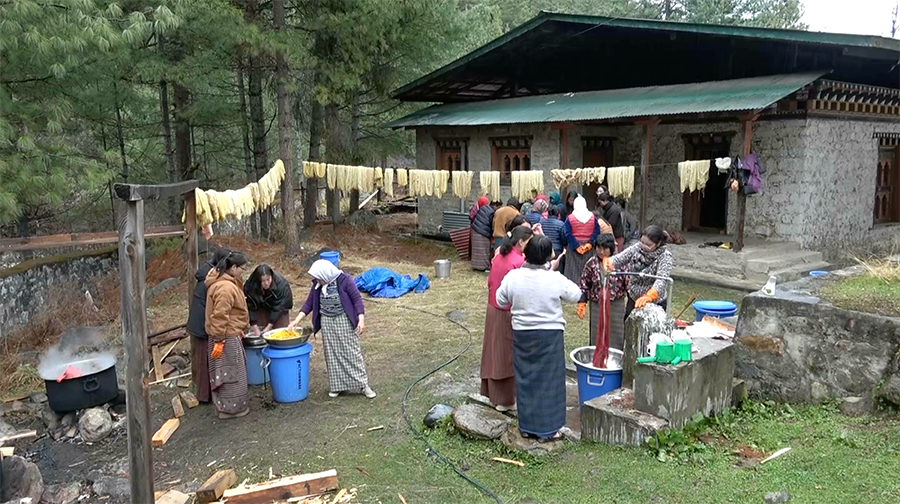 To revive the practice, around 30 women weavers from Chhumey Gewog attended a training on natural dyeing of wool organised by the Department of Media, Creative Industry and Intellectual Property.
“The famed Bumthap Yathra has been produced in Chhumey Gewog for years. We depend on it, even to date. As we have been practising it since childhood, we are keen to keep the tradition alive. We can learn if we are given the opportunity. By doing so, we can pass on the skills to our children in the future,” said Jangchu Dema, Resident, Chhumey Gewog, Bumthang.
“If we know the process of dyeing, we can also use it to dye other yarns besides Yathra. So, there are opportunities to produce naturally dyed yarns for other weavers as well,” said Chonga Lhamo, Resident, Chhumey Gewog, Bumthang.
The training is also expected to strengthen efforts to obtain the Geographical Indication, or GI certification, for Yathra woven from naturally dyed wool in Chhumey. GI certification is an intellectual property right that acts as a mark of authenticity and quality.
“We are focusing on empowering people on GI-based commodities and products. It not only preserves age-old traditions and cultures. It will also enhance community vitality and economic opportunities,” said Sonam Penjor, Director, DoMCIIP, MoICE.
The initiative does not just protect Bhutan’s textile heritage. It also opens new economic opportunities for local artisans through authentic and sustainable production methods.
Thinley Dorji, Bumthang
Edited by Phub Gyem