
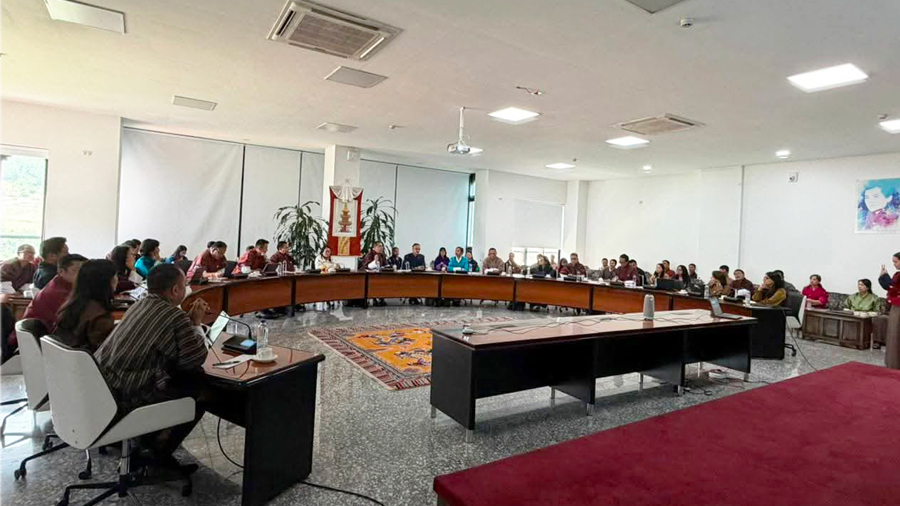
 World Bank experts say one of the biggest challenges facing healthcare systems worldwide is inefficient health financing. In Bhutan, health expenditure increased sixfold between 2021 and 2025, according to the latest National Health Accounts. To explore ways to make better use of health resources, the health ministry and the World Bank brought together other relevant agencies for a discussion in the capital today.
According to the World Health Organisation, countries waste between 20 and 40 per cent of their health spending due to inefficiencies in healthcare systems.
World Bank experts said this can happen through unnecessary use of healthcare services, the purchase of expensive medicines and leakages within the health system.
“For example, there are countries where people stay for a long time in a hospital, but they don’t need to stay in the hospital for a long time, but then they keep the beds, people and staff busy. So basically, these are wasting those resources for people, and it is care that is not needed and is actually not helpful for the patients to stay longer in a hospital. So, we might want to have efficiencies in terms of length of stay,” said Anna Koziel, Senior Health Specialist, World Bank.
World Bank experts recommend measures such as strategic purchasing of medicines and medical supplies and better allocation of health resources.
“There is also something called allocative efficiency, where we look at both resources and financing. So, are we having the right mix of people in the health facilities? Do we have enough of them, or maybe we have too many people in health facilities? Which facilities need to be empowered with more people and more staff, and which ones require only one staff member instead of three? From other countries’ experience, this is something that might be worth looking at,” said Anna Koziel, Senior Health Specialist, World Bank.
Another recommendation is to invest more in preventing non-communicable diseases, which could reduce the need for costly treatments in the future.
Meanwhile, the health ministry says some of these recommendations can be implemented gradually. However, improving health financing will require coordinated efforts from multiple agencies.
“There are lots of things that need to be done to improve the health financing. But several organisations and agencies will be involved in this process. This is not solely the responsibility of the health ministry, but rather, it requires a collective effort from multiple agencies,” said Kinga Jamphel, Director General, Department of Health Services, MoH.
Although the government remains the largest contributor to health finance, reports show that support from development partners has reduced by about half over the years.
As healthcare costs continue to rise and donor support declines, experts say improving efficiency will be critical to sustaining healthcare services in the country.
Singye Dema
Edited by Sonam Pem