
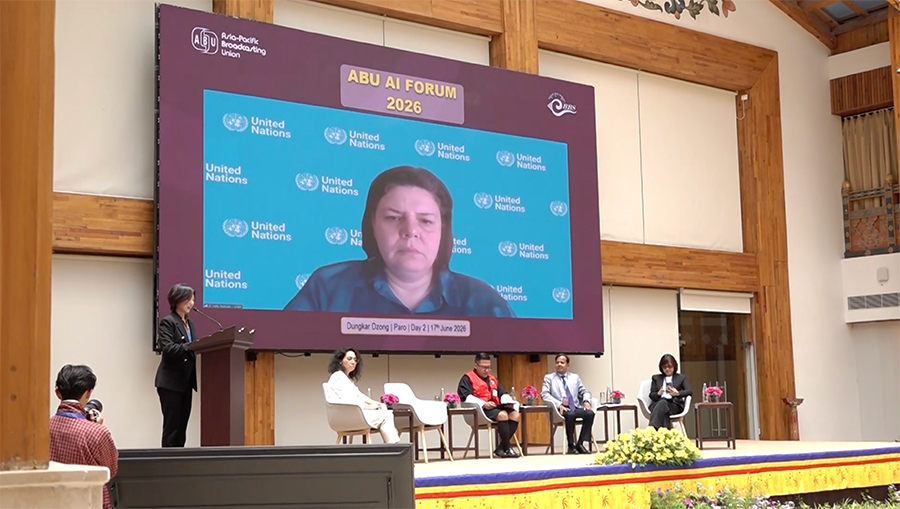
 When disasters strike, the challenge is no longer simply getting information out quickly, but ensuring the right information reaches the right people at the right time. As broadcasters in the Asia Pacific region adopt artificial intelligence to meet that challenge, experts at the ABU AI Forum in Paro discussed how the technology can be used responsibly in disaster communication.
Participants at the forum said disasters are becoming more frequent and complex. During such crises, misinformation often spreads rapidly online, challenging traditional methods of emergency communication, thereby delaying aid, hindering rescue and inciting public panic.
They said AI can help broadcasters deliver more targeted information, support fact-checking and improve accessibility through translation and multilingual services.
While several broadcasters in the region have already integrated AI tools such as Instant Translators, Smart Message Writers or Fake Content Filters into their operations, Bhutan is still exploring its potential in public broadcasting and emergency communication.
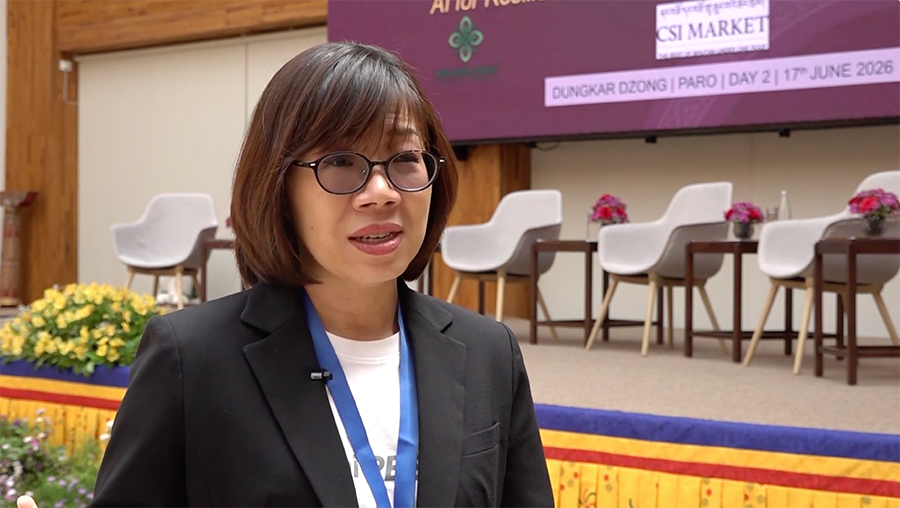
“At Thai PBS, we use AI during a disaster crisis, where we share correct data because AI smartly collects and analyses a lot of information and audience behaviour. So, AI will analyse information and personalise content to each audience,” said Kanokporn Prasitphon, Digital Media Director, Thai PBS World, Thailand.
For Bhutan, where communities face recurring risks from floods, landslides, earthquakes and glacial lake outburst floods, experts said AI could strengthen existing disaster preparedness and response systems by helping simplify complex information, improve situational awareness and support faster dissemination of warnings.
Representatives from the Bhutan Red Cross Society said emergency responders, together with the Department of Local Governance and Disaster Management, are looking into ways to integrate AI during disasters.
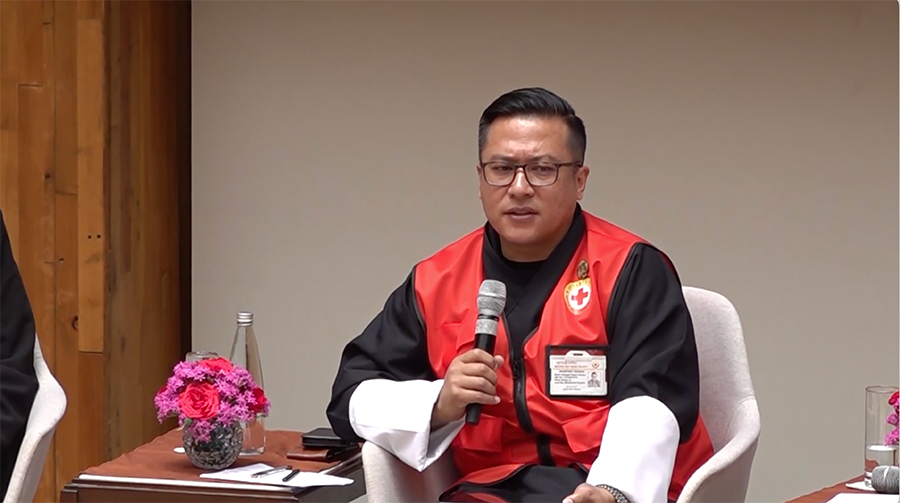
“In disaster management, AI is helpful to simplify complex data. Last year, the Red Cross Society and the Department of Local Governance and Disaster Management explored how AI can be used in anticipatory action, in terms of readiness and how to manage after a disaster has occurred,” said Dragyel Tenzin Dorjee, Secretary General, Bhutan Red Cross Society.
However, participants cautioned that adopting AI is not without risks.
They warned that the same technology that can support verification and communication can also contribute to misinformation.
Broadcasters stressed that while AI can help accelerate information gathering and content production, editorial judgment and human oversight must remain central to journalism, particularly during emergencies where inaccurate information can have serious consequences.
“In this digital era, the first is fact-checking or verification. While AI can help make content to our benefit, it can also create misinformation. So, public media should always push for fact-checking,” said Kanokporn Prasitphon, Digital Media Director, Thai PBS World, Thailand.
“AI has both pros and cons. One of the main challenges is accuracy. Information generated by AI should always be verified through fact-checking and additional research because its outputs may not always be reliable or completely accurate,” said Dragyel Tenzin Dorjee, Secretary General, Bhutan Red Cross Society.
As artificial intelligence continues to reshape the global media landscape, participants said the question is no longer whether AI will become part of disaster communication, but how it can be adopted responsibly.
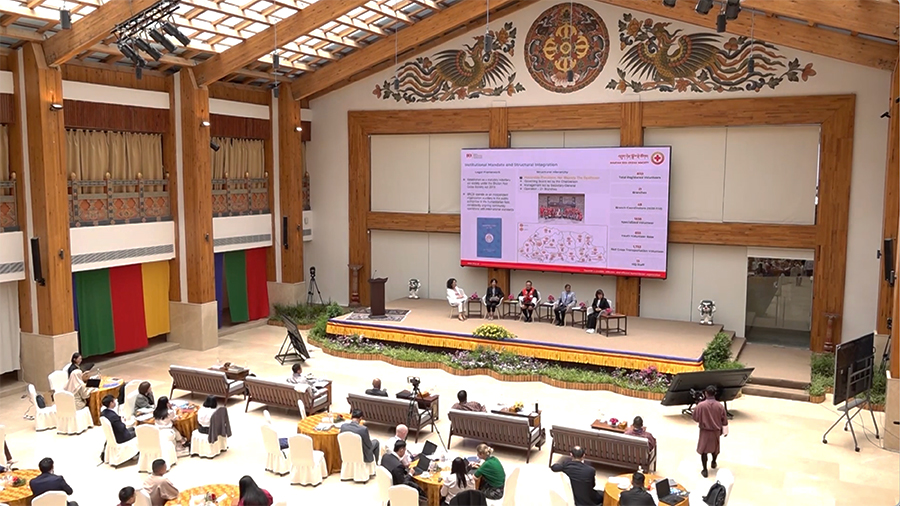 For Bhutan, discussions at the forum highlighted both an opportunity and a challenge: ensuring that as disasters become more frequent and information moves faster than ever, public broadcasters and emergency responders are equipped with the tools needed to deliver information that people can trust and act upon.
Karma Samten Wangda/Sangay Chozom/Kelzang Chhophyel
Edited by Phub Gyem