
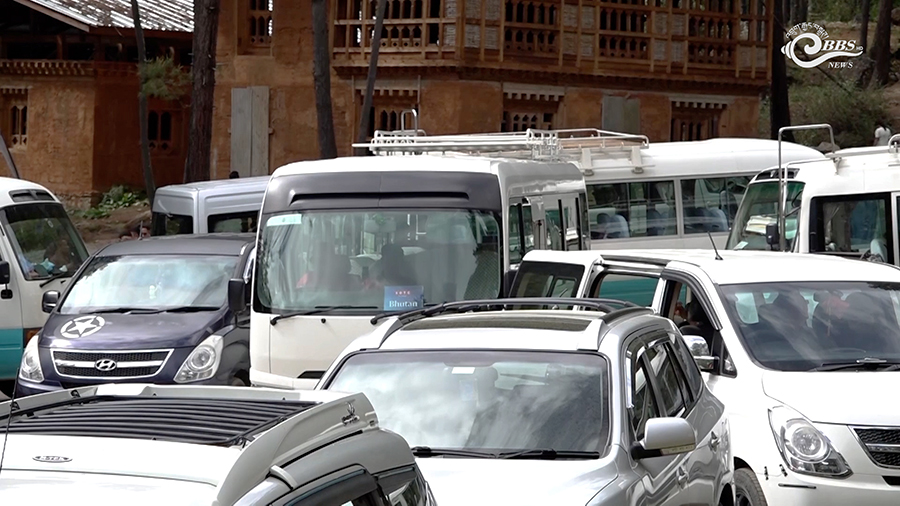
 Paro Taktsang, widely known as the Tiger’s Nest, draws thousands of visitors every year. But the journey to get there is becoming a challenge in itself. Narrow roads, shared lanes with horses and a parking area built for far fewer vehicles are frustrating drivers, tourists and tour operators.
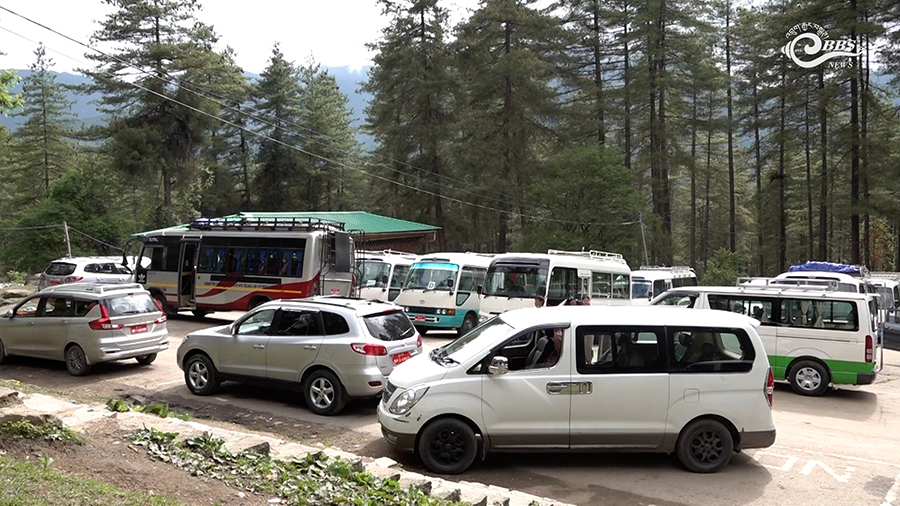 At the base of Taktshang in Ramthangkha, the parking area near the public restroom can accommodate only around 15 vehicles at a time.
However, the space has become inadequate with a large number of tourist vehicles, buses, taxis, and private cars arriving every day.
While some manage to squeeze into nearby spaces, others are forced to park along the already narrow road leading to the base. For drivers in the tourism industry, this is a daily reality.
“Traffic congestion here is severe, especially in the mornings, and the afternoons are no better. Vehicles are forced to park along the roadside because there is not enough parking space. Whether it falls under the district administration or the government, there is a clear need for development and better infrastructure here,” said Phurba Tshering, a driver.
“After crossing the Taktshang bridge, vehicles and horses have to share the same road, often passing dangerously close to each other. Drivers cannot even pull over properly because of the deep roadside drop-offs. When we finally arrive, there is hardly any parking available. At times, even tourists struggle to walk through the crowded area. The situation has become very difficult,” said Nado, another driver.
The congestion is further worsened by transport horses sharing the same route with vehicles. Drivers say the narrow road offers little room for two vehicles to pass safely.
“There is a real need for development here. Tourists visiting this site contribute to the country’s revenue, but the supporting amenities are not adequate. The overcrowding creates inconvenience for both drivers and tourists. Because of the confusion and rush, some tourists even mistake vehicles, which adds to the overall chaos,” said Chimi, also a driver.
“If the government improves the parking facilities, upgrades the road, and creates a separate route for horses, traffic would move much more smoothly. It would also help prevent accidents involving vehicles and horses,” added Nado, a driver.
But for now, those changes remain distant. The Paro district administration says there have been no discussions yet on expanding the parking area or developing the road leading to Ramthangkha.
Karma Samten Wangda, Paro
Edited by Sonam Pem