
 The government is exploring ways to reduce lending rates and make credit more affordable for borrowers. Although the Royal Monetary Authority lowered the Minimum Lending Rate, or MLR, from 6.11 per cent to 5.7 per cent in March, banks continue to lend at an average rate of around 11 per cent. Finance Minister Lekey Dorji shared the update during the Question Hour session in the National Assembly yesterday.
The Radhi-Sakteng MP asked whether the government has begun reviewing lending rates in consultation with the Royal Monetary Authority and financial institutions.
According to the MP, the average lending rate in Bhutan is about 11 per cent, while savings deposits earn an average interest rate of 4.55 per cent, leaving a spread of 6.45 percentage points.
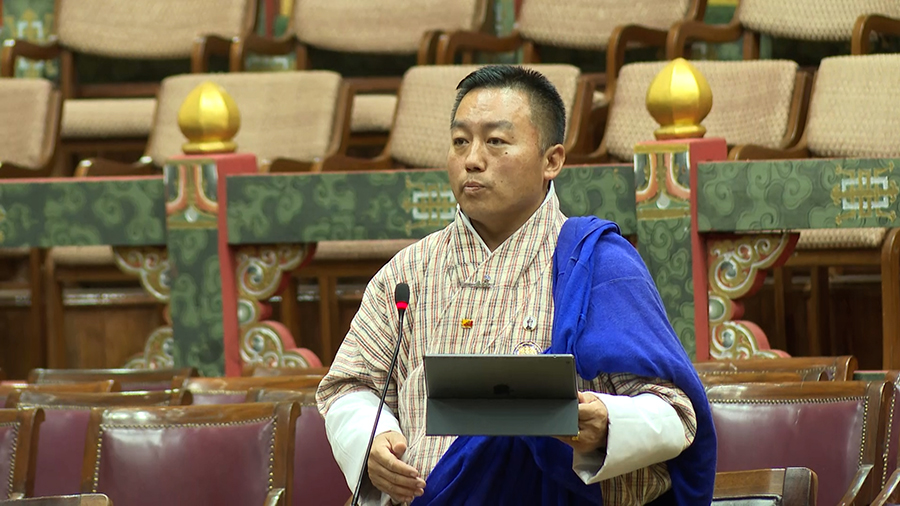 Radhi-Sakteng MP Tashi Tenzin said, “Bhutan is also grappling with a significant level of non-performing loans, which amount to billions. More than 51 per cent of these defaulted loan accounts are held by farmers. In addition, house owners are increasing rental prices, largely due to the high interest rates on housing loans.”
Responding to the concern, Finance Minister Lekey Dorji said the government is working with the Royal Monetary Authority and financial institutions to understand why loan interest rates remain high.
He said banks and lenders charge higher rates to cover their operating expenses, the risk of borrowers failing to repay loans and other business costs.
“During the recent MLR review meeting with the RMA, we agreed to review and rationalise factors such as operating costs and credit risk premiums to explore the possibility of lowering lending rates.”
Currently, commercial lending rates across banks range between 8 and 14 per cent.
The central bank sets a Minimum Lending Rate, which acts as the floor rate for lending in the financial sector.
The Royal Monetary Authority reviews the Minimum Lending Rate every six months. Introduced in 2016, the MLR serves as the benchmark minimum rate used by financial institutions to determine loan interest rates and was designed to encourage greater competition in the financial sector. Following its latest review in March, the rate was reduced to 5.7 per cent.
The minister said any proposals that could benefit the economy would be further discussed with the central bank.
Finance Minister Lekey Dorji said, “If there are recommendations or feedback that can benefit the economy, the Speaker, the Opposition Leader, Members of Parliament and the ministry will discuss them further with the RMA.”
According to economists, lower lending rates can stimulate economic growth by making borrowing cheaper for businesses and households. This can encourage investment, increase consumer spending, support private sector growth, and create jobs.
However, they say lower rates also carry risks. Increased borrowing can lead to higher inflation, rising household debt, pressure on banks’ profitability, and higher imports, which may strain foreign currency reserves.
Passang
Edited by Sangay Chezom