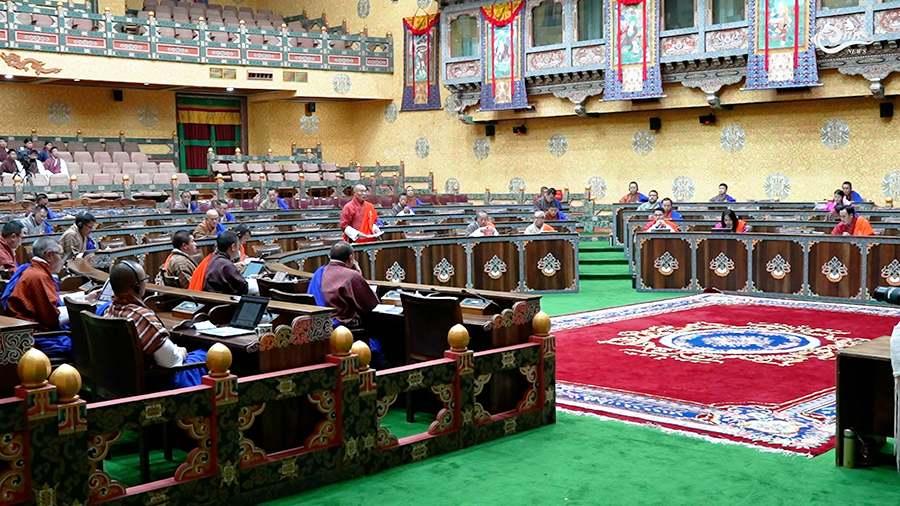
 The government plans to roll out the Third Child Incentive Programme by next month. The Prime Minister announced this during the National Assembly’s question-and-answer session today, following concerns raised about the country’s falling birth rate. The programme is one of the government pledges which intends to provide Nu 10,000 per month to families for their third and subsequent children until the child attains three years.
The Kengkhar-Weringla MP said Bhutan’s birth rate has declined by 62.9% over the past 35 years. In 2025, only about 5,800(5,784) babies were born, down from 15,580 births in 1990.
She said job and income insecurity are discouraging young Bhutanese from starting and raising families.
Monggar’s Kengkhar-Weringla MP Dorji Wangmo said, “Living costs keep rising while incomes remain the same. Moreover, ECCD facilities are not good enough. Young couples have to think about all these factors when planning to start a family.”
According to the United Nations, Bhutan’s fertility rate stands at 1.4, which is below the replacement level of 2.1 needed to maintain a stable population.
Prime Minister Tshering Tobgay said, “It means that a woman will give birth to an average of only 1.4 children in her lifetime. In other words, parents are not replacing themselves.”
As one of the measures to address the declining birth rate, the government expects to start with the Third Child Incentive Programme by June.
“We have pledged to provide Nu 10,000 for the third child. We expect to begin the initiative next month. Along with financial support, we will also introduce various programmes and plans,” said the Prime Minister.
He added that the government is exploring additional measures, such as expanding creche facilities and the National Social Protection strategy, to address ageing population challenges.
Sangay Chozom