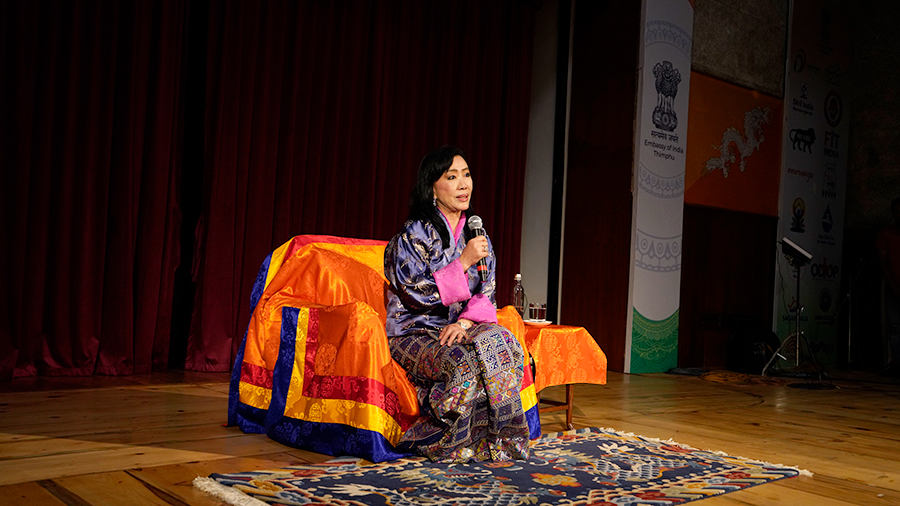
 It is that time of the year again. Bhutan Echoes: Drukyul’s Literature and Arts Festival has returned for its 15th edition. It opened today under the Royal Patronage of Her Majesty Queen Mother Dorji Wangmo Wangchuck. Over the next three days, the festival will bring together ideas, stories and conversations that inspire, challenge and connect.
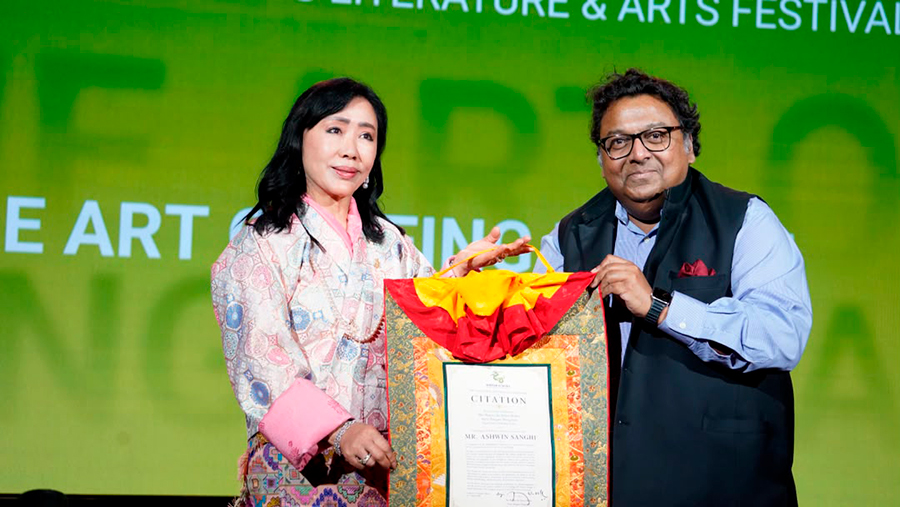 Her Majesty opened the festival in conversation with world-renowned author Ashwin Sanghi, setting the tone for this year’s theme, “The Art of Being Human.”
“I think it is stories- stories of our lives that we impart and those stories, right stories they can move the younger generation. All of us here today, and all of us who will be here for the next three days, let us all be grateful for being humans, and particularly being Bhutanese humans. And let us as Bhutanese humans impart our compassion, our love, and all the stories of Bhutan.
For the festival’s organisers, this year’s theme speaks directly to the questions of our time.
“We are very happy to present this theme because it is very thought-provoking in this age of imminent reliance on AI, which is not entirely reliable or satisfactory. We want to remind everyone to ask themselves the question: what does it mean to the art of being human, remaining human, and influencing AI and not being influenced by AI as much?” said Kelly Dorji, Festival Director, Bhutan Echoes.
From artificial intelligence and art to education and storytelling, the first day of the festival explored ideas shaping both the present and the future. It also drew students from far and near, offering them a chance to exchange ideas, discover new perspectives, and be inspired by some of the world’s leading voices.
“We get to learn about many cultural things, about different diverse cities, countries, and everything else. We get to know their food, cuisine and their dresses. And also, we get to learn about humanity, how to connect with others and emotions. And especially in Bhutan, we get to learn about literature, about different authors, and how they think that AI should not replace humans,” said Jaanvi Agarwal, Student, Mayoor School, Ajmer, India.
“I attended for the second time because I believe that the Bhutan Echeos Festival is something that isn’t supposed to be celebrated only one time. But it is supposed to be repeatedly celebrated because it embraces the art of literature, and I believe it is a moment, an opportunity for all of us who are enthusiastic about literature to come together and talk about it,” said Sonam Tshokee Wangmo, Student, Motithang HSS.
“I am participating in the festival because it’s an opportunity to interact and learn from both local and international experts,” said Chador Tenzin, Student, Motithang HSS.
As the festival unfolds over the next three days, writers, artists and thinkers will continue exploring storytelling, culture, history, education and the changing role of technology. But at the heart of every conversation lies one simple question: as artificial intelligence becomes part of everyday life, what does it truly mean to be human?
Devika Pradhan