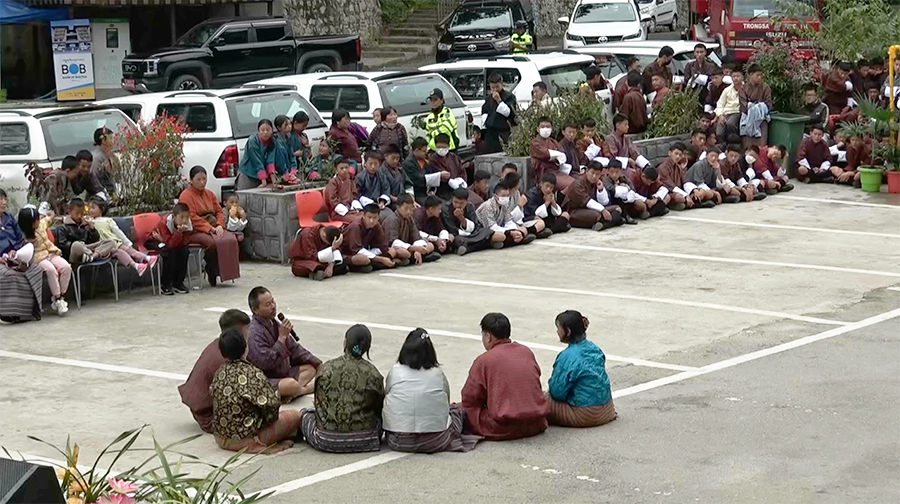
 What if the stories behind Trongsa’s past could come alive on stage? At the fifth Black Mountain Festival, communities did just that, bringing generations-old stories and traditions to life through performances.
For generations, stories about Trongsa have been passed down by word of mouth. But with changing lifestyles and modern technology, some of these traditions are slowly fading according to the locals.
This year, the Black Mountain Festival is giving them a new stage.
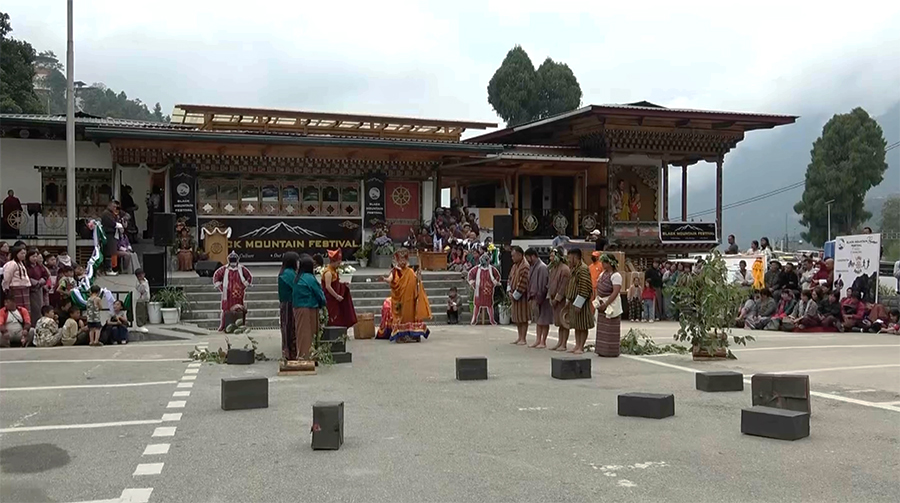 Participants from Dragteng Gewog, for instance, performed the story of how Trongsa Dzong came to be built at its present location.
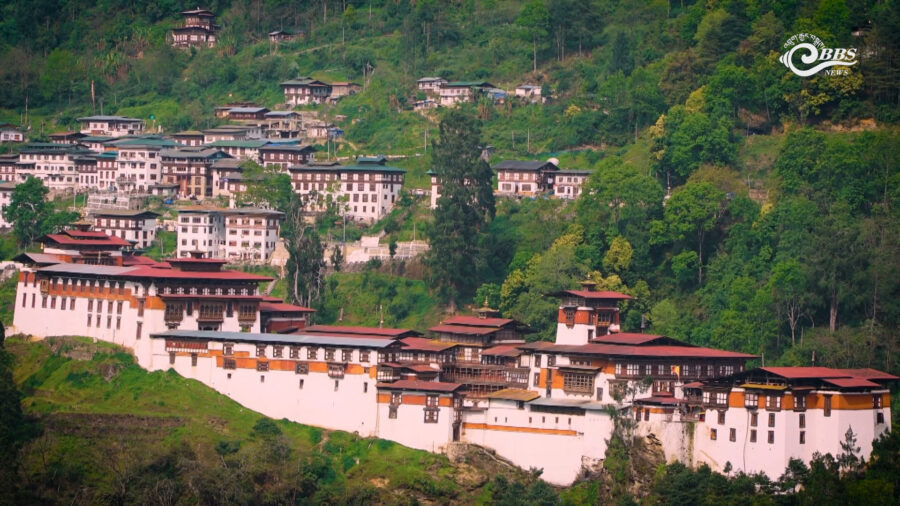 According to an oral account, the Dzong was first planned at a place called Dzongkha Lum. But the construction was repeatedly disrupted. Work completed during the day was believed to have been destroyed by local deities at night. The present site was eventually identified through prophecy.
The dzong was first founded as a small temple in 1543 by Yongzin Ngagi Wangchuk, the great grand father of Zhabdrung. Later in 1647, Zhabdrung built the Dzong.
For the performers, the story is more than a performance. It is a way to preserve their history and pass it on to younger generations.
“The present Trongsa Dzong was initially planned to be constructed at a place called Dzongkha Lum in our gewog. However, the deities of that place did not allow the construction to progress. So, we adapted this oral history into a skit and presented it to the public today,” said Rinzin, Taktse, Dragteng Gewog, Trongsa.
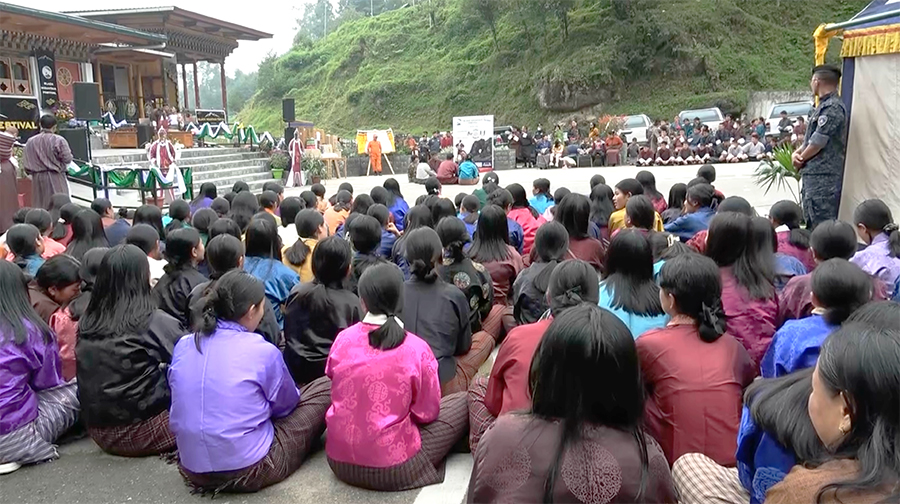 Other Gewogs also took to the stage. Their performances highlighted local traditions, livelihoods, historical stories and cultural practices. The festival is giving communities a chance to showcase what makes their gewogs unique. It is also helping younger people reconnect with traditions that are slowly disappearing.
“Today, the audience is not limited to the youth of Trongsa. We also have many people from other districts. So, through such programmes, we have focused on showcasing the culture and history of Trongsa to them,” said Dorji Tshering, District Culture Officer, Trongsa.
The festival also featured storytelling and a culinary competition. Traditional dishes were prepared using local ingredients and methods.
Officials say such activities will continue, with more focus on preserving oral traditions and local knowledge. For Trongsa, the festival is becoming more than a celebration.
It is a way to remember the past, share it with others and keep it alive for the future.
Thinley Dorji, Trongsa
Edited by Passang