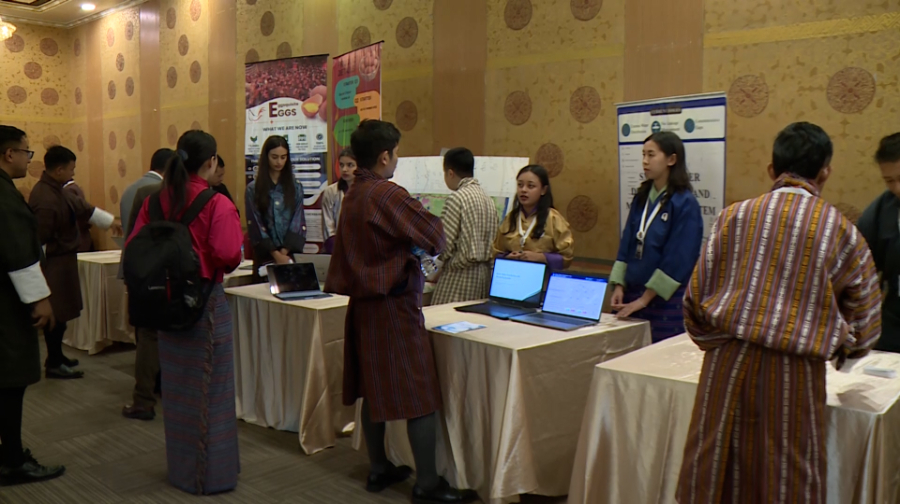
 From turning bamboo into valuable resources to promoting safety and convenience through innovation, Pelsups of the third cohort of the Pelsung programme pitched 30 ideas aimed at shaping the future of Gelephu Mindfulness City. Pelsups presented innovative solutions to real-world challenges, aligned with the vision of GMC, following a three-month immersion programme.
Many projects focused on sustainability, economic opportunities, and improving the quality of life.
Ideas ranged from converting agricultural and food waste into useful products to the production of bamboo through nursery development and plantation in the country. The idea aims to establish a supply system in southern Bhutan with the objective of reducing bamboo imports while creating income opportunities for rural communities.
Pelsup Tshering Dorji from team Quality Pakshing said, “In 2023, 20 M kgs of bamboo were imported into the country. That accounts for USD 1.88 M. Our team aim to establish a bamboo plantation nursery to reduce the import of bamboo. Moreover, in collaboration with people in rural areas, we hope to improve their source of income.”
Ensuring safety while embracing innovation also emerged as a key theme. Participants pitched initiatives that enhance emergency response services where people can send real-time alerts to authorities when accidents occur.
“When anyone is confronted with emergencies such as snakebites, elephant attacks, landslides, floods, and vehicle accidents, they can open the app. Even illiterate people can use it with the help of visual graphics. Then it will notify the control room, and the control room will track the victim,” said Pelsup Nim Dorji from the team Quick Mind: GMC Emergency Response.
A smart water distribution system was pitched as a solution to address challenges in water management because of limited resources and delayed and manual work.
Pelsup Shreya Chhetri from team Sustainable Water Distribution and Monitoring System said, “This idea came through our own experience in Gelephu, where we experienced water in a hard way. Right now, water is managed physically and manually, and through our project, we hope to transition from manual and reactive to a digital and proactive system.”
Pelsung officials said that the ideas presented demonstrate how local solutions can contribute to a more sustainable and resilient future.
“Projects that are pitched here today are the result of Pelsups living in GMC for three months, sharing strategic lectures from GMC’s leadership. Because they have been intimate or have a closer look at the problems at GMC, projects that are pitched here are the result of the problems they see in GMC,” said Phub Dorji, the Executive Director of Pelsung.
He added that on the pitching day, present the raw ideas and projects, future programmes would follow to connect the viable ideas and prototypes with potential investors.
As one of Gelephu Mindfulness City’s flagship youth programmes, Pelsung continues to nurture innovation and entrepreneurship among young Bhutanese.
So far, 981 Pelsups were trained under the programme, equipping them with skills in leadership, innovation, and policy implementation to drive the Gelephu Mindfulness City initiative.
Kelzang Chhophyel
Edited by Phub Gyem