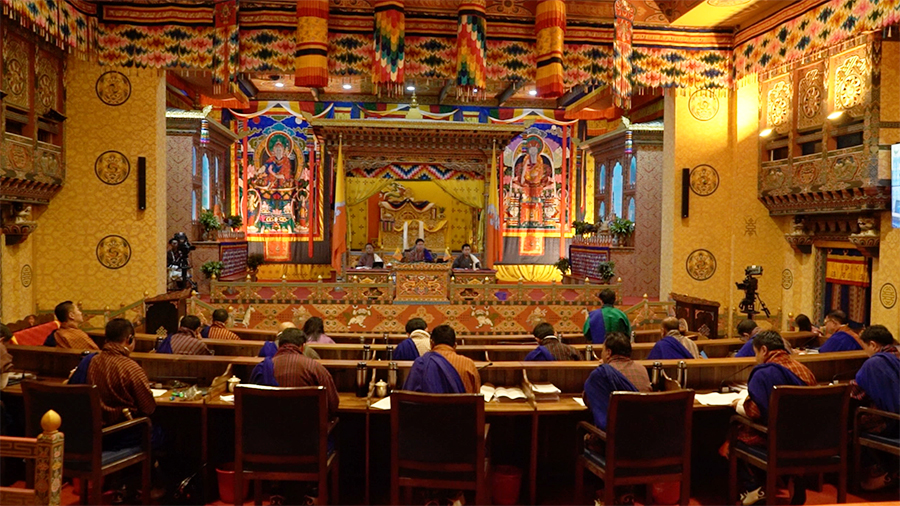
 NC members are calling for court clerks who once served as Jabmis, as well as Jabmis who hold a Postgraduate Diploma in National Law, to be allowed to represent clients in court. They also raised concerns that the current requirement of a law degree and passing the bar exam to become a Jabmi has contributed to the rising cost of legal services, making them less affordable and accessible to the public. The issue was discussed during the introduction of the Jabmi (Amendment) Bill 2026 at the National Council today.
During the session, several members raised concerns over the affordability and accessibility of legal services, calling for transparent fee structures and more consistent Jabmi regulations.
They emphasised that experience should be valued alongside academic qualifications and pointed out inconsistencies in who is allowed to represent clients in court.
“The transparency of the fee is very important. So, if the Legislative Committee codifies the fee structure case by case, will it not help the people get justice?” questioned Kelzang Lhundup, MP, Lhuentse, National Council.
“While having a law degree is important, experience is equally crucial. We have court clerks who have served for more than 20 years and are often more knowledgeable than some law graduates, as they are well-versed in various Acts. Therefore, mandating that only those with a law degree can serve as Jabmi is not fair,” said Sonam Tobgay, MP, Trashigang, National Council.
“Officials from the Police and the Office of the Attorney General who hold a diploma in law are allowed to represent cases in court without engaging a Jabmi. However, officials from non-governmental organisations, such as banks, are not permitted to do so due to the educational requirements. Similarly, court clerks are also not eligible because they do not meet the required law degree qualification,” said Sonam Tenzin, MP, Trashi Yangtse, National Council.
In response, the Legislative Committee said a structured fee limit for Jabmis could discourage legal practice rather than improve access. The committee reiterated that Jabmis must hold a law degree and pass the bar exam.
Prior to 2016, individuals with a Post Graduate Diploma in National Law were allowed to represent clients in court.
“There are lots of Jabmis. If we impose a fee ceiling, will it not affect how they practice? There is concern that experienced Jabmis may be discouraged from taking up cases. According to our committee, it is best not to set a fee limit,” said Tshering Wangchen, Member, Legislative Committee, National Council.
Furthermore, the committee clarified that the Jabmi (Amendment) Bill 2026 is not a legal aid Act but a framework regulating the profession.
“The Bill is mainly about how Jabmis should work, including criteria for certification, similar to doctors, with a code of conduct. It regulates and outlines disciplinary measures, including how a Jabmi’s license can be cancelled if they act against the rules,” said Ugyen Tshering, Member, Legislative Committee, National Council.
The Legislative Committee has proposed expanding provisions on pro bono legal support for vulnerable individuals, including the accused persons. The deliberation will continue tomorrow.
Tashi Dekar
Edited by Sonam Pem