 More than 6,500 wildlife-related offences have been settled by the Ministry of Energy and Natural Resources between 2020 and 2024, highlighting the scale of illegal activities affecting forests and biodiversity. Illegal timber extraction, and aquatic and fishing offences account for the largest share of these cases. To strengthen investigations and ensure stronger prosecution, the ministry has introduced a new Investigation and Legal Documentation Manual.
The highest wildlife-related offences were recorded in 2020 with about 1,900 registered cases which declined to around 750 in 2024.
Illegal timber extraction was the most common offence, with nearly 3,300 cases during that period, followed by aquatic and fishing offences with more than 1250 cases.
Other offences include forest fire, timber misuse, offences related to non-wood forest products and poaching.
Officials say that when wildlife-related offences happen, it requires stronger investigation procedures and clearer legal documentation to ensure cases stand up in court.
Nima Om, the chief legal officer of Ministry of Energy and Natural Resources said, “For now, the main outcome of this workshop that we are looking forward is to have more coordinated approach and also I think streamlining the process is very important for us and also for judiciary. If there is any gap, if there are any issues from our side, their side, we bring it on the table as a common ground and try to find a common solution to it.”
Until now, without a proper manual, forestry officers carried out investigation of the offences without a standard procedure, ultimately affecting the quality of evidence presented during prosecution.
So, the newly developed Investigation and Legal Documentation Manual will ensure that evidence collection and documentation follow the same standards nationwide.
Officials said the manual was developed after reviewing internal procedures following the enactment of the Forest and Nature Conservation Act of Bhutan 2023.
Nima Om, the chief legal officer said, “We have developed a document called the Investigation and Legal Documentation Manual where we have all the procedures which are in line with the CCPC, what are the powers of the forestry officers, what are the required procedures under the purview of CCPC and also the types of evidences we can submit before the court and what are the admissible evidence in line with the Evidence Act of Bhutan.”
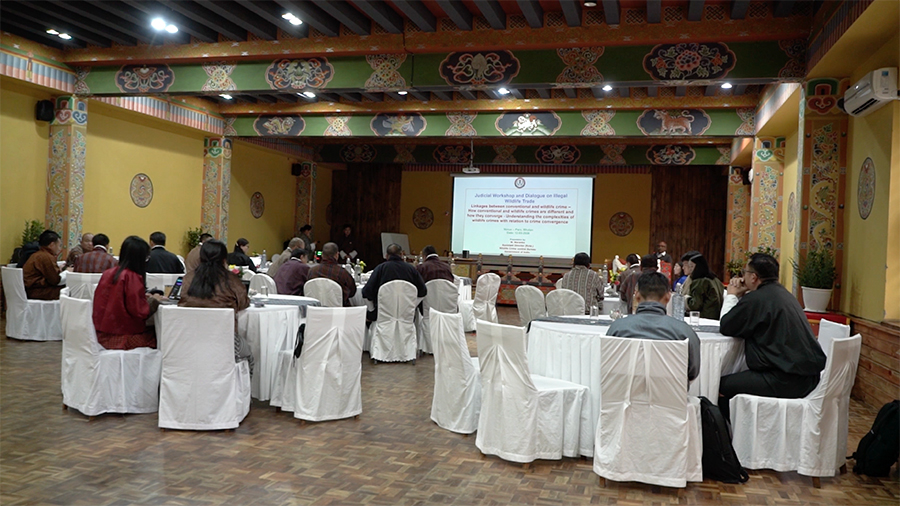 The manual was presented to the judges and legal professionals taking part in the judicial workshop and dialogue on wildlife crime and illegal trade in Paro, to seek their feedback.
Karma Samten Wangda/Karma Wangdi