
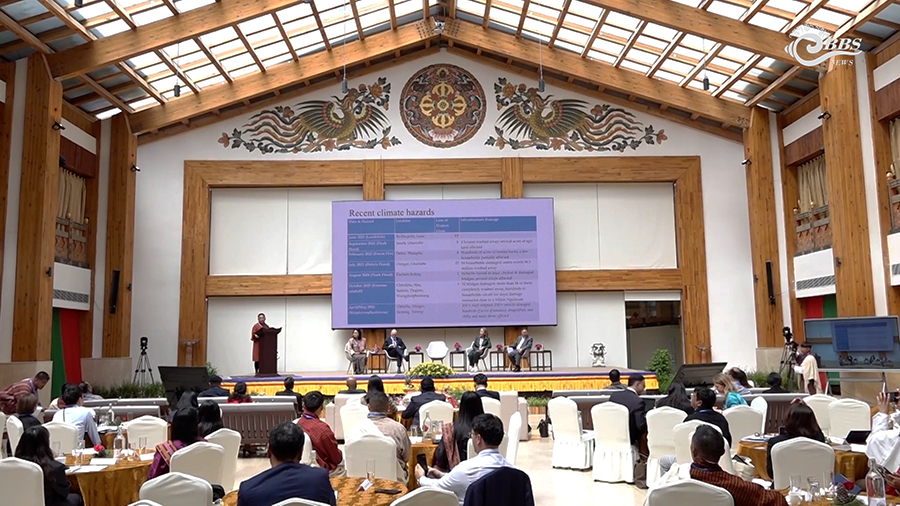
 As climate-related disasters become more frequent, media organisations across the Asia-Pacific region are discussing ways to strengthen efforts to provide timely, accurate information to help communities prepare for and respond to emergencies. This was discussed during the 10th Asia-Pacific Broadcasting Union Summit in Paro. Media leaders, climate and disaster management authorities, scientists, and civil society representatives have gathered to strengthen collaboration and accelerate action on climate resilience.
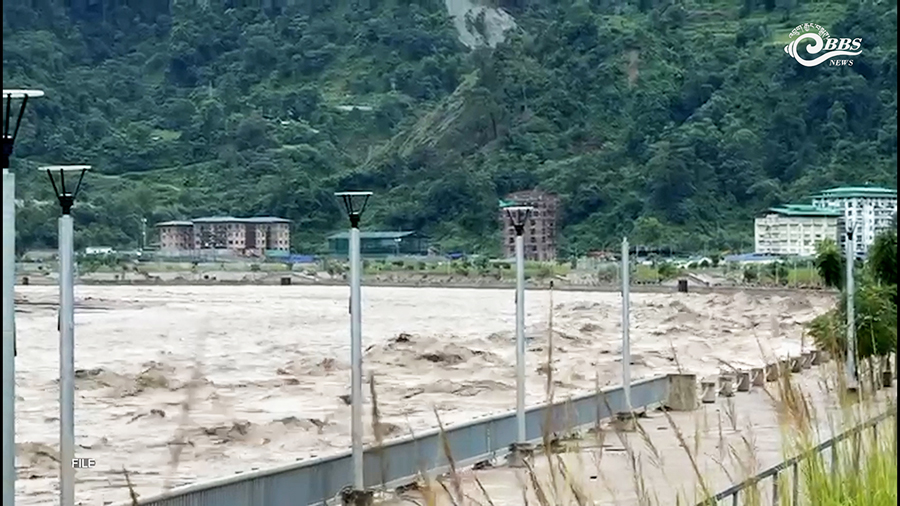 In countries like Bhutan and the neighbouring Himalayan countries, climate change-induced disasters such as landslides, flash floods, and extreme rainfall are becoming more frequent. According to data from the Department of Local Governance and Disaster Management, 46 people lost their lives to climate-related disasters in Bhutan between June 2021 and October last year.
To minimise such losses, speakers at the summit stressed the need for public media to move beyond conventional post-disaster reporting and play a more proactive role in disaster assessment and preparedness.
Speakers, mostly from public media organisations in disaster-prone countries like Nepal and Japan, shared the importance of working closely with government agencies, scientists, emergency responders, and local communities to ensure that timely and reliable information reaches people before disasters occur.
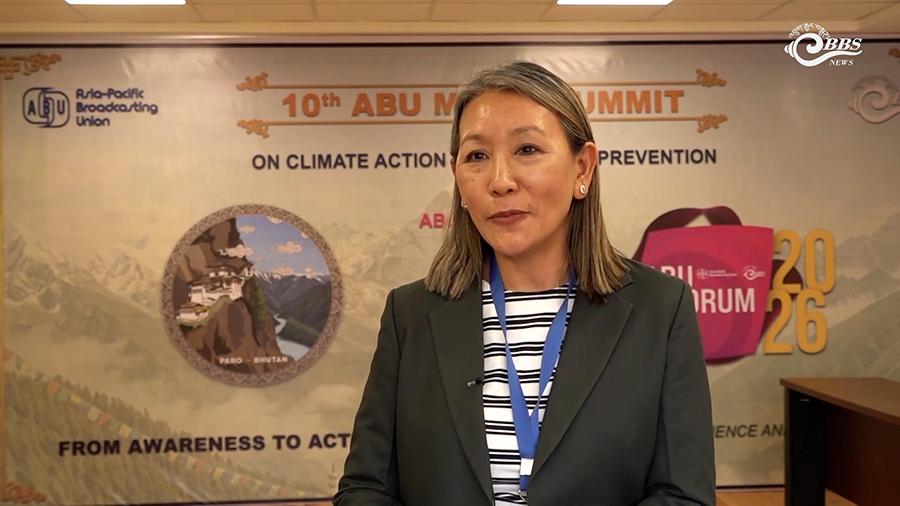
“One of the biggest lessons from the workshop is that we need to work more closely with different agencies. Collaboration is key. Right now, we’re focusing on building capacity and strengthening disaster preparedness. We’re also working with Nepal’s public service broadcaster to improve disaster risk communication and preparedness,” said Shobhana Gurung Pradhan, the country director of BBC Media Action Nepal.
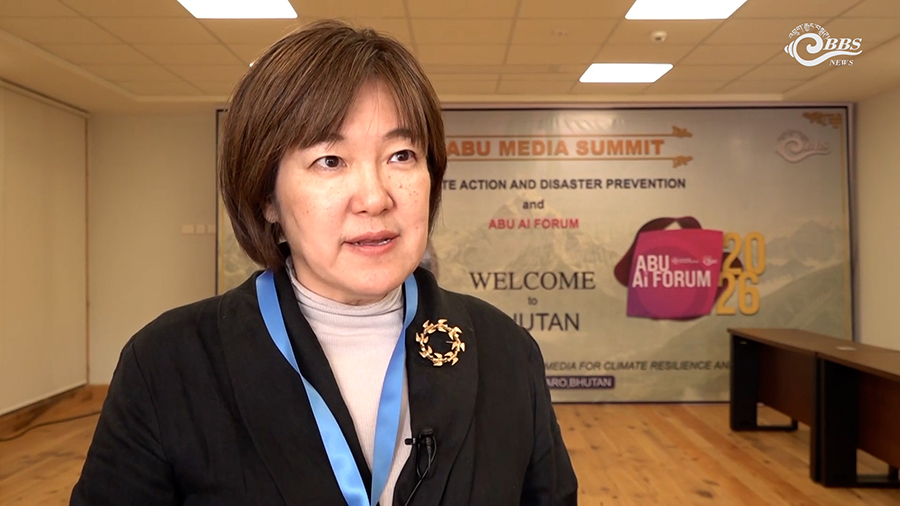
“The first priority is to have an accurate early warning system and ensure timely information reaches the public. People must be prepared and, if necessary, evacuate before the disaster strikes,” said Kudo Noriko, the Deputy Head of Multilingual Media Division with NHK, Japan.
Speakers representing organisations dealing with disaster preparedness shared that trusted public media can serve as a link between scientific information and communities at risk. By disseminating early warnings, raising awareness of potential hazards, and providing clear guidance during emergencies, broadcasters can help people make informed decisions and reduce the impact of disasters.
“We also need to pay attention to upstream catchments and the communities living there, because that’s where disasters often begin. In the case of glacial lake outburst floods, the risk starts high up in the mountains. So our focus shouldn’t be only on downstream communities. We also need to strengthen monitoring, preparedness and support for the people and systems upstream,” said Ugyen Chophel, Offtg. Chief of Meteorology Services Division, NCHM.
Meanwhile, participants at the summit highlighted the need for more coordinated and sustainable early warning systems to achieve the proposed shift.
According to the United Nations Office for Disaster Risk Reduction, disaster-related deaths in countries with comprehensive Early Warning Systems are nearly six times lower than those in countries with limited or moderate systems.
Kuensel Reporter Yam Kumar Poudel said, “Through partnerships and forums like this, we help journalists better understand complex climate data so they can explain it clearly to farmers and other communities who rely on this information in their daily lives.”
As climate change is no longer a distant threat, the summit emphasised that public media have a growing responsibility to help protect lives and livelihoods before they are lost to disasters.
The summit will focus on the role of artificial intelligence for broadcasting and emergency response tomorrow.
Karma Samten Wangda/Sangay Chozom/Kelzang Chhophyel, Paro