
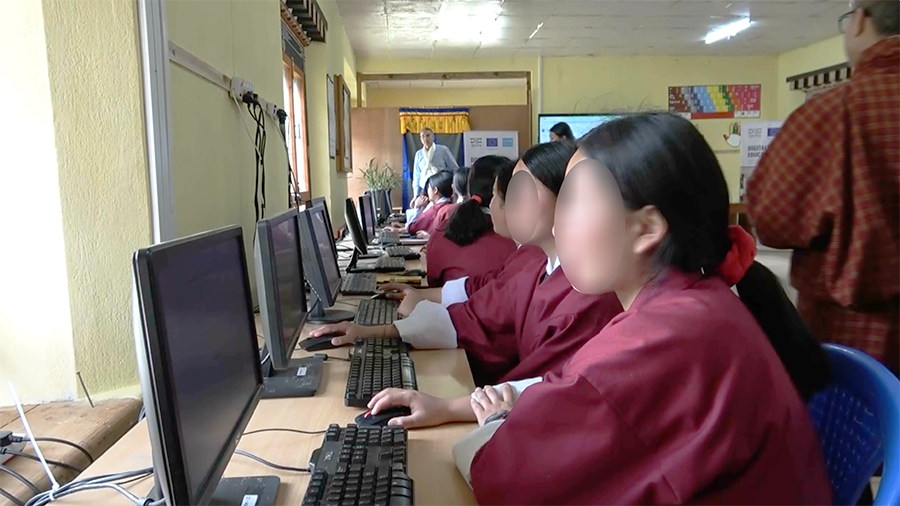
 The digitalisation of education initiative is transforming classrooms across Bhutan through reliable internet connectivity, digital learning tools, and teacher training. The initiative has now connected 10 pilot schools across the country, benefiting more than 6,000 students and 400 teachers. This story highlights how it is shaping the learning experience for the students of Chumey Central School, one of the pilot schools under the initiative.
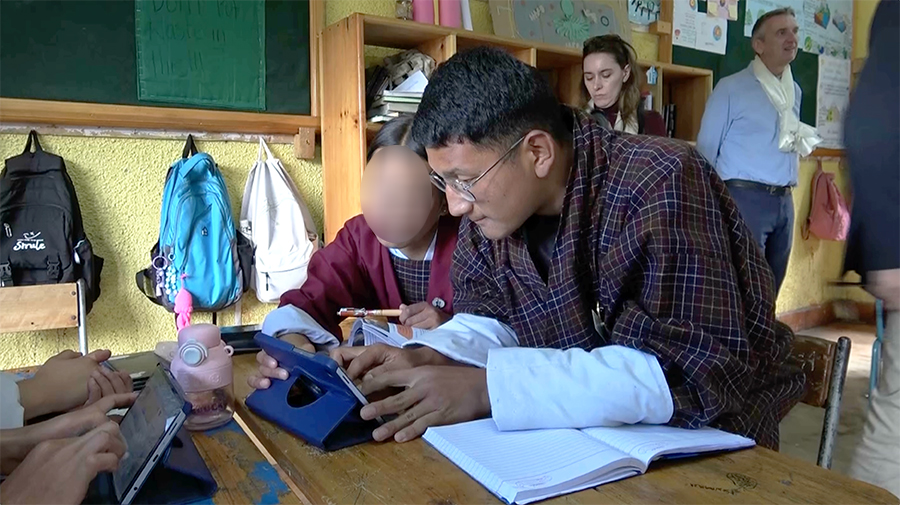 Inside the classrooms at Chumey Central School in Bumthang, students are actively engaging with desktops, iPads, and laptops.
These facilities are helping create a more interactive learning environment while strengthening digital governance and promoting inclusive education for children.
According to teachers, digital learning in the past relied mainly on a single computer laboratory, limiting access for students. However, with campus-wide internet connectivity and digital devices now available across the school, both teaching and learning have significantly improved.
Kencho Dema, School Digital Focal Teacher says Internet connectivity is no longer confined to a single computer. “As a teacher on the ground, I had the privilege of seeing daily, how the European Union and UNICEF’s digitalisation initiative is changing the pace of education in our school.”
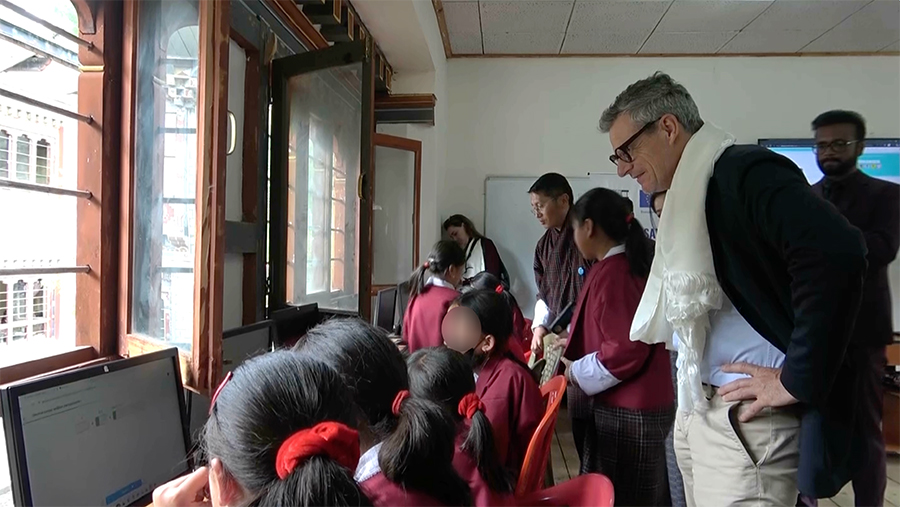 Funded by the European Union with an investment of € 1 M, the initiative is being implemented by the Ministry of Education and Skills Development in partnership with UNICEF Bhutan to bridge the digital divide across the country.
The Ambassador of the European Union to India and Bhutan, Hervé Delphin, visited the school recently and commended the progress achieved through the initiative. “And it is very heartening that to see that, today over 6,000 students and 400 professors across the country are now learning and developing digital skills. And our mission is that, by next year roll it out throughout the country.”
Moving forward, the initiative will expand digital training for teachers nationwide through the Digital Lopen programme.
Beyond internet connectivity, the initiative is also investing in the future of learning through the development of digital content for Science and Mathematics subjects.
Students in classes 9 and 10 will soon have access to digital Science and Mathematics materials aligned with the national curriculum. These STEM resources will be delivered through a central online platform, ensuring that every student, regardless of location, can access them.
Thinley Dorji, Bumthang
Edited by Phub Gyem