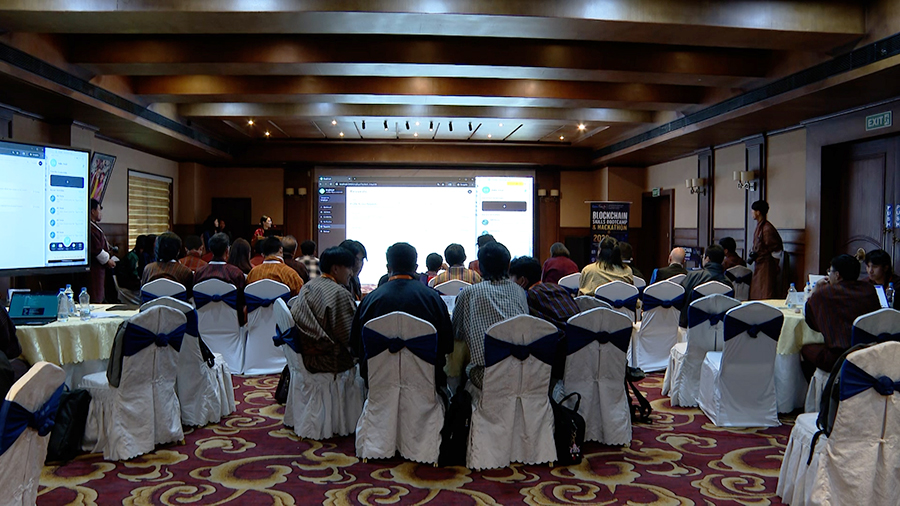
 As Bhutan’s digital ecosystem continues to evolve, young innovators are increasingly stepping forward with solutions that aim to reshape public service delivery through emerging technologies like blockchain. During the GovTech Agency’s blockchain bootcamp and hackathon, aspiring innovators presented various solutions ranging from systems to record academic records to improving transparency in government systems.
Eleven teams comprising students, software developers, and professionals pitched blockchain-based solutions targeting issues such as fake academic certificates, slow inter-agency coordination, document verification, procurement inefficiencies, and unsecured digital transactions.
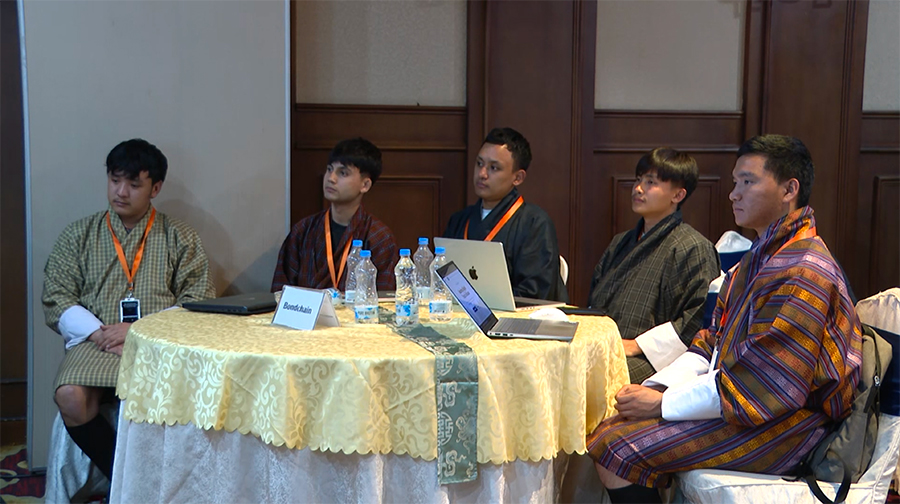 Among the standout innovations was Team BondChain’s blockchain-based digital signing and verification platform integrated with the National Digital Identity system, or NDI.
The platform addresses issues where physical documents submitted to offices can sometimes be altered without a clear audit trail, leading to fraud and disputes.
Their system uses blockchain to create tamper-proof digital records with transparent logs showing who signed or modified a document and when.
The team says this could strengthen trust between citizens and government agencies by enabling instant document verification, while improving transparency and reducing fraud.
“Document is not just a piece of paper. It is also proof of somebody having something, or it’s proof of a decision being taken. My idea involved developing Application Programming Interfaces for the document signing layer, verification, and tracking layers. So, I believe that this API can be integrated into all other systems, solving that very particular problem of centralised data control,” said Jigme Nidup, the winner of the Blockchain Bootcamp and Hackathon.
Team Toffs bagged the second place for developing EDUCHAIN, a blockchain-based academic verification system designed to prevent forged documents and simplify student record verification.
The system allows institutions such as the Bhutan Council for School Examinations and Assessment to upload student marks directly onto the blockchain.
Students can then access results through their NDI login, while universities, including the Royal University of Bhutan, can verify records instantly.
“I surely think that the idea can be properly implemented in Bhutan because we have lots of students who are trying to apply to different universities in Bhutan. And when they do so, the document-tampering processes are kind of high, and the process for obtaining hard copies of the documents is also there. So, we’re able to digitalise that process and implement blockchain in that case,” said Pradee Pokhrel, the runner-up of the Blockchain Bootcamp and Hackathon.
The two winning teams were awarded USD 1,700 and USD 1,300 each, respectively and will also have the opportunity to participate in DevCom or Development Communication in Mumbai.
Throughout the week, participants took part in technical sessions, team-building activities, and mentoring programmes led by local and international blockchain experts.
Organisers say such programmes are helping build local expertise in emerging technologies while encouraging innovation tailored to Bhutan’s needs.
They also add that continued mentorship, incubation support, and stakeholder engagement will be provided to help teams further develop their solutions into real-world applications.
“Moving forward from here, those participants with the MVPs will continue mentorship from the Ethereum and India team, and also from the GovTech team. And moving to the second one, we have continued support in incubation support, like for building this product, they need a resource or tool to develop. So, we have a Bhutan Innovation and Technology Centre in the Tech Park, so we would like to make use of it for free. We also facilitate stakeholder engagement between all the agencies and make the product successful, and basically marketing into the commercialising and thing,” said Kinley Phuentso, the organiser from the GovTech Agency.
Together, innovations highlight how Bhutan’s young developers are not only experimenting with emerging technologies but also shaping practical solutions that could redefine transparency, efficiency, and trust in the country’s digital future.
Namgay Wangdi
Edited by Phub Gyem