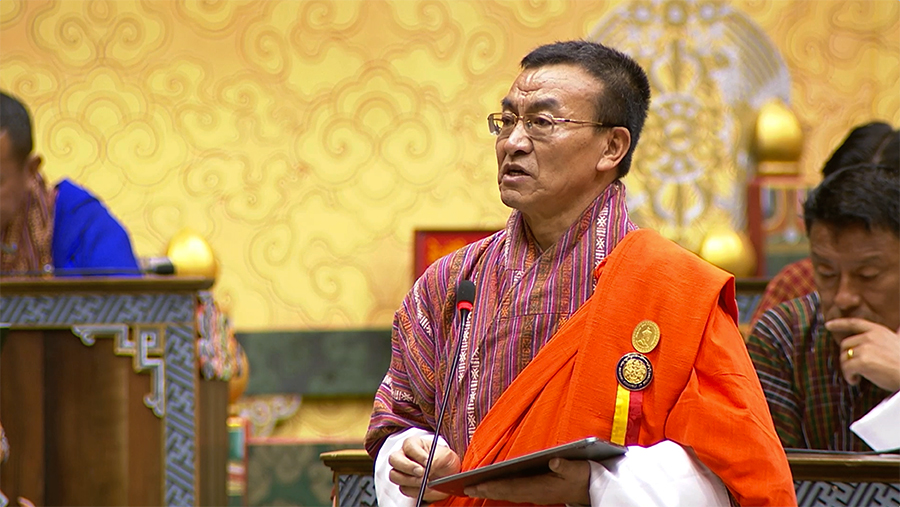
 Just four months after the implementation of the Goods and Services Tax Act, the finance ministry has proposed expanding the list of GST-exempt essential goods. The Finance Minister introduced the Goods and Services Tax Amendment Bill 2026 in the National Assembly today.
Rice, cooking oil, salt, sanitary napkins, diapers and wheelchairs are already exempt from GST. However, the exemptions do not apply uniformly to all varieties of rice, oil and wheelchairs.
However, the finance minister said some essential goods that were intended to be exempt were taxed due to issues related to the Bhutan Trade Classification and Tariff Schedule, or BTC Codes.
Finance Minister Lekey Dorji said, “Following concerns raised and upon the command of the Speaker of the National Assembly, discussions were held between the Economic and Finance Committee and the Finance Ministry to address the issues. The bill has therefore been introduced as a money bill to resolve the problems faced by the people.”
The amendment bill proposes adding twenty-two new BTC Code entries to correct the issue.
It includes 19 categories of commonly used edible cooking oils, such as soybean oil, palm oil, sunflower oil, mustard oil, sesame oil, and coconut oil.
The bill also proposes GST exemption for husked brown rice, red rice known as Yeechum, and semi or wholly milled rice.
Motorised wheelchairs are also proposed for GST exemption. Manual wheelchairs were already exempt.
During the deliberation, several members of the National Assembly said unclear implementation and limited public awareness had caused confusion about GST exemptions.
Trashigang’s Bartsham-Shongphu MP Rinchen Wangdi said, “While going on constituency visits, we found that people are worried. Awareness was not carried out well, and there are different methods of implementing GST. It is really affecting the poor. It is good that the bill is going to be amended.”
Trashigang’s Radhi Sakteng MP Tashi Tenzin said, “People in my constituency shared that, as the country’s economy has not yet recovered and policies and plans to increase revenue and income are still unclear, the 5 per cent GST is a bit high. While amending the bill, how possible is it for the government to reduce the tax to around 2 to 3 per cent?”
“As some items are not included in the BTC code, people have to pay tax for an item and are exempt at others. This has caused confusion among people and serious problems. As the Finance Ministry, on behalf of the government, is now proposing tax exemption on rice, oil, and salt, I would like to thank the government on behalf of the people,” said Lhakpa Tshering Tamang, Sergithang-Tsirang Toed MP, Tsirang.
The finance minister said there were no major systemic problems with the GST system. However, he acknowledged that some goods meant to be exempt were taxed because they were not properly reflected in the BTC Codes.
The proposed exemptions are expected to reduce the cost of living, support household consumption and promote economic welfare.
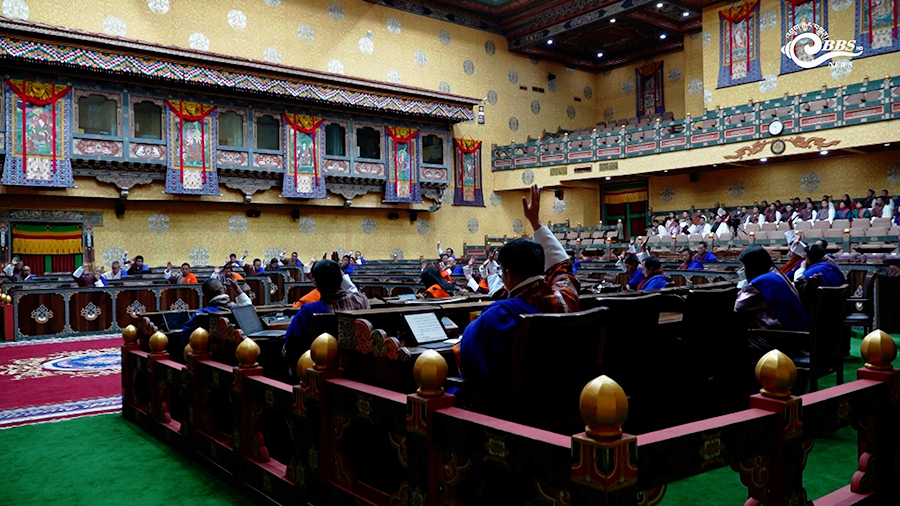 The National Assembly unanimously decided to forward the bill to the Economic and Finance Committee for further review.
Kelzang Chhophyel