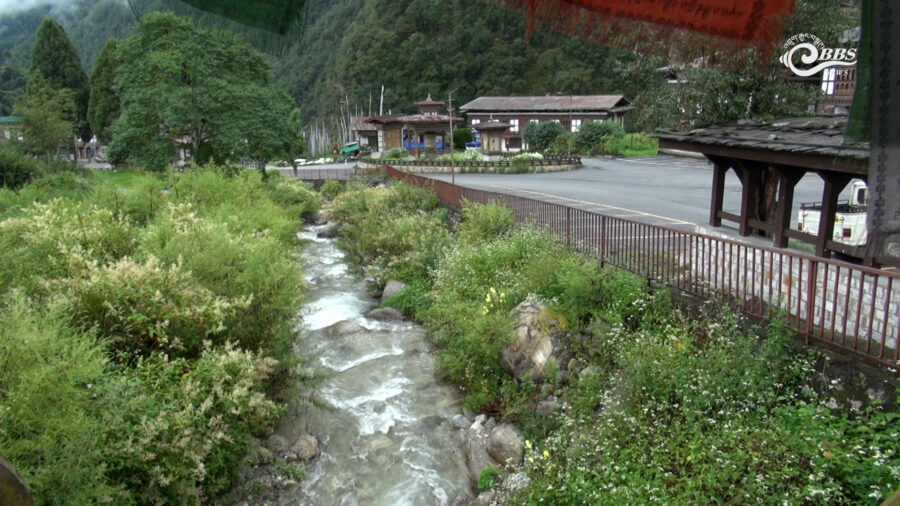
 For people living along Serkangchu in Trashi Yangtse town, rain brings the risk of flooding. They say the stream can rise quickly after heavy rainfall, and they continue to live with the fear of flooding. They are calling for a flood early warning system near the stream’s sources to provide timely alerts.
At first glance, Serkangchu appears calm. However, residents say even a short spell of heavy rainfall upstream can quickly change the situation.
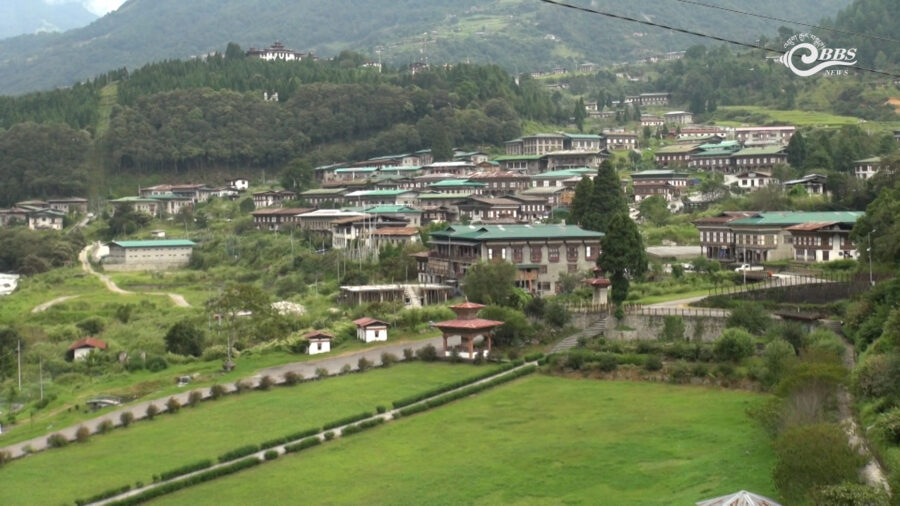
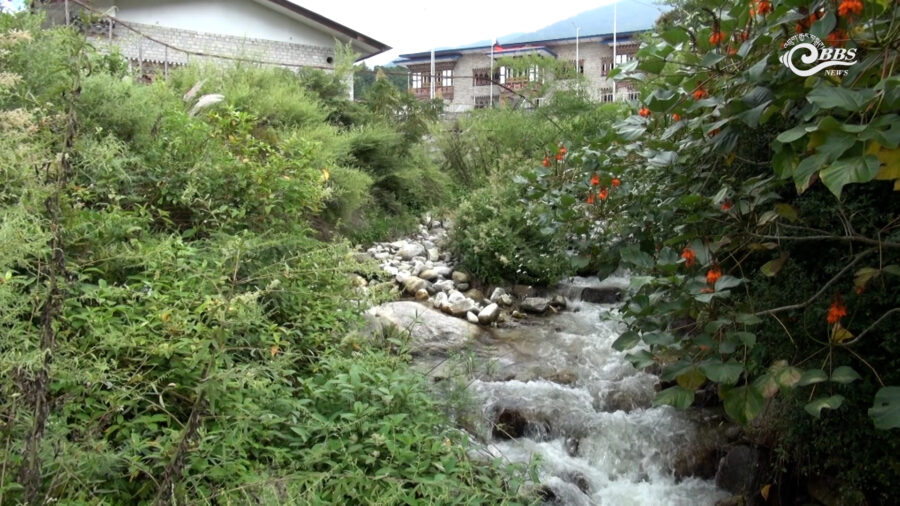 The stream runs through the heart of Trashi Yangtse town, putting homes and businesses close to its banks at risk when water levels rise.
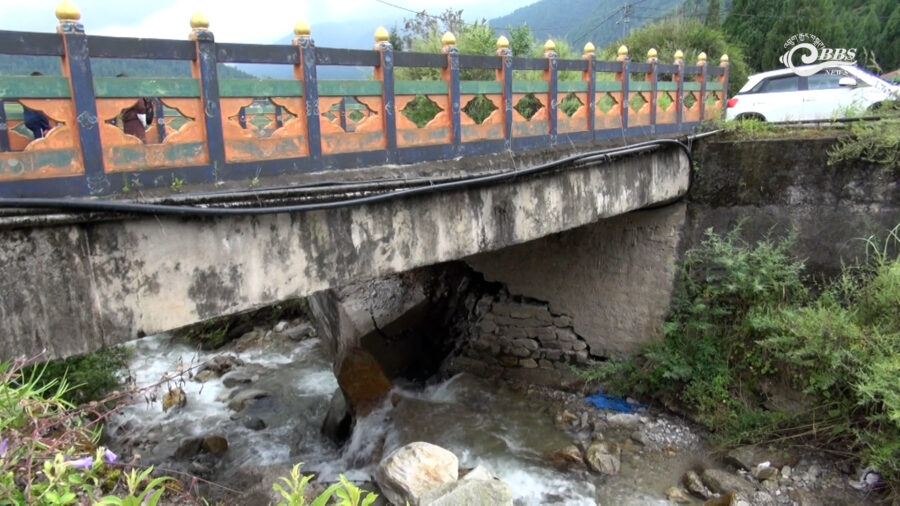 A few months ago, the force of the stream damaged the base of a bridge, disrupting vehicle movement in the town.
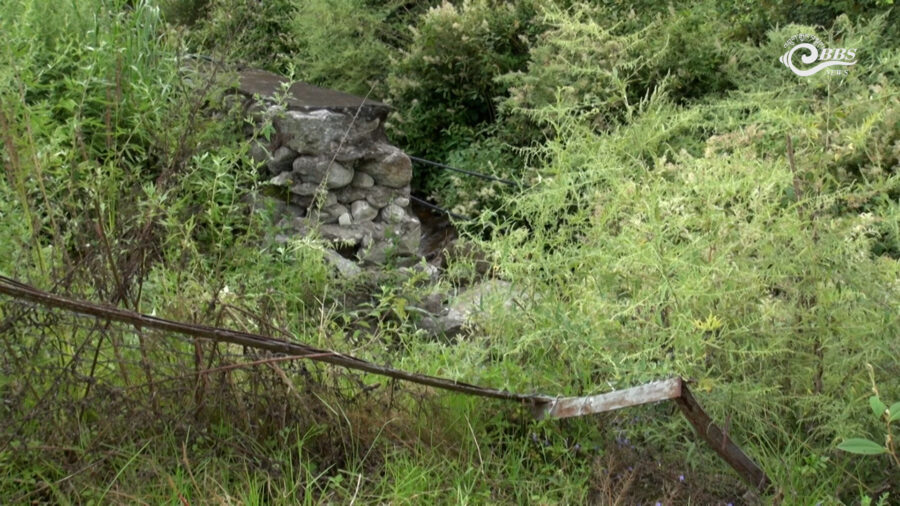 The district administration has built retaining walls along the stream, but parts of the structure have since been damaged.
For residents, the concern is not new. In 2021, a flash flood along the stream claimed the lives of three students.
Since then, some residents say they remain alert whenever it rains, particularly at night when a sudden rise in water could leave them with little time to respond.
“The stream swelled once, but this time, we did not have to run away. However, we still have to keep monitoring the stream. I have heard about the flood early warning system, and I think it would help us if one could be set up near the sources. During the day, at least we can run away and escape, but if the stream swells at night while everyone is asleep, it could be very risky for all of us,” said Gyempo Tenzin, a businessman.
“The moment it rains heavily, we start panicking. We have to keep watching the stream. The sound of rolling stones is frightening. My house needs maintenance, but since I am located in the town area, where there is a constant risk of flooding, I cannot do anything even though I want to reconstruct my house,” said Sonam Tenzin, a resident.
The district administration says it has assessed the area around the stream’s sources and found no signs of lake or pond formation. It says there is currently no indication of a flood threat from a potential lake outburst, and that sudden rises in the stream are mainly caused by heavy rainfall.
As a result, the district has no immediate plan to install a flood early warning system. It says establishing one would require extensive field assessments and surveys.
For now, the district is focusing on repairing damaged structures. It has compiled an assessment of the damaged bridge and retaining walls and proposed financial support through the Department of Environment and Climate Change’s Responding to Loss and Damage Programme.
The district has also allocated Nu 5 M from its 2026–2027 annual block grant to reduce risks to structures along the stream.
 Until then, the district is urging residents to remain vigilant during heavy rainfall.
Sonam Darjay, Trashi Yangtse
Edited by Sangay Chezom