 Online advertising and shopping are becoming part of everyday social media use. Some sellers make their own promotional videos; others turn to influencers to endorse their products. As these posts shape buying decisions, the Competition and Consumer Affairs Authority (CCAA) is calling on businesses, content creators, and social media influencers for responsible advertisements and promotions online.
Last month, two customers in Monggar ordered garments from a TikTok-based business and paid in advance. But the order never arrived. Following their formal complaint to the Monggar police, it was found that a woman operated the online business from Phuentshogling. She allegedly collected advance payments from customers but failed to deliver the products. The police detained her, and the case is now with the Monggar District Court.
This failed delivery is one of the concerns the CCAA is cautioning people about. They are calling for proper verification from both ends – sellers and promoters as well as buyers.
Going by the experiences of some buyers, the risk is not limited to an order that never arrives. It can begin even before they place an order.
A familiar face promoting a product, a convincing video, or a seemingly genuine business page can make an online seller or the product appear trustworthy.
A 29-year-old woman, who requested anonymity, said that she bought a product after an influencer endorsed it online.
“I saw an influencer talking about an anti-hair fall product in a TikTok video. In the video, she said the product helps reduce hair fall and that the changes can be seen within three weeks. Since I struggle with hair loss, I bought the product and used it for three months. However, unlike what was said in the video, I did not see any changes.”
According to the CCAA, social media influencers, content creators, advertising agencies, businesses, and individuals involved in promotions should exercise due care before publishing promotional content. This includes checking whether the business is legitimate, whether it can deliver what it promises, and whether the claims being promoted are accurate.
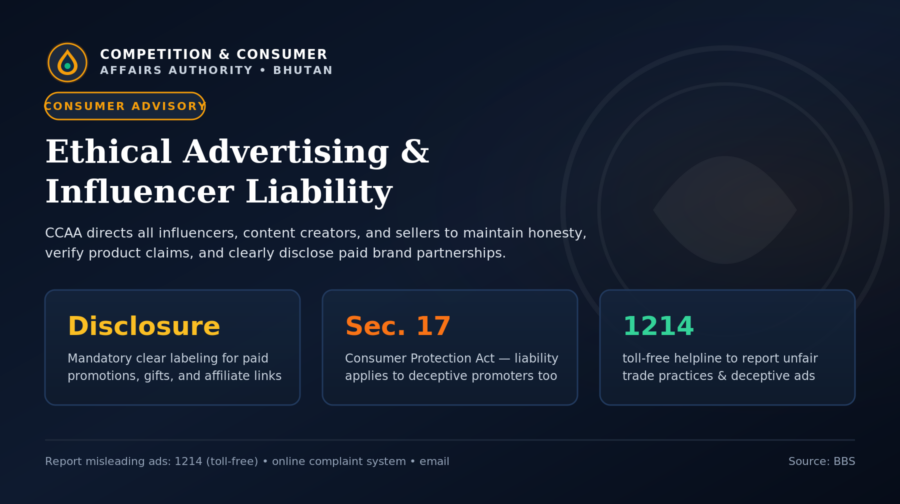
Under Section 17 of the Consumer Protection Act, representations made in an advertisement may be attributed to the person who claims to supply the goods or services, the person on whose behalf the advertisement is made, or both, unless the contrary is proved.
While the section does not directly implicate an influencer or a person promoting a product, the CCAA says their responsibility should lie in understanding the role they played, what was claimed, whether they knew the information was misleading, and whether they exercised reasonable care.
Speaking to BBS, some influencers said they are aware of the responsibilities around misleading claims. They said they try to cross-check information before endorsing products or services. However, they added that paid promotions are not always clearly disclosed in their content.
For now, Bhutan’s existing consumer protection framework does not specifically set out detailed requirements for influencers or sponsored content.
The CCAA says the Consumer Protection Act is being revised. The proposed changes would strengthen provisions on misleading advertising and address issues including false endorsements and fabricated reviews and testimonials.
As social media increasingly becomes a marketplace, the responsibility is shared. Businesses are responsible for the products and claims they make. Influencers and content creators are expected to take reasonable care over what they promote. And consumers, too, can check whether an online seller is identifiable, properly licensed, and able to provide what is being advertised before making a payment.
Consumers who suffer loss or damage from misleading advertising can lodge complaints with the CCAA and may be entitled to compensation under the Consumer Protection Act. Complaints can be made through the authority’s toll-free number, 1214, its online complaint system, or by email.
Tashi Dekar
Edited by Sonam Wangdi