
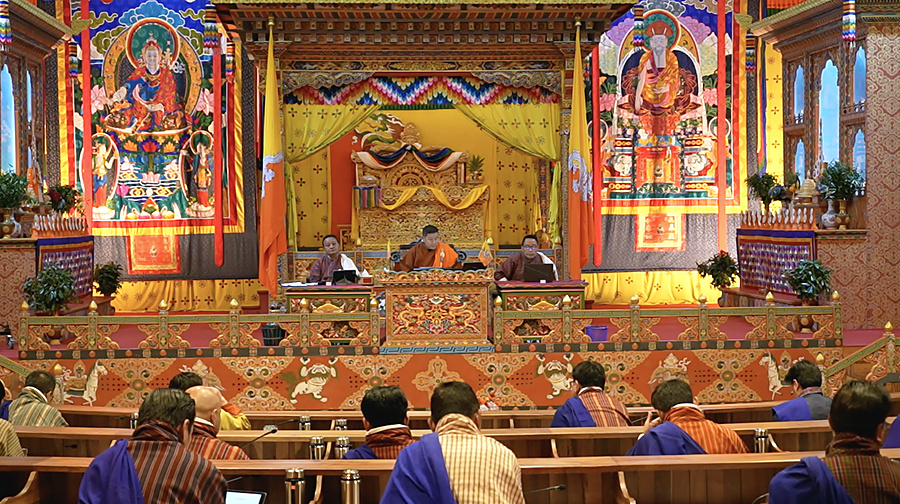
 Should compensation for adultery move with changing times, or stay fixed to a steadier yardstick? This question split the National Council as the members deliberated on revising Gao, the statutory compensation for adultery. While the Natural Resources and Environment Committee suggested increasing the compensation, some members felt the need for a more stable and universal rate.
According to the Marriage (Amendment) Act of Bhutan 1996, a person committing adultery is liable to pay compensation to the aggrieved spouse. The calculation is pegged to the national minimum wage rate of 125 ngultrum and the total number of years of marriage.
In amending this provision, the Natural Resources and Environment Committee is proposing to increase the compensation. They want to raise it to Nu 400, equivalent to the national workforce wage for the unskilled category. The formula to calculate the compensation, however, remains the same.
Chairperson of the Natural Resources and Environment Committee, Birendra Chimoria, said the national minimum wage has remained unchanged for the past 13 years, despite salaries being revised four times during the same period.
He said the Committee felt it was unfair to continue calculating compensation using an unchanged rate when the value of money also changes over time. Therefore, it decided to base the compensation on the national workforce wage rate.
Committee member Leki Tshering said the existing rate could result in a relatively low compensation amount.
He said that, for instance, if a couple had been married for three years, calculating the compensation at the earlier rate of Nu 125 would amount to only around Nu 11,000. The Committee felt this was too low to compensate for the disruption of someone’s married life and proposed using the national workforce wage rate of Nu 400 instead.
However, some National Council members questioned whether the proposed rate would provide a stable and universal basis for calculating compensation.
National Council Member from Trashigang, Sonam Tobgay, said the national minimum wage could be applied universally, regardless of whether a person was a farmer or an employed individual. However, he questioned whether the national workforce wage rate would apply to everyone.
Similarly, National Council Member from Sarpang, Pema Tashi, said the national workforce wage rate is revised from time to time, while fines and penalties are generally calculated based on the national minimum wage, which remains unchanged and makes calculations easier.
The House has failed to reach a consensus on the proposed amendment. As directed by the Chairperson, the Committee will revisit the provision before further deliberations.
Sangay Chozom
Edited by Sonam Wangdi