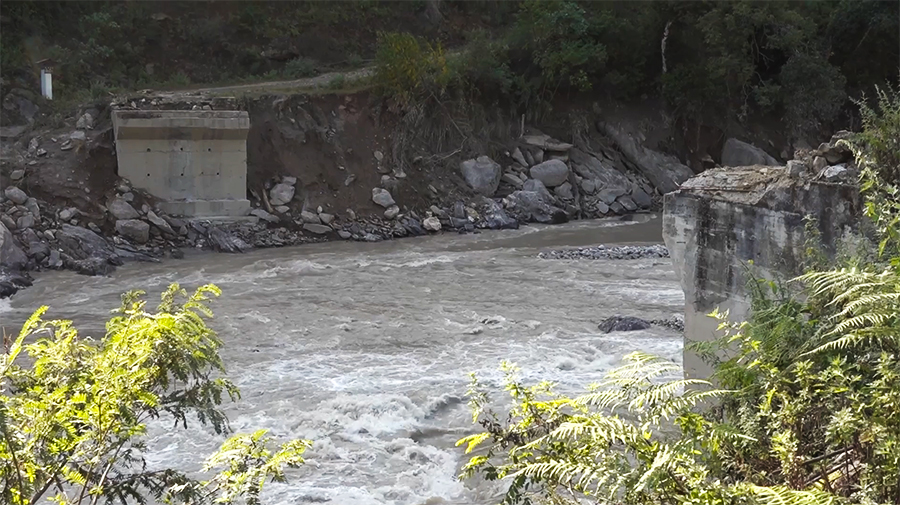
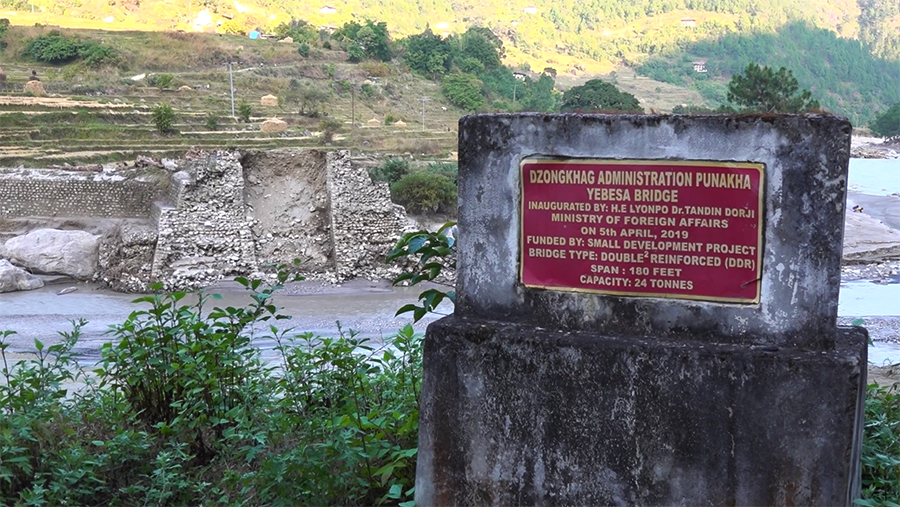
 The Gasa flood last month washed away two Bailey bridges over the Mochhu River, cutting off road access to Bhalue and Yebisa Chiwogs in Chhubu Gewog, Punakha. More than 80 households in the two chiwogs are now struggling to transport farm produce and access essential services. Residents are appealing for urgent support to restore road connectivity.
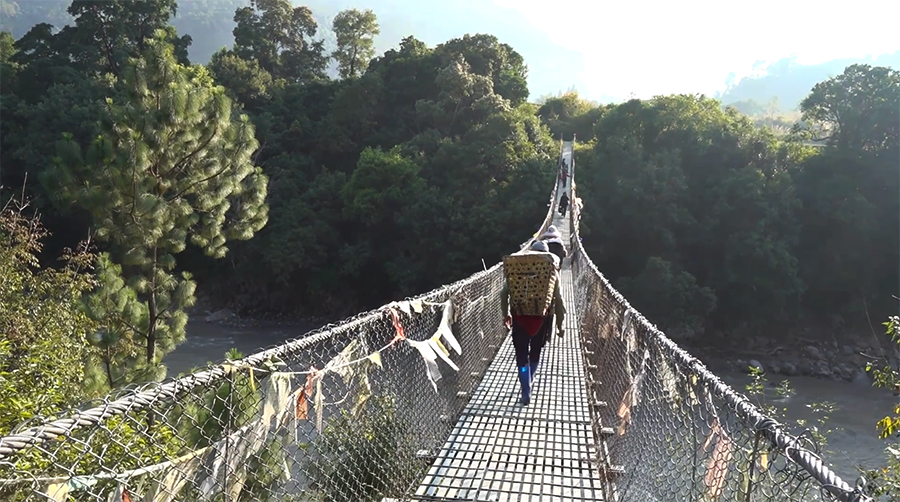 For farmers in Bhalue, taking their produce to the market has become an exhausting task. With the bridge gone, they must carry their harvest on their backs and walk nearly two kilometres to reach the nearest motorable road through an old suspension bridge. The journey takes almost an hour.
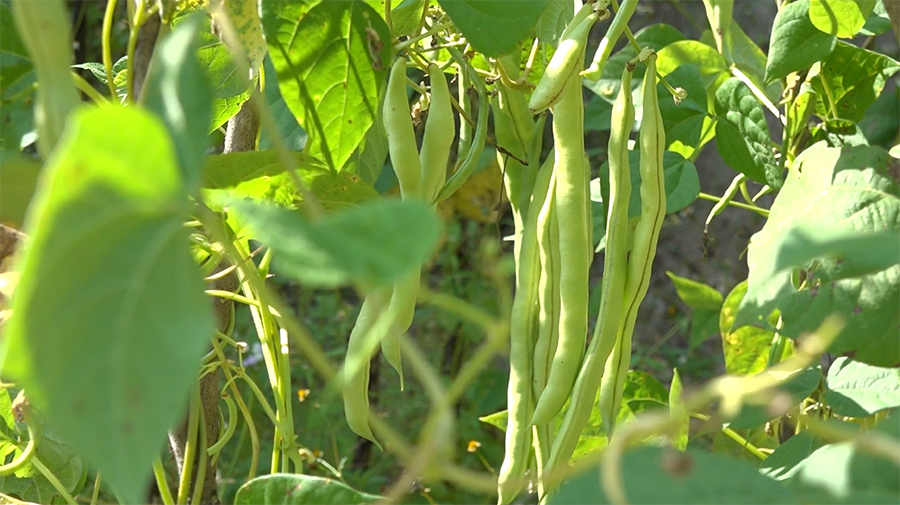 Forty-two-year-old Nidup Dorji was preparing to take his freshly harvested beans to the market when BBS visited him last week. He says the loss of the bridge has drastically reduced the quantity of vegetables farmers can transport.
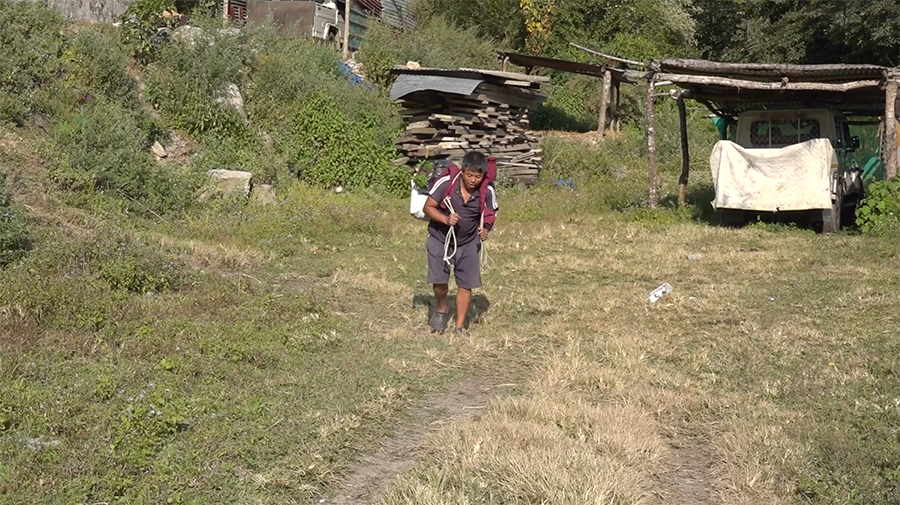 “Earlier, when the road was accessible, we could transport around 30 bags of vegetables at once from our doorstep in a Bolero pickup truck. But now, we have to carry the vegetables ourselves to Zhoshi, and we can hardly transport eight bags in a day,” said Nidup Dorji.
For farmers who cannot carry heavy loads, the situation is even more difficult. Kinley, another farmer from Bhalue, says carrying even one sack of vegetables to the road point is a challenge. He is also concerned that delays in transportation could cause their perishable produce to spoil before reaching the market.
 The loss of road access has also raised concerns over emergency healthcare.
Namgay Thinley, a farmer, says the absence of a bridge could put the lives of critically ill patients at risk. “Without the bridge, there is a risk that a critically ill person could die before reaching the hospital. Losing the bridge has made our lives difficult,” he said.
In Yebisa, residents are relying on an old suspension bridge to cross the river, despite warnings from relevant authorities against using it. With the harvest season underway, farmers are worried about transporting their produce safely.
Sangay Zam, another farmer, says residents are preparing to harvest and sell their guavas and oranges, while the annual ritual is also approaching. She is particularly concerned about transporting paddy from fields located across the river.
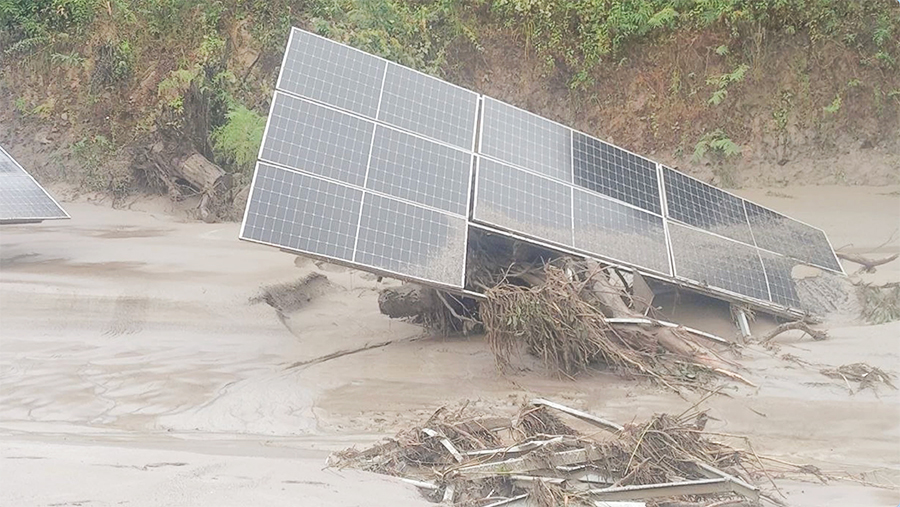 The flood also damaged a solar-powered water-lifting irrigation system. With the chilli cultivation season approaching after the paddy harvest, farmers are concerned about having enough water for their crops.
Meanwhile, the damaged suspension bridge below Yebisa village is expected to be renovated soon, while reconstruction work on the other two bridges is underway.
Bhalue Tshogpa Phurba says the Gewog Administration will provide an excavator, while residents will contribute labour to construct a temporary wooden bridge. “The people will contribute labour. We do not expect the river to swell again until the fourth month of the lunar calendar. Therefore, we are planning to construct a temporary wooden bridge strong enough to allow vehicles to cross and use it throughout the winter season,” he said.
However, residents say temporary arrangements will only provide short-term relief. Restoring reliable road connectivity remains important for transporting farm produce, accessing healthcare and reaching other essential services.
The two chiwogs depend mainly on fruits and vegetables for their livelihoods.
Changa Dorji, Punakha
Edited by Passang