
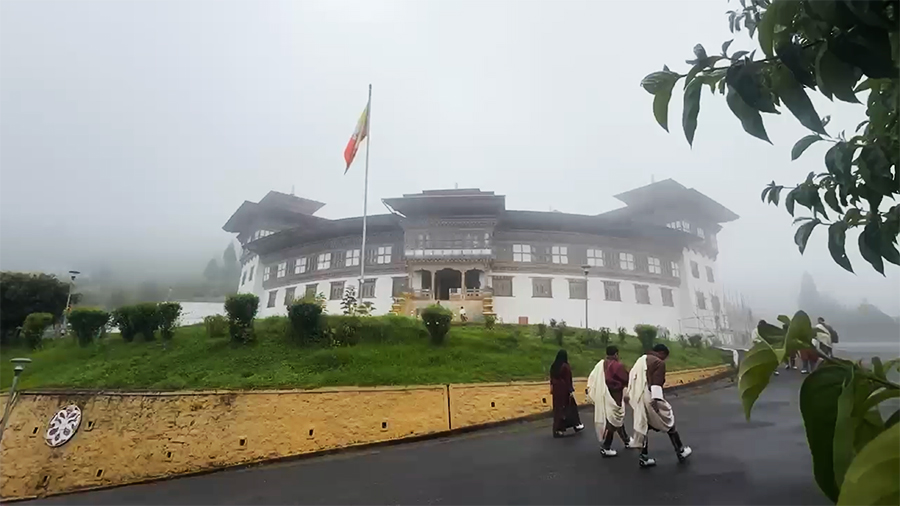
 As the country prepares for the Local Government elections, the revised Functional Literacy Test is drawing mixed reactions. During the Chhukha Dzongkhag Tshogdu, local leaders called for a minimum educational qualification for candidates. Others questioned why experienced candidates who had already passed the Functional Literacy Test must sit for it again.
Some local leaders said setting a minimum educational qualification for aspiring local government candidates would be more convenient. They said it would also reduce the need for the Election Commission to conduct the Functional Literacy Test every five years.
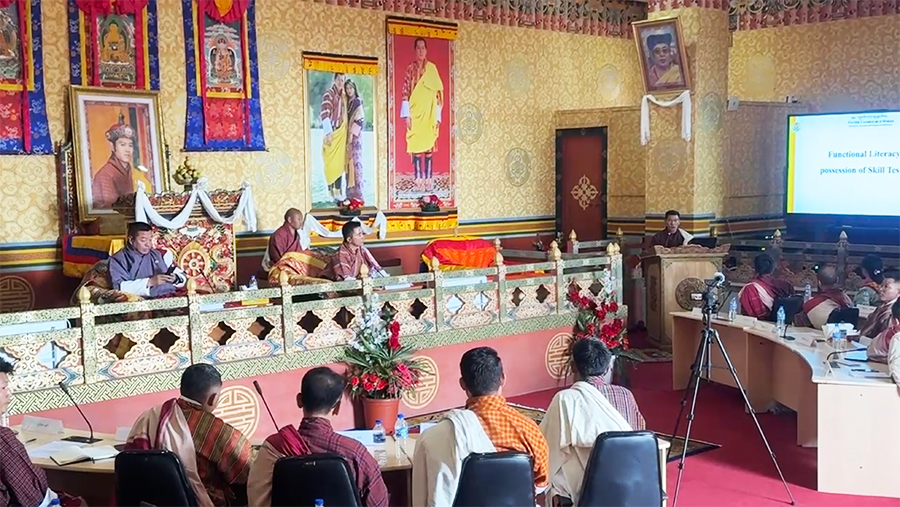 Some members also questioned why candidates who had already obtained an FLT certificate were required to sit for the test again.
Bjabchho Gup Tashi said, “It will be convenient if a certain qualification standard is set, like Class VIII or X. If such a standard is introduced and I do not qualify, I simply will not contest because I know I am not eligible. Another concern is that the certificate we earned earlier is of no value now, as we have to sit for the test again to obtain a new certificate. We are not happy about this because once a certificate is issued, it should not lose its validity.”
“We respect the fact that education and certification requirements for candidates are beneficial and have served their purpose so far. However, setting a qualification standard would be more convenient for those contesting the elections. It would also ease the Commission’s burden of having to conduct similar tests every five years,” added Geling Gup Kinley Dorji.
Others said educational qualifications and competency tests alone do not guarantee effective leadership.
Maedtekha Gup Passang Tshering said,”Certain qualification standards are important, especially with changing times, as most work is now done online using computers. However, having a degree alone does not necessarily make an effective local government leader. A leader must also be able to work closely with villagers, remain active, be willing to serve at any time, earn people’s trust, and communicate effectively.”
The Election Commission revised the Functional Literacy Test, citing greater decentralisation and expanded responsibilities of Local Governments.
According to the Commission, the revised assessment is intended to ensure aspiring local leaders possess the administrative, leadership, policy, planning and public service delivery skills needed to serve increasingly digital communities.
The District Election Officer explained that the revised test has two components: the Functional Competency Assessment and the Functional Competency Engagement.
Together, they assess candidates’ reading, communication, computational, analytical and digital skills, as well as their ability to make decisions, manage public resources and deliver local services effectively.
He said that candidates contesting the posts of Gup, Mangmi and Thromde Ngotsab must obtain a Level One competency certificate. Those contesting the posts of Thromde Tshogpa and Chiwog Tshogpa require a Level Two certificate.
Existing FLT certificate holders contesting only for Tshogpa will be issued a Level Two certificate without sitting for another test.
However, candidates contesting for Gup and Mangmi, including those who already hold an FLT certificate, must take the revised test to obtain a Level One certificate.
In Chhukha, nearly 130 individuals have registered for the Functional Literacy Test so far.
The Dzongkhag Tshogdu has decided to write to the Election Commission of Bhutan, requesting it to review the concerns raised by members regarding the revised testing requirements.
Kinley Dem
Edited by Sangay Chezom