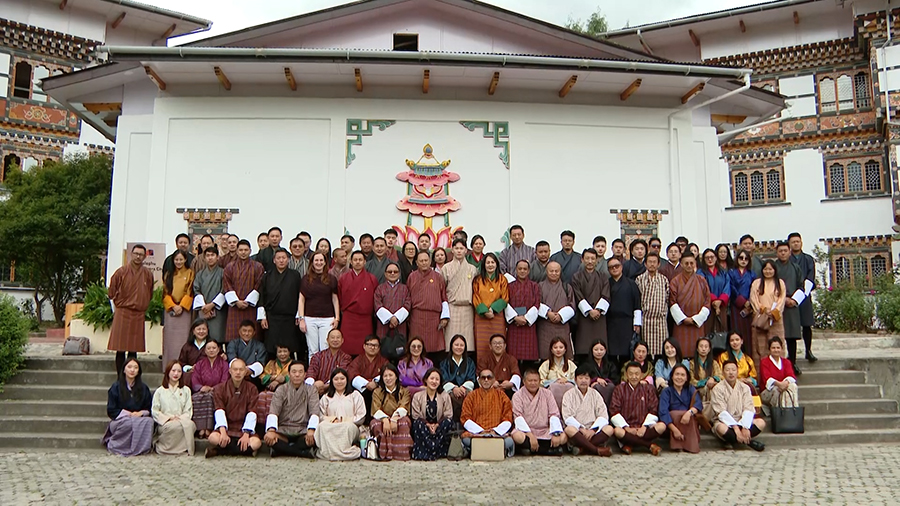
 Tourism is one of the eight priority sectors of the Gelephu Mindfulness City Project. But what kind of tourism future is the GMC building and who gets to be part of it? At the GMC Tourism Investment Opportunity Forum today, the headline message was clear. Officials say Bhutanese businesses, from family operators to young entrepreneurs, sit at the centre of the plan.
From adventure parks and capsule hotels to water festivals and alpine coasters, the GMC unveiled a broad portfolio of tourism investment opportunities aimed at shaping its future tourism landscape.
Officials presented 20 tourism attractions and 20 tourism activities, with investment sizes ranging from about USD 100,000 to over USD 40 M.
Rabsel Dorji, the managing director of Tourism GMC said, “This forum is really about opening the door wider and highlighting that GMC is not only for large or foreign investors. It is also designed as a platform for Bhutanese entrepreneurs, small and medium enterprises, family businesses, local operators, and young people. That is where we see huge opportunities.”
Officials also introduced a formal Expression of Interest (EOI) system, through which proposals will be submitted and evaluated under a structured process before approval.
Rabsel Dorji said, “We have an evaluation framework in place. We look at whether a proposal is aligned with GMC Tourism’s broader vision and mission, so strategic fit is important. We also assess the potential economic impact of the proposal, including how many jobs it can create and the revenue it is expected to generate.”
To help investors raise capital, the GMC has partnered with DK Bank on financing tailored to tourism projects – a set of options meant to make these ventures more accessible to small players.
“If you look at our regulatory frameworks, our laws and policies are designed to be business-friendly, including commercial laws, tax regimes and various tax incentives. We have also introduced the Tourism Spark Fund, worth about Nu 30 M, to support potential investments and provide micro-grants, interest-free loans, and even equity participation. We are exploring these different financing options to support the sector,” said Rabsel Dorji.
Officials say the GMC is looking for innovative, sustainable and experience-based tourism and hospitality projects that fit the city’s long-term vision.
As GMC moves from concept to execution, officials say the real test will be how quickly Bhutanese entrepreneurs step forward to turn these ideas into projects on the ground. For many in the room, the message was clear, GMC is no longer just a vision on paper, but an open invitation to help build Bhutan’s next tourism hub, one investment at a time.
Kinley Bidha
Edited by Sonam Wangdi