 From this academic year, students will no longer need to score at least 40 per cent separately in both the written examination and continuous assessment (CA) to pass. Instead, students will be assessed based on their combined score from the written examination and CA, with a minimum overall score of 40 per cent required. The Education and Skills Development Minister announced the change during the National Assembly’s question hour session today, following concerns over the increasing number of students failing Dzongkha.
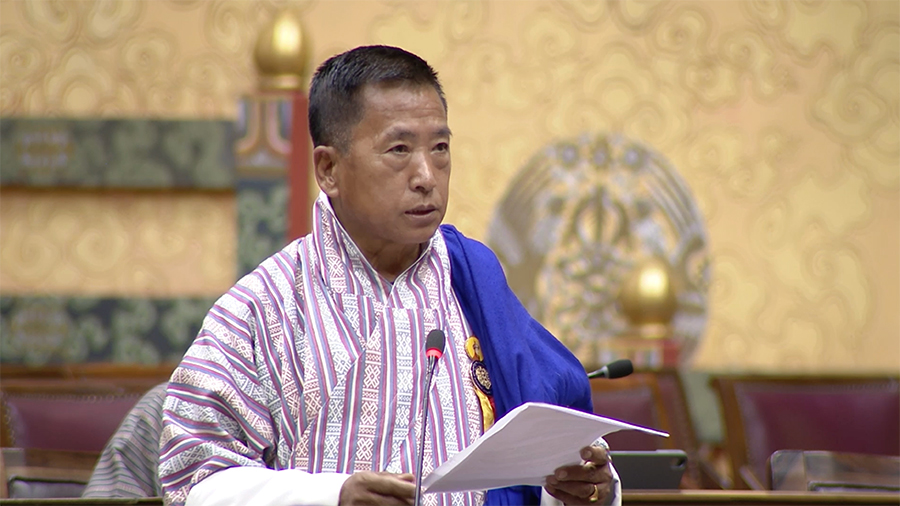 The Khar-Yurung Member of Parliament from Pema Gatshel questioned why Dzongkha has become one of the biggest academic hurdles for Bhutanese students.
According to the Bhutan Council for School Examinations and Assessment, more than five thousand Class VI and VIII students failed the Dzongkha subject from 2023 to 2025.
The MP called for a review of the subject and questioned the effectiveness of the current teaching methods and assessment system.
‘‘Does the Ministry have plans to revisit the ‘must-pass’ subject policy? Does the ministry also plan to review the Dzongkha curriculum, teaching methods, and assessment system to make the subject more accessible and improve student performance?’’ questioned Sangay Thinley, MP, Khar_Yurung, Pema Gatshel, NA.
In response to this, the Education and Skills Development Minister said that Dzongkha has been performing relatively well compared to STEM subjects.
The minister said the overall pass rate in Dzongkha board examinations has consistently remained above 90 per cent in recent years.
‘‘BCSEA has reviewed the assessment framework. Beginning with the 2026 board examinations, the pass percentage for Dzongkha, as well as other subjects, will be determined by combining the written examination and continuous assessment marks. Previously, students were required to score at least 40 per cent in each component. From 2026 onwards, students will pass if they achieve an overall score of 40 per cent through the combined marks,’’ said Yeezang De Thapa, Education and Skills Development Minister.
Dzongkha is taught using a competency-based learning and assessment approach aligned with the Cambridge curriculum.
The subject focuses on four key areas, that is, listening, speaking, reading, and writing skills, from PP through Class XII.
The minister further added that while the ministry is making every effort to improve learning outcomes, responsibility does not rest solely with teachers. Parents and students must also play their part.
Sonam Yuden
Edited by Sangay Chezom