
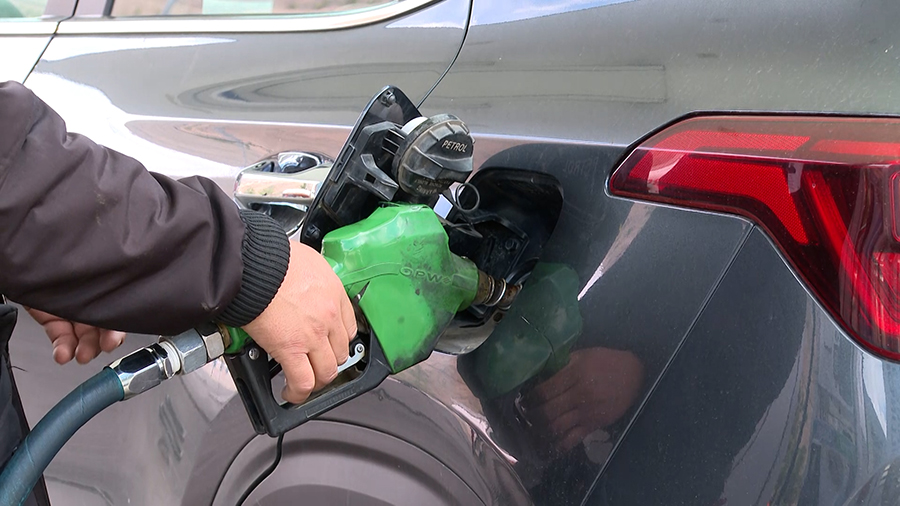
As fuel subsidy expenditure exceeds the allocated budget, the Royal Audit Authority has recommended that the government undertake an immediate fiscal impact assessment. Through its Auditor General’s Advisory Series on Fuel Price Support, the RAA is also calling on the government to make the scheme fairer, more targeted, and time-bound.
The government is currently incurring a significant fiscal risk in providing subsidy under the National Fuel Price Smoothening Framework. As per the report, the price support to date has cost the government Nu 1.46bn, far exceeding the initial allocation of Nu 1bn under the Economic Stimulus Programme. The spending has also reached around 90 per cent of the Nu 1.6bn threshold set by the Cabinet.
The RAA cautioned that what was intended as a temporary macroeconomic stabilisation measure has evolved into a major fiscal commitment that threatens the country’s reserves and reduces fiscal space for other priorities. Besides, the broad-based price support does not sufficiently distinguish between essential and non-essential use. As such, the Authority is recommending the government to assess the possible impact of continued support on fiscal deficits, current account balances, reserves, and present options for adjusting the price ceiling, scope of support, or rationalisation measures.
With the petrol price support withdrawn during the last cycle, the fiscal burden is now mainly driven by diesel consumption. Therefore, the RAA suggests the government to focus on monitoring and rationalising diesel-intensive consumption across high-use sectors such as transport, construction, industry, and agriculture. Rather than removing support entirely, the report recommends a targeted approach that continues subsidies for essential and productive activities while reducing non-essential or high-consumption use.
The report also stated that the framework may introduce better monitoring of fuel use by sector, vehicle type, category, and consumption patterns to reduce leakage and improve fiscal efficiency.
As per the Authority’s findings, the withdrawal of petrol price support also adversely affected the petrol-driven taxi operators. While their operating costs have increased, fares remain regulated. This, as per the report, has affected income and placed many operators at risk of financial distress. The RAA recommends the government to consider providing appropriate support to them. Currently, there are around six thousand petrol-driven taxis compared to some 400 diesel-driven taxis in the country.
The report stated that while the framework aims to moderate fuel price shocks and encourage fuel conservation, the support mechanism is mainly applied through fuel pricing and does not appear to provide a clear incentive for shifting from individual private vehicle use to shared mobility options such as public buses, school transport, taxis, and pooled transport arrangements.
Findings include while diesel-driven passenger buses and school buses may benefit indirectly from the general diesel price support, there is no separate targeted support or incentive mechanism to encourage their use as substitutes for private vehicle travel.
The report recommends improving the reliability and coverage of public buses, promoting pooled school transport arrangements, encouraging shared mobility options, and optimising routes and service schedules based on demand. Such measures would help reduce household fuel expenditure, traffic congestion, and overall fuel consumption, while supporting affordable and accessible mobility for the public.
Further, the report recommends strengthening non-fiscal measures such as walk-to-office, remote work arrangements, improved vehicle pooling, restrictions on official travel, and promotion of public transport. It also calls for the introduction of a robust monitoring system for these non-fiscal measures.
Other recommendations include developing a recoupment and exit plan early. The report stated that early development of the plan is important because the current price support is being financed from public resources and has already created significant fiscal exposure.
As per the latest announcement, the retail prices are maintained at Nu 109.85 per litre for petrol and Nu 100.89 per litre for diesel in Thimphu.
The Auditor General’s Advisory Series is issued under the legal mandate of the Auditor General and the Royal Audit Authority, as provided in the Constitution and the Audit Act. These provisions require the authority to audit and report on the economy, efficiency, and effectiveness of public resource utilisation.
Sonam Yuden