
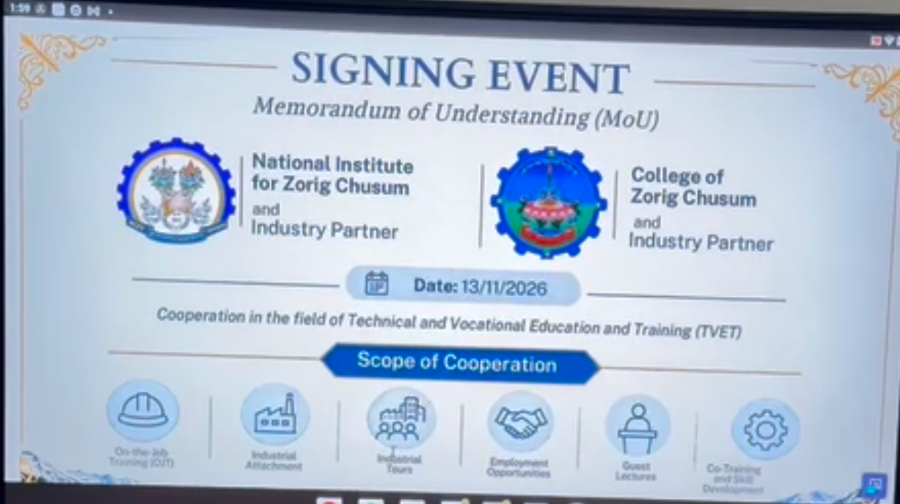
 Despite continued efforts to preserve traditional arts and crafts, finding skilled workers remains a challenge. While institutions continue to train young people, some graduates are reluctant to pursue careers in the trades they studied. To bridge this gap, the National Institute for Zorig Chusum and the College of Zorig Chusum signed agreements with industry partners.
Bhutan’s thirteen traditional arts and crafts preserve centuries of cultural knowledge. But finding people willing to carry these skills forward is becoming a challenge.
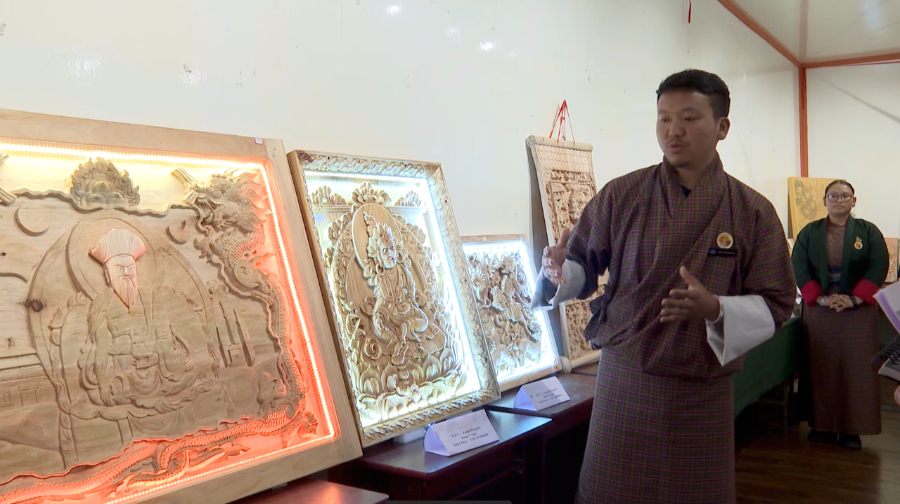 Businesses say even graduates trained in traditional crafts are reluctant to join the industry.
Nim Dorji, Proprietor of Bodhisattva Sculpture, said, “Some graduates accept the work, while others are not fully committed. Those who come to work with me, I teach and guide them to do it in the easiest and most convenient way. It takes around four to five years for them to acquire the basic skills needed to succeed.”
Kinley Wangchuk, Proprietor of Druk Patra, said, “Labour shortage in wood carving is a major issue. Graduates are reluctant to take up work in this field and often opt for other professions. In the future, as developments such as the Gelephu Mindfulness City combine modern technology with traditional methods, the government should also be concerned about how we sustain our traditional craftsmanship.”
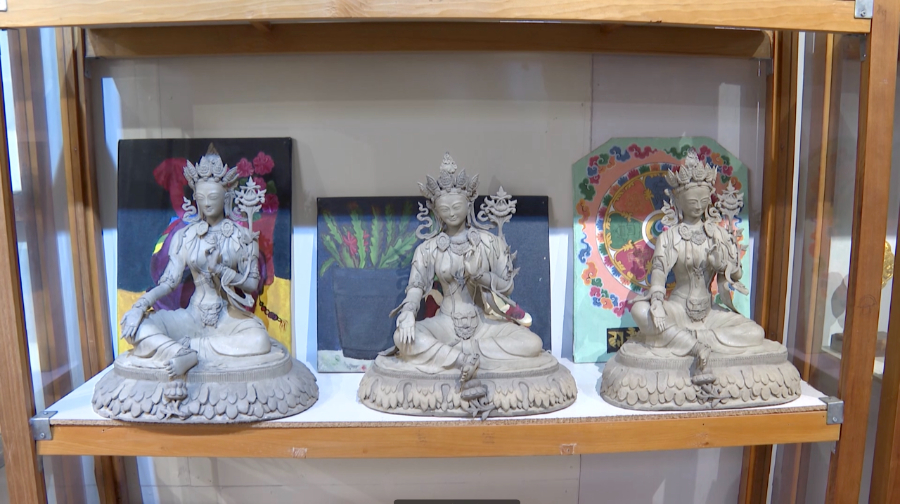 For graduates, however, better payment and working arrangements are equally important in making these professions attractive.
Sangay Wangdi, an alumnus of the National Institute of Zorig Chusum, said, “Proper payment and the necessary working arrangements should also be in place alongside employment opportunities. This would benefit both the employees and employers.”
The National Institute for Zorig Chusum in Thimphu and the College of Zorig Chusum in Trashi Yangtse signed agreements with more than fifteen employing firms during the first Industry Forum. It brought together artisans, employers, alumni and trainees.
The agreements cover on-the-job training, industrial attachments, internships, guest lectures and joint skills development, while encouraging industries to consider qualified graduates for employment.
With growing opportunities in tourism, contemporary architecture and interior design, stronger industry partnerships could help expand markets for Bhutanese crafts and create employment for graduates. Ultimately, sustaining traditional craftsmanship will depend on making it not just a cultural heritage, but also a viable career.
Anita Chhetri
Edited by Tandin Phuntsho