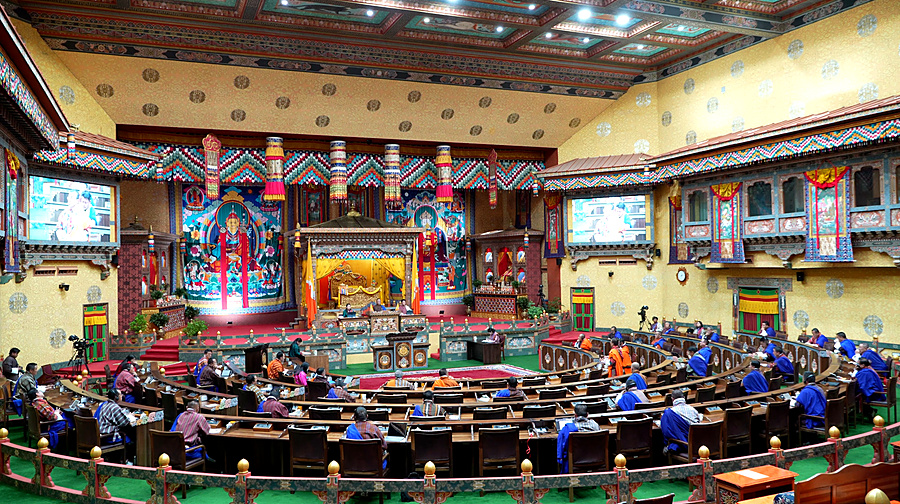
 The Mines and Minerals Bill 2026 was introduced in the National Assembly, and the House has unanimously agreed to deliberate on it. Following its first and second readings, the Speaker has referred the Bill to the Environment and Climate Change Committee for review. The Committee is expected to present its findings during the next session, ahead of the Bill’s third reading.
The Bill seeks to replace the Mines and Minerals Management Act of 1995, which has remained in place for 31 years.
The proposed legislation aims to strengthen the management and regulation of the country’s mineral resources, promote transparency and accountability, and ensure that mining activities are environmentally and socially responsible.
Energy and Natural Resources Minister Sonam Tashi said the Bill provides a comprehensive legal framework to strengthen governance of the mines and minerals sector, encourage responsible investment, protect the environment and ensure equitable distribution of benefits.
The Bill comprises 15 chapters and 156 sections and was drafted in consultation with relevant agencies, the minister said.
One of the key areas addressed by the Bill is the classification of strategic minerals. It is expected to provide a clear list of strategic minerals to avoid confusion over who can mine them.
National Assembly Member Pema Drukpa from Khamaed-Lunana constituency in Gasa said the existing legislation had remained unchanged for 31 years, making its revision necessary.
He said an amendment was submitted to the National Assembly in 2020 but could not be implemented. If passed, he said, the revised legislation is expected to benefit people across all 20 districts and 205 gewogs by strengthening the management and development of the mines and minerals sector.
The Bill also covers provisions related to mineral exploration, mining and quarrying, environmental risk management, community engagement and revenue collection.
The Environment and Climate Change Committee will review the Bill and present its findings in the next session before it proceeds to the third reading.
Devika Pradhan & Namgay Wangdi
Edited by Sonam Wangdi