
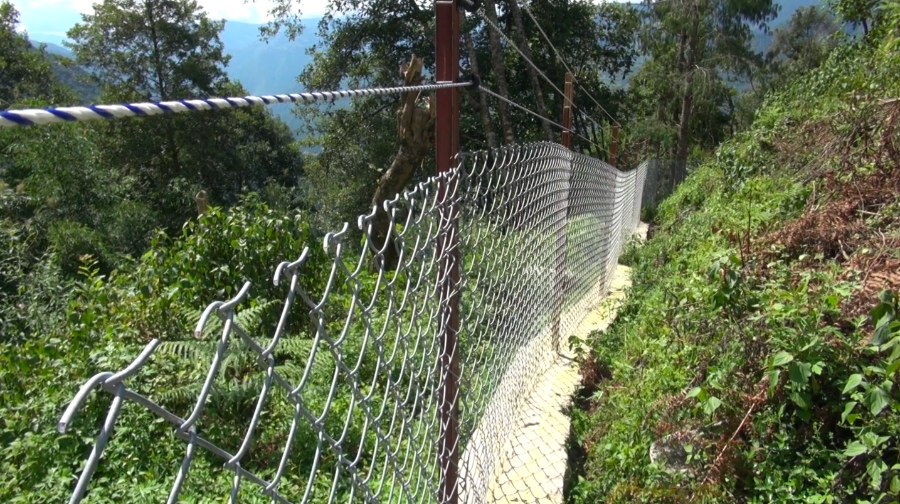
 A chain-link fence covering more than 400 acres of farmland has come as a huge relief for farmers of Shongphu in Trashigang. Around 300 households no longer have to guard their crops against wild animals. But while the fence has brought a sense of security to one chiwog, farmers in neighbouring chiwogs without fencing say they are now facing greater pressure from wildlife.
The 8.6-kilometre chain-link fence covers around 415 acres of farmland belonging to 302 households of Shongphu Chiwog.
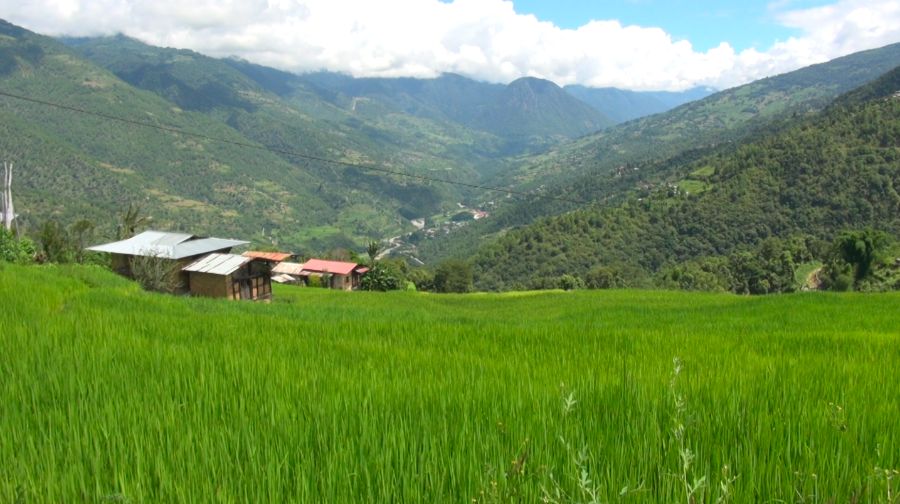 Inaugurated last month, the fence was constructed with support from the Government of India.
For farmers in Shongphu, it is already making a difference.
Jigme, a resident, says that wild animals damaged crops even when the fields are in the middle of the settlement. “Farmers whose fields are away from the village had to spend a lot of time guarding their crops. But with the chain-link fencing, we no longer have to guard our fields. Except for occasional encroachment by porcupines and deer, wild boars and other animals have almost completely stopped entering into our farmland.”
“We had left some of our fields fallow for several years. But this year, with the chain-link fencing in place, we have started cultivating them again. From now on, I think we can work harder and make better use of our farmland. This will benefit not only farmers but also the government. We are planning to cultivate crops throughout the year,” said Norbu Wangdi, another resident.
However, not every household in the area is benefitting from the fencing.
With farmland in Shongphu Chiwog now secured, farmers in neighbouring chiwogs say wild animals are moving into fields that remain unfenced.
For 60-year-old Yeshi Choden in Galing Chiwog, protecting her crops has become a daily struggle.
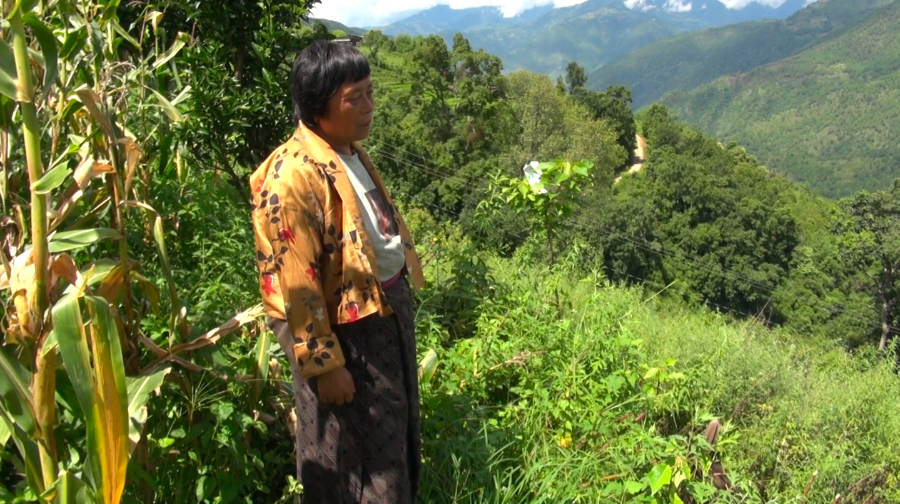 Her farmland is located next to a thick stretch of forest between the two chiwogs. With fallow land surrounding her fields, keeping wild animals away has become even more difficult.
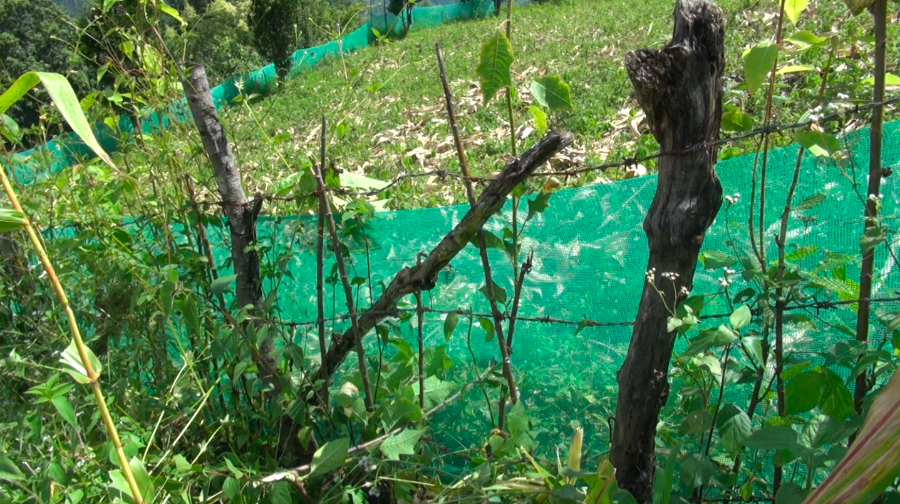 Her husband was sentenced to prison a few months ago after a neighbour died from an electric shock from an illegal electric fence they had installed to protect their crops.
Now, Yeshi is left to manage the farm and tend to her two grandchildren. She spends both day and night in this small hut, keeping watch over the crops. Despite her guarding, wild boars recently destroyed nearly half of her maize crop.
Yeshi Choden said that her husband had installed the electric fence only to protect crops and harvest what they had worked hard to produce throughout the year, and that it was not intentional. “The unfortunate incident happened while we were trying to find a way to protect our crops. Now that I am experiencing this myself, I understand this must be what people describe as depression and a mental health issue. When I think about everything that has happened, I sometimes feel like I am going to faint.”
Ugyen Dendup from Galing also used to install electric wires to protect his crops. He said, “Bhutan Power Corporation officials are strictly monitoring, so we do not use it anymore. Instead, we have built huts to guard the crops ourselves. Now that Shongphu has chain-link fencing, the wild animals will look for food elsewhere. We are worried that animals will come into our fields now.”
The gewog says the fencing in Shongphu Chiwog is only the first phase.
Shongphu Gup Jigme Thinley said, “This is the first phase of chain-link fencing we are getting in Shongphu Gewog. We had to begin with Shongphu Chiwog because people in other chiwogs could not agree on where to begin the work. However, we have prioritised providing chain-link fencing to Galing and the remaining chiwogs in the next phase, depending on the extent of wildlife-related issues in each area.”
For now, farmers in the unfenced chiwogs are left to guard their fields themselves, as they wait for similar protection.
And with electric fencing no longer an option, the need for a safer solution is becoming urgent.
Trashigang recorded six deaths from electric shocks caused by illegal electric fencing used to protect crops between 2020 and 2025.
Sonam Darjay, Trashigang
Edited by Phub Gyem