
 Narrow footpaths and goods spilling onto public walkways are making it difficult for pedestrians to move around in some parts of Thimphu. While Thimphu Thromde says businesses must keep public Rights of Way clear, shopkeepers and vendors say the bigger issue is the lack of space. They are calling for wider, better-designed footpaths that can safely accommodate pedestrians while also addressing the needs of businesses.
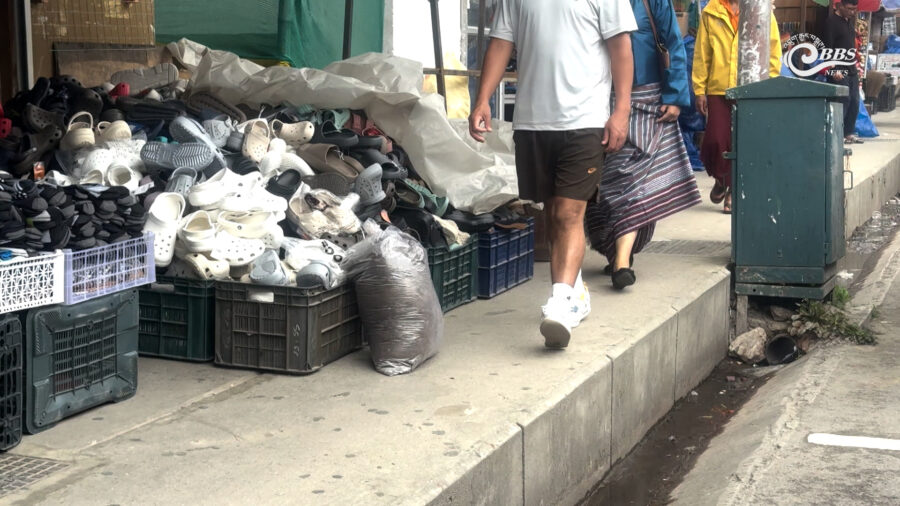 For pedestrians, a walk through Kaja Throm area is not always as simple as putting one foot in front of the other.
Racks, boxes, goods and shop displays take up space on already narrow walkways, forcing people to squeeze past each other.
At times, they have no choice but to step onto the road.
“The footpath is narrow, and when vendors display their goods outside, it causes inconvenience for people passing by. Earlier the road was a single lane, but now it’s a double lane. So, the parking issue is further adding to the problem for the footpath,” said Tshejay, a pedestrian.
But vendors say simply removing goods from the footpaths may not solve the entire problem. They say the walkways themselves are too narrow to comfortably accommodate the growing number of people using them.
“If the footpaths could be made a little wider and more comfortable for pedestrians to walk freely, it would be convenient for both shopkeepers and pedestrians,” said Kuenzang Wangmo, a vendor.
“It becomes a problem, especially during weekends when more people come shopping. If the footpaths could be expanded with better ideas or solutions, it would help,” said Kinley Dorji, another vendor.
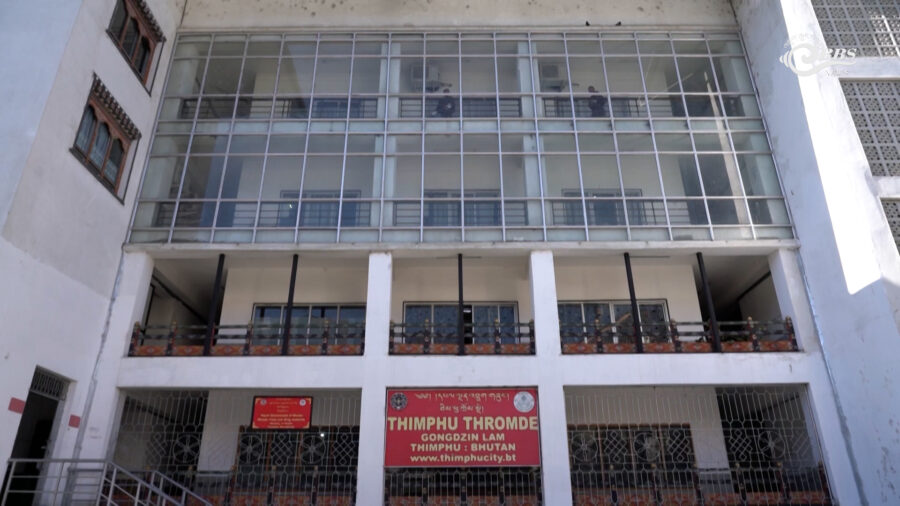 BBS asked Thimphu Thromde whether shopkeepers in the Kaja Throm area had been formally notified to clear public Rights of Way, what action is taken against repeated offenders, whether any vendors have been penalised and how much space must be kept clear for pedestrians.
But Thromde did not directly answer these questions. Instead, it said officials conduct regular inspections to ensure businesses do not occupy public Rights of Way with goods and shop displays.
That leaves an important question. If footpaths are repeatedly obstructed, how is the rule being enforced?
For pedestrians and vendors, the issue is not simply about removing goods from public walkways. It is also about whether the footpaths themselves are wide enough.
Anita Chhetri
Edited by Sonam Pem