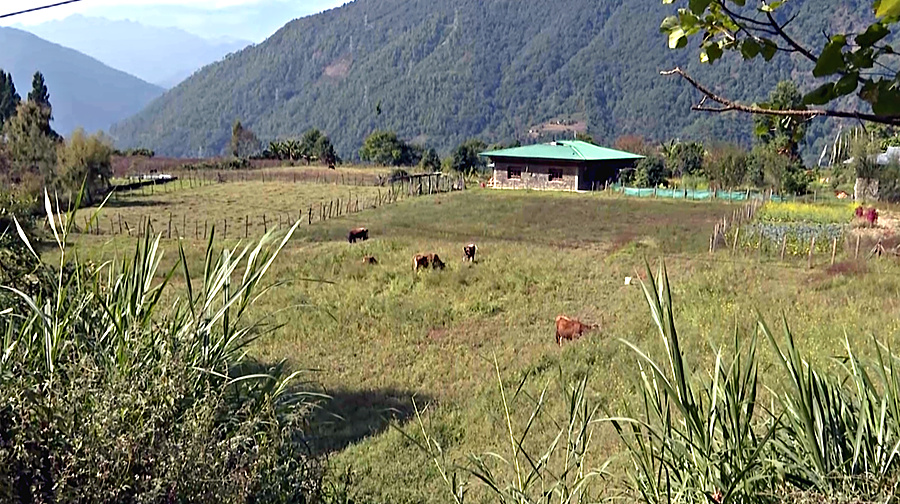
 For farmers in Trong Gewog, Zhemgang, water shortages have meant leaving paddy fields uncultivated and limiting agricultural production. But that could soon change. The district is on track to complete its biggest water project by May next year. Worth Nu 579 M, the Asian Development Bank-funded project is expected to benefit 500 households and provide irrigation water for over 700 acres of land.
For residents of Crespaipam, Dhangkhar, Dungbi, Tingbi Pam and Wangduegang, water scarcity has been a longstanding challenge. They say the problem has worsened over the last 15 years, as drying water sources have forced many farmers to leave their farmland, particularly paddy fields, uncultivated.
With limited water for irrigation, most farmers can grow only enough produce for their own consumption, leaving little surplus to sell. The shortage becomes particularly severe during the dry season.
Farmers are now hopeful that the new water project will help address the problem.
Tshewang Rinzin, a resident of Trong Gewog, says access to reliable water will help farmers resume paddy cultivation and improve food production.
“If the water arrives, we will be able to cultivate a paddy field like before and become self-sufficient. We can also sell our surplus produce in the district, even if we cannot supply to other districts.”
Tsithar Dorji, Tshogpa of the Water Association in Dhangkhar, says the water shortage began after irrigation water was also shared with the town.
“Before, we had enough water for both drinking and irrigation. But the shortage began after the irrigation water was also shared with the town. When we do not have enough water, it becomes quite challenging for farmers.”
For farmers in Dungbi, the shortage also affects seasonal farming activities.
Nima Wangchuk, a resident of Dungbi, says adequate water is needed to prepare fields for planting wheat and barley.
“Around this time, we plant wheat and barley, and we need water to wet the field. When the land is dry, it becomes difficult to plough. If we have enough water, I believe we can get the work done while we are still here.”
The project is expected to benefit more than 2,000 people in nearly 500 households. It will also include a water treatment plant to improve access to safe drinking water.

Beyond meeting drinking and irrigation needs, the project is expected to create opportunities in ecotourism and agro-tourism.
Singye Dorji, Project Engineer, Zhemgang, says plans are in place to introduce coffee and tea plantations, with the planning stage already completed.
“We have a plan to plant coffee beans and tea leaves, and we have already completed the planning stage. We will begin planting soon. We also plan to take water to Somel and store it to support ecotourism initiatives, including setting up tented accommodation.”
Officials say plantation activities will begin next year, after the water project is completed in May.
For farmers who have faced water shortages for years, the project is expected to provide a reliable water supply, support agricultural production and create new livelihood opportunities.
Singye Dema
Edited by Sonam Pem