
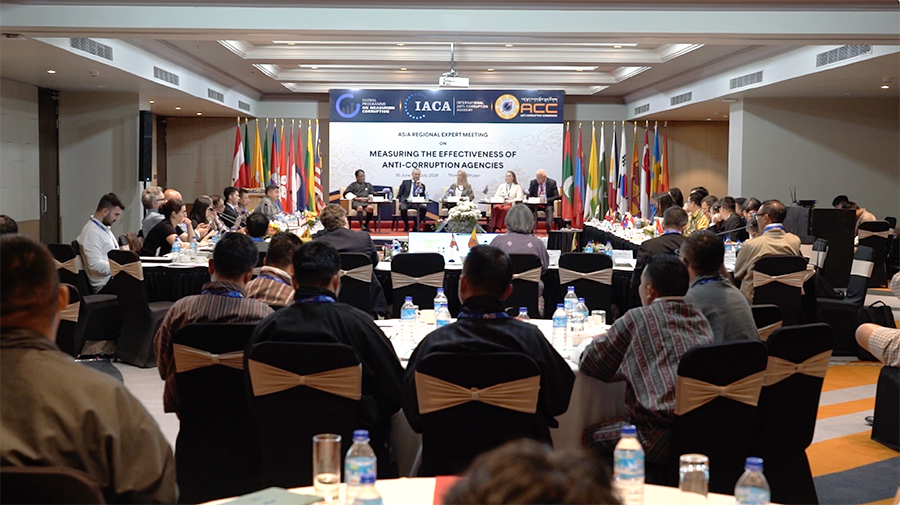
 As corruption becomes increasingly complex and harder to detect, experts say artificial intelligence could become a powerful tool in strengthening the fight against corruption. However, experts caution that AI should assist investigations, not replace human judgement. This was highlighted at the Asia Regional Expert Meeting on Measuring Effectiveness of Anti-Corruption Agencies, which ended yesterday.
Experts at the Asia Regional Expert Meeting on Measuring Effectiveness of Anti-Corruption Agencies said AI can quickly analyse vast amounts of data, identifying patterns and risks that would take investigators months, or even years, to uncover.
AI can also help detect irregularities in government procurement, compare officials’ asset declarations with financial records, identify conflicts of interest and trace hidden links between officials, contractors and suppliers.
“AI can analyse a huge amount of data in seconds, which is very important for investigators because it saves time. It does not get tired, and it does not make human errors. It can help identify risky behaviour, shorten the path to evidence, and support the validity of findings,” said Drago Kos, Dean, International Anti-Corruption Academy.
AI is also being used globally to strengthen anti-money laundering efforts, support audits, review legal documents, monitor public projects, and improve digital reporting systems for corruption cases.
ACC officials attending the meeting said the discussions are particularly relevant in Bhutan, where fraud and corruption cases are becoming more complex due to growing amounts of digital data and financial transactions.
Officials added that the Commission is already using AI-assisted systems that can analyse bank statements, convert raw financial data into structured information, retrieve citizen records from civil registration systems, and map relationships between individuals, helping investigators uncover hidden networks more efficiently.
However, experts stressed that investigators must remain in full control of how AI functions and how its results are used. They added that while AI can improve speed and detection, it cannot determine guilt or innocence.
“Investigators should know that AI will not investigate cases on their behalf. It is only an assistance tool. They must remain in full control of how it functions and how its results are used. Most importantly, they are the ones who must make the final decision,” added Drago Kos, Dean, International Anti-Corruption Academy.
As corruption in Bhutan evolves, the key challenge ahead is not only adopting AI tools but ensuring they are used responsibly, guided by strong human oversight, ethical safeguards, and institutional accountability.
Tashi Dekar
Edited by Phub Gyem