What happens when the next major flood hits our town? Or when an earthquake tests the strength of the buildings we live and work in? Several assessments revealed that Bhutan is not ready if such disasters occur. This is set to change. Bhutanese engineers, architects, and planners are trained to assess, identify weaknesses, and retrofit old structures to make them disaster-resilient.
We build roads. We build homes. We build schools and hospitals. But beyond these is a question that is becoming harder to ignore. How well will they hold up when nature tests them?
Bhutan is exposed to a range of hazards, from flash floods and landslides to earthquakes and glacial lake outburst floods, affecting infrastructure.
But the decision made when a building or piece of infrastructure is designed can determine what happens when disasters occur.
Some structures may have vulnerabilities that are difficult to see with the naked eye, but could become critical during a major earthquake.
Sherub Lhamo, an Urban Planner with the Tsirang District Administration says, “Before we start planning, it is important to study the site carefully. Bhutan is a mountainous country and is also earthquake-prone, so we need to understand the soil conditions and the risk of soil erosion. If we consider these factors, we can make our infrastructure more resilient.”
That thinking is now being applied to disaster-resilient infrastructure, from drainage and building-level protection to integrated approaches to managing flood risks.
“Before constructing a building, proper planning is very important. If we consider disaster risks at the planning stage, we can make buildings safer and less vulnerable. Ultimately, this is about protecting lives,” adds Shova Bhattarai, an Architect in Thimphu.
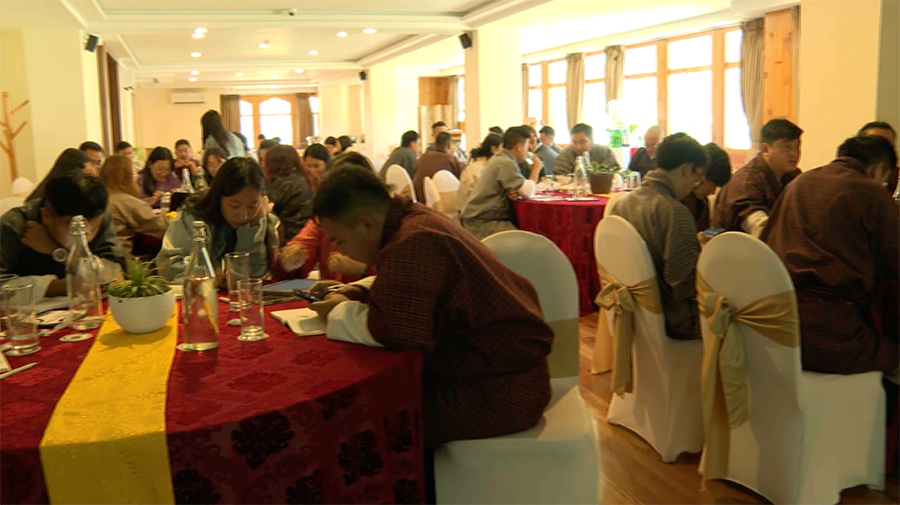 During a two-day workshop in Thimphu, technical officials from across Bhutan looked at ways to identify weak points and strengthen buildings before a disaster exposes those weaknesses.
For a building, that can mean making sure its foundation is suitable, its main structural members are strong enough, and the connections between them can withstand the forces of an earthquake.
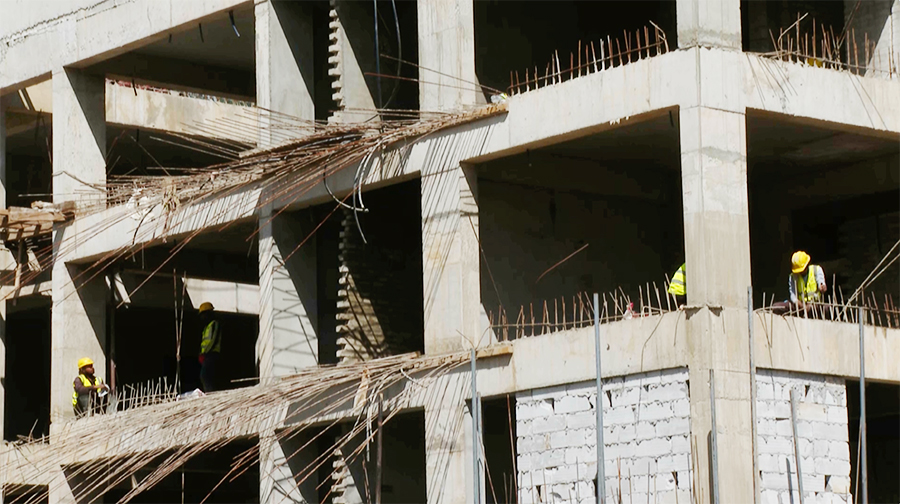
They also looked at common weaknesses such as buildings with an unusually open or weak ground floor, weak columns, and weak connections between beams and columns.
They are also learning how existing concrete, brick, stone and other buildings can be strengthened instead of simply waiting for a disaster to reveal their weaknesses.
Yam Kumar Barailey, an Engineer with the Trongsa District Administration, emphasised that it is important to plan properly before construction begins. “We need to consider the strength and stability of the structure, as well as factors such as the ground’s ability to support the building and its ability to withstand earthquakes.”
But the real test will not be inside a training room.
It will be on the ground, when the next heavy rainfall comes, when a river overflows, or when an earthquake shakes a building.
Bhutan has completed at least three national infrastructure tests to assess how well the country can withstand earthquakes and climate-related hazards. These assessments showed that monsoon landslides and weaknesses in some structures could put schools, bridges, and other public infrastructure at risk.
Bhutan already knows many of the hazards it faces. Resilient infrastructure means making sure disasters do not become worse simply because the structures were not built for it. The challenge now is turning that knowledge into safer designs, stronger structures, and better decisions before construction begins.
Deki Lhazom
Edited by Phub Gyem