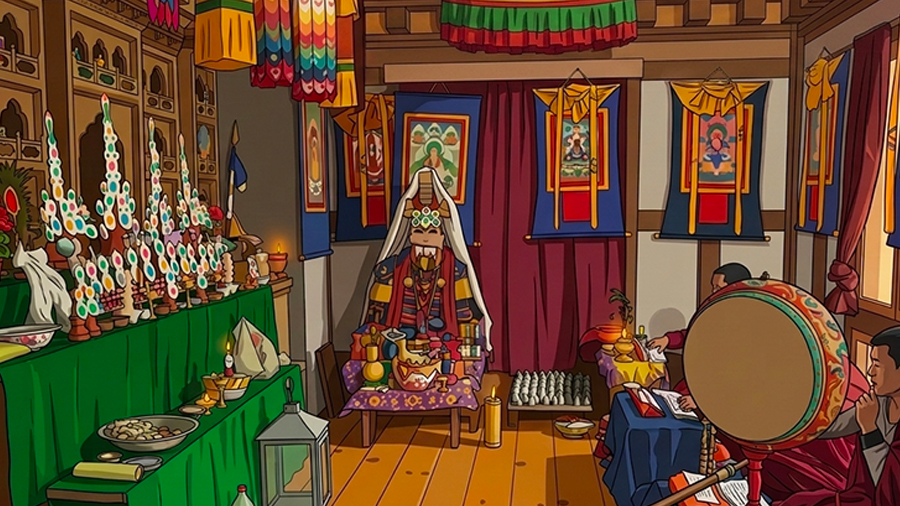
 Bhutanese households spend an average of nearly Nu 28,000 every year on ritual activities, accounting for almost five per cent of total household consumption. This is according to the National Statistics Bureau’s latest report on Household Ritual Expenditure in Bhutan. The report also finds that while wealthier households spend more in absolute terms, lower-income households allocate a larger share of their household budgets to rituals.
Household rituals have long been an integral part of Bhutanese culture, shaping spiritual beliefs and strengthening community traditions.
According to the report, households in Wangdue Phodrang and Punakha recorded the highest average annual ritual expenditure, exceeding Nu 50,000.
This is followed by Haa, Paro, and Gasa, where households spend more than Nu 30,000 annually.
The lowest average spending was recorded in Samtse and Samdrup Jongkhar, at just over Nu 11,000 per year.
The report also highlights that economic status is the strongest determinant of ritual spending, with expenditure increasing steadily as household income rises.
It further notes that female-headed households, older household heads, and larger families tend to spend more on rituals, while households with higher levels of education generally spend less.
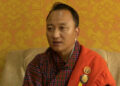
“These traditions have been passed down for generations, from our great-grandparents to our grandparents. We carry out the ritual every year. In the past, it was relatively inexpensive, but the cost has steadily increased with development over time. Today, it can sometimes cost around Nu 150,000,” said Gutong, Resident, Kanglung, Trashigang.
“Household rituals are a culture and tradition widely spread across the country. Since it’s a culture that has been going on for so long, that’s why we do the ritual. When it comes to expenditure, we do not have it saved for the ritual alone. We use the savings if we have, and some who do not have it borrow and conduct the ritual,” said Tashi, Resident, Monggar.
At the gewog level, local leaders also point to multiple annual rituals as significant community expenses.
“In my gewog, we have three rituals that we do annually. We conduct Kanjur, Tshechu, and there is a Drubchen festival that we do. So at the gewog level, most expenditure is being incurred in these areas. The reason why we do it is that it is a custom that has been there for a long time,” said Rinchen Norbu, Jurme Gup, Monggar.
The National Statistics Bureau says ritual expenditure reflects not only financial capacity but also deep-rooted cultural and spiritual values.
At the same time, it highlights that the cost of such practices can place a burden on lower-income households, and this should be considered when assessing overall well-being under the Gross National Happiness framework.
The report, based on the 2025 Household Consumption and Expenditure Survey, is the first nationwide study to examine the level, distribution, and determinants of household ritual expenditure in Bhutan.
Sonam Yuden
Edited by Sonam Pem