 The construction of Bhutan’s 100-megawatt solar power project has officially begun at Tashithang Gewog in Samdrup Jongkhar. The groundbreaking ceremony was held today, marking a major step in expanding the country’s renewable energy sector. The project is expected to boost electricity generation during the dry winter months, when hydropower output usually declines.
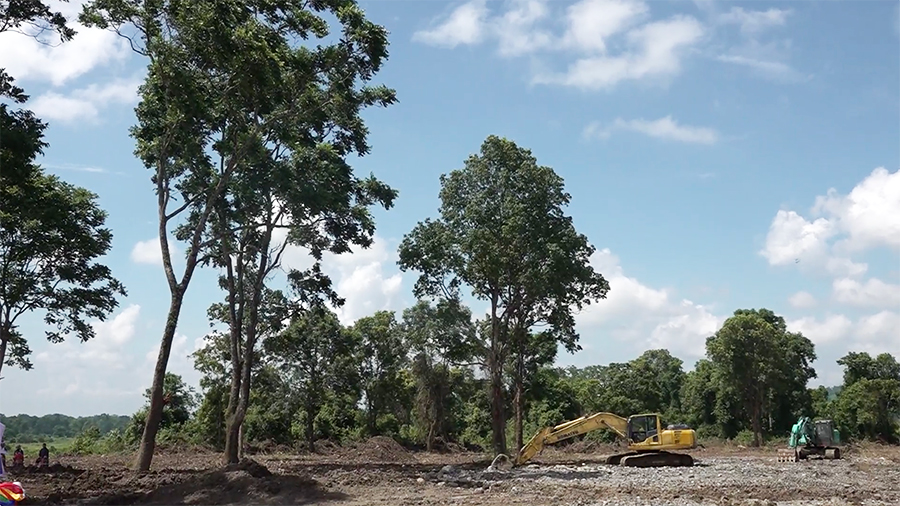 Spread across about 250 acres, the project is estimated to cost more than Nu 4.1bn. It is being developed by GDL-CK Pte Limited, a joint venture between Bhutan’s Green Digital Private Limited and Singapore-based Clean Kinetic Private Limited. Incorporated under the Gelephu Mindfulness City, the company specialises in developing massive utility-scale, grid-connected solar power plants in Bhutan.
“Over the years, solar technology has improved tremendously in terms of efficiency and consistent performance. We believe that implementing projects like this in Bhutan will make the country’s energy generation more resilient and independent,” said Wilson Lee, Chief Engineering Officer, Clean Kinetic Private Limited, Singapore.
Construction will be carried out in two phases. The first phase, with a capacity of 30 megawatts, is expected to be completed by mid-next year. The remaining 70 megawatts will be commissioned in the first quarter of 2028.
Residents have welcomed the project, saying it will bring long-term benefits to the community.
“Everyone here is happy that the solar power project is finally starting in our area. We already have access to electricity, and having a solar power project here will bring additional benefits to our community,” said Lachimi Narayan Pardhan, Resident, Tashithang Gewog.
“This project will benefit our community and support its development. We hope it will improve access to cooking gas, as collecting firewood has become difficult. It will make life easier for many families,” said Nilu Rai, Resident, Tashithang Gewog.
Once operational, the solar plant is expected to generate nearly 126 million units of electricity annually. This is expected to complement hydropower production and help improve energy reliability during the dry season.
Kinley Wangchuk, Samdrup Jongkhar
Edited by Sonam Pem