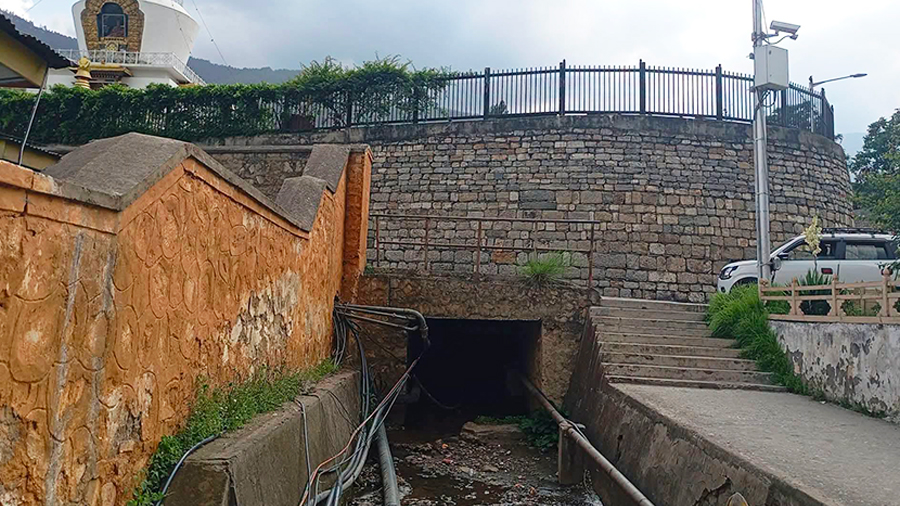
 The Memorial Chorten stream corridor is set for a major transformation. Thimphu residents can look forward to greener public spaces, walking trails, recreational spaces, solar-powered lighting, and improved pedestrian access. The project is being developed under the Disaster Resilient Infrastructure Project with support from the United Nations Development Programme and the Coalition for Disaster Resilient Infrastructure.
The Memorial Chorten stream is one of the five major stream corridors identified in the Thimphu Structure Plan 2023–2047. It serves as an important ecological and stormwater corridor, linking the city to the Wangchhu.
However, rapid urbanisation, encroachment into environmentally sensitive areas, inadequate drainage, and changing rainfall patterns have increased flood risks and environmental degradation.
To address these challenges, Thimphu Thromde has developed the Memorial Chorten Stream Corridor Revitalisation Design Plan.
“There have been several flood incidents in this area. To address these challenges, we are implementing this project as a mitigation measure. The design phase has already been completed, and the contract has been awarded. Implementation is expected to begin within a month,” said Kezang Dorji, Urban Planner, Thimphu Thromde.
According to Thimphu Thromde, the initiative is among Bhutan’s first comprehensive urban infrastructure projects to integrate disaster resilience, climate adaptation, ecological restoration, and accessible public space development.
The plan includes stream rehabilitation, stormwater retention ponds, restoration of riparian vegetation, ecological landscaping, walking trails, public viewing areas, recreational spaces, solar-powered lighting, and improved pedestrian connectivity, among others.
Officials say the project will help reduce flood risks, improve water quality, support biodiversity, and create safer and more attractive public spaces.
“These are not developments that we will see overnight. There are lots of projections done on what the climate projections are, how many visitors will come, how they will look at it, and whether it is in line with how Bhutan wants its urban landscape and Thimphu city to look like,” said Fadhil Bakeer Markar, Deputy Resident Representative, UNDP.
“We are trying to look at a new way of addressing this problem. We are partnered together to introduce nature-based solutions. Focus on building a place where people can come while you are reducing flooding, we are also creating a place where people can walk, sit, and enjoy nature in the context of flood management,” said Amit Prothi, Director General, Coalition for Disaster Resilient Infrastructure.
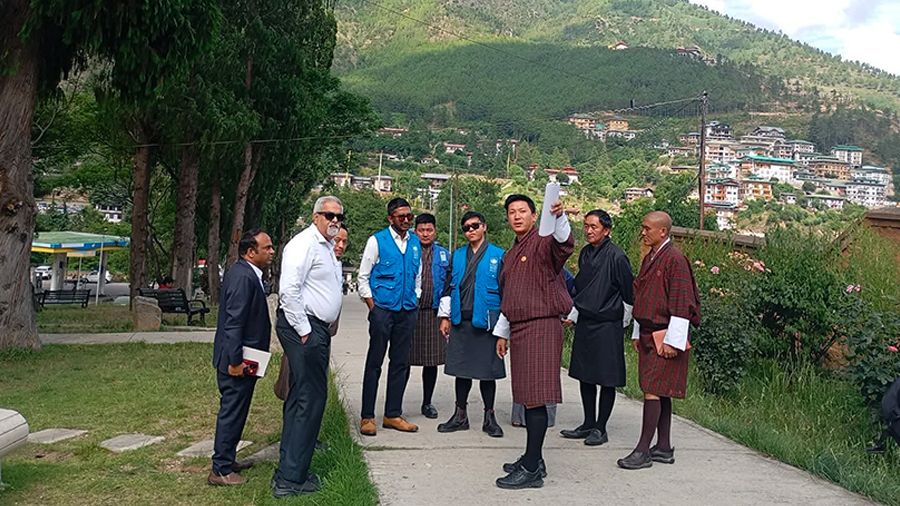 The design was developed through consultations with government agencies, technical experts, engineers, landscape architects, and social and environmental specialists.
The Enhancing Climate Resilience of Urban Landscapes project, supported by UNDP and GEF, has allocated Nu 24 M for the revitalisation of the Memorial Chorten stream corridor. The work is expected to be completed before the next monsoon.
The revitalisation initiative is expected to strengthen urban resilience while creating a healthier, more sustainable, and people-friendly environment in the capital.
Sangay Chozom
Edited by Sonam Pem