
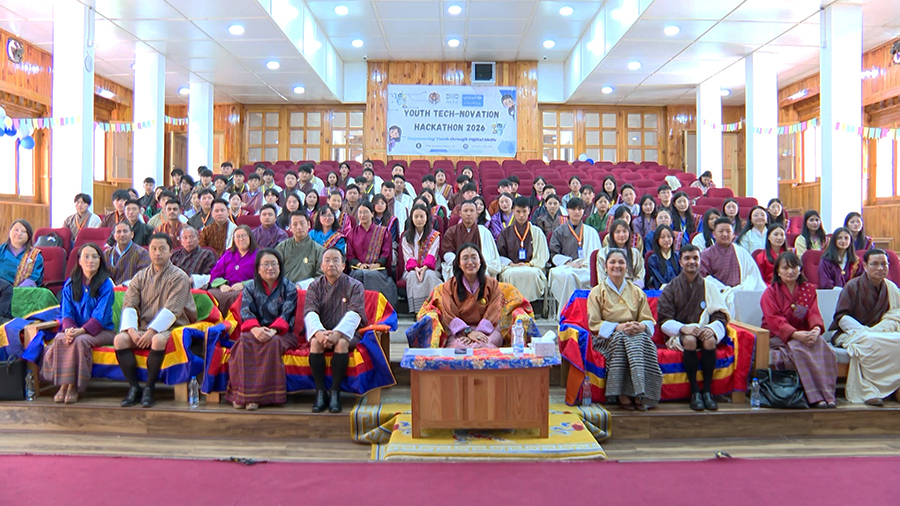
 From offline learning platforms to AI-powered writing tools, young innovators showcased a range of digital solutions to address real-world challenges during the Youth Tech-Novation Hackathon 2026. The event brought together 21 teams from across the country to develop and present ideas that could contribute to Bhutan’s digital future.
The hackathon provided an intensive, hands-on platform for participants to refine ideas, test prototypes and present solutions.
The programme engaged over 900 young people across 13 youth centres, schools, and three tertiary institutions since May this year.
“Given the fact that the rest of the world is going through rapid technological advancement, it is very important for us as Bhutanese to catch up with the rest of the world. It is very important to provide such a platform for our youth to acquire adequate technical and ICT-related skills so that we can catch up with the rest of the world, and they will have enough skills to thrive in the 21st-century digital economy,” said Amrith Bdr Subba, Principal Counsellor, Programme and Youth Coordination Division, MoESD.
The programme was implemented through three levels of training. Level one, focused on foundational digital skills, was conducted by Athang Training Academy across 14 locations, including 13 Youth Centres, while Levels two and three on intermediate and advanced digital competencies were delivered through the Royal University of Bhutan colleges, GNEC, CST & GCIT.
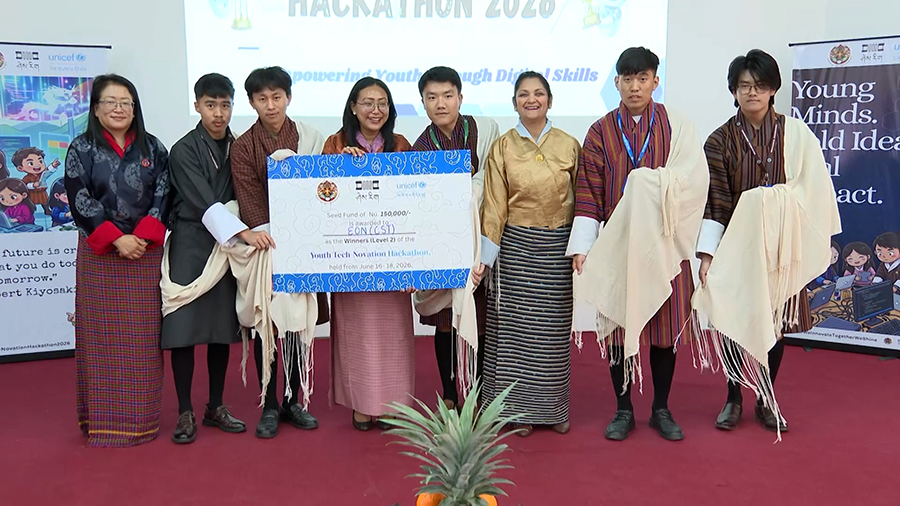 In the level two category, Team EON from the College of Science and Technology secured first place with their innovation, EDUMOS. It is an offline-based learning platform designed to provide accessible education without requiring internet connectivity.
“This platform is very important for youth, as it helps the youth to discover their ideas. Without our ideas being recognised, they will go to waste. For years, we have been learning and consuming knowledge. But personally, we humans are meant to create things. With platforms like this, we can use the knowledge we have to create beautiful things and innovative ideas,” said Sonam Lhendup Dorji, Team EON.
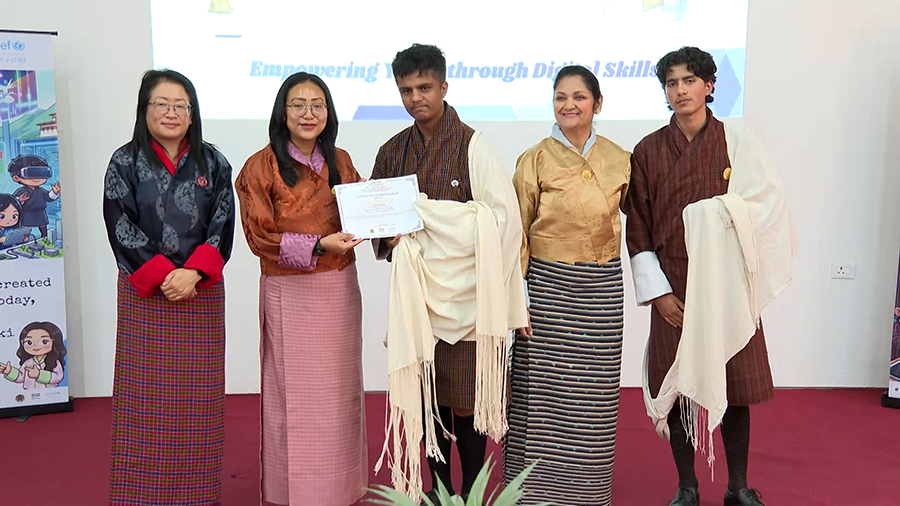 In the open category, Team JINA, comprising a group of out-of-school youths, won first place with a paid survey data collection platform aimed at addressing limited data availability.
“We plan to use the fund we received to improve our platform and use it in the industries and organisations in Bhutan to improve their data-driven decision for the development of Bhutan,” said Soran Acharya, Team JINA.
Meanwhile, Team FAIR Code from the College of Science and Technology won the level three category with Peerlytics. It is a collaborative writing platform that uses artificial intelligence to grade and track contributions by lecturers and students.
“Hackathon is giving us a platform to come as a group, experience new things and learn more about coding and skills development,” said Kezang Tshomo, Team Faircode.
The Programme and Youth Coordination Division under the Ministry of Education and Skills Development, in partnership with UNICEF, organised the hackathon
Organisers say the initiative reflects their commitment to building a digitally skilled and innovative youth population to support Bhutan’s digital transformation.
Anita Chhetri
Edited by Sonam Pem