
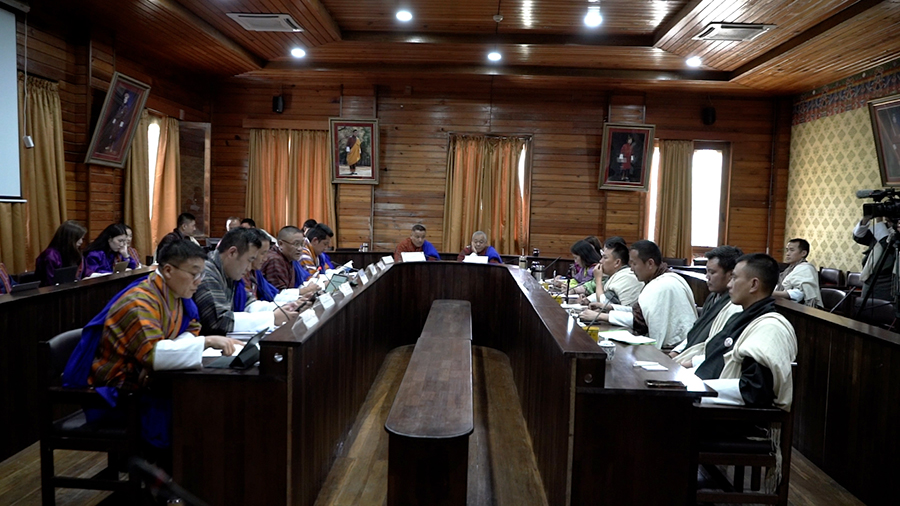
 Rising prices have pushed pay revision back onto the national agenda. With living costs climbing, the government says a salary revision is on the way. During the National Assembly’s fifth session’s closing press conference, the Deputy Speaker said the revision would be initiated based on the country’s economic factors.
For many public servants, the last pay revision is a recent memory. Under the previous government, the Pay Revision Act 2023 raised civil service salaries by between 55 and 74 per cent.
Now, a fresh revision being sought barely three years on is itself a measure of how quickly rising prices have eaten into those gains.
As per the World Bank’s recent report, driven by higher food and oil prices, Bhutan’s overall inflation is expected to reach 5.2 per cent this his financial year and 5.6 per cent in the next. In January alone, inflation jumped to 5.8 per cent, nearly double the rate a year earlier. The World Bank attributes this spike partly to the country’s transition to the new Goods and Services Tax.
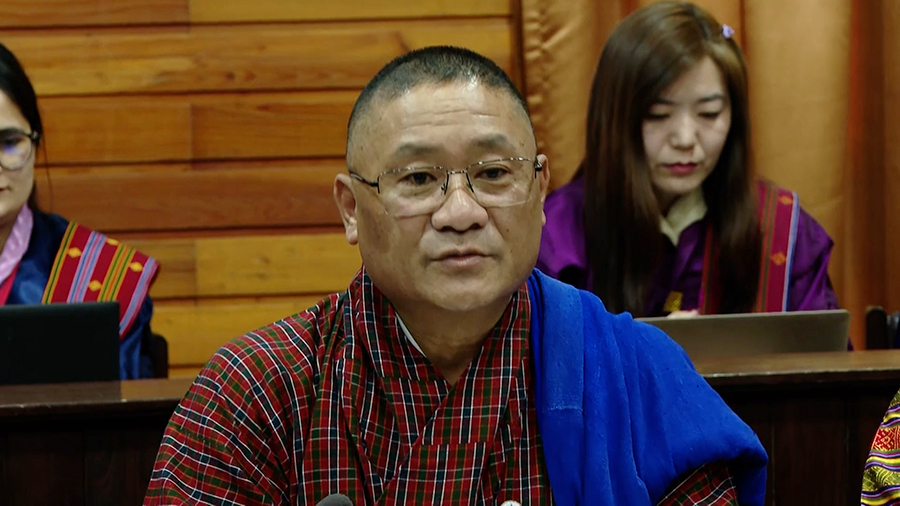 At the press conference, Deputy Speaker Sangay Khandu acknowledged the public’s concerns and set out the steps that must come first.
The Deputy Speaker of the National Assembly, Sangay Khandu said, “As far as I know, the government is working on it. However, there is a process that must be followed. A pay commission needs to be established first, which will then assess the feasibility and recommend to the Cabinet and the Parliament on the possible raise. Although it could not be tabled during this session, the government is working towards it, and it is expected to come soon.”
The process is set by the Constitution. An autonomous Pay Commission must be constituted from time to time on the Prime Minister’s recommendation. The Commission, with due regard to the country’s economic conditions, is mandated to review salaries, allowances, and benefits for public servants before submitting any recommendations.
Pay revision, which is also one of the government’s campaign pledges, has been a recurring topic during the Question Hour sessions. In December last year, the finance minister informed the House that the revision would have to be carefully reviewed and the Commission would be constituted at the right time.
Whether that time has arrived turns on the economy, and the signals point both ways.
Growth remains strong with the Gross Domestic Product recording an increase of 30 per cent in the first two years of the current plan, primarily driven by hydropower expansion.
The International Monetary Fund also projects the economy’s growth at 7.4 per cent in the current fiscal year and to remain strong in the next. Similarly, the country’s foreign currency reserve stands at about USD 1.1bn.
On the other hand, inflation is climbing, the current account deficit remains wide, and the World Bank warns that rising debt servicing could squeeze the very fiscal space a revision would need.
For now, the revision hinges on a single word: soon. But how soon and, more importantly, whether the economy can carry it is the harder question.
Sonam Yuden & Tashi Dekar
Edited by Sonam Wangdi