 Health screenings conducted by the Bhutan Stroke Foundation found that nearly 80 per cent of the people screened nationwide were at high risk of stroke. Monks and nuns are among the most vulnerable groups, largely due to sedentary lifestyles. To promote stroke prevention and healthier living, the foundation has launched a four-year project targeting 260 monastic institutions across the country.
Stroke remains one of the leading causes of death and long-term disability in Bhutan.
The National Referral Hospital treats two to three stroke patients every day.
In 2023 alone, the health ministry recorded 528 stroke cases, resulting in 74 deaths.
 Health experts identify high blood pressure as the leading cause of stroke in Bhutan. Other major risk factors include diabetes, high cholesterol, tobacco use, excessive alcohol consumption, unhealthy diets, physical inactivity, obesity, and heart disease.
 Monastic communities face additional risks. Long hours of study, prayer and meditation often involve prolonged sitting and limited physical activity, increasing the likelihood of stroke and other non-communicable diseases.
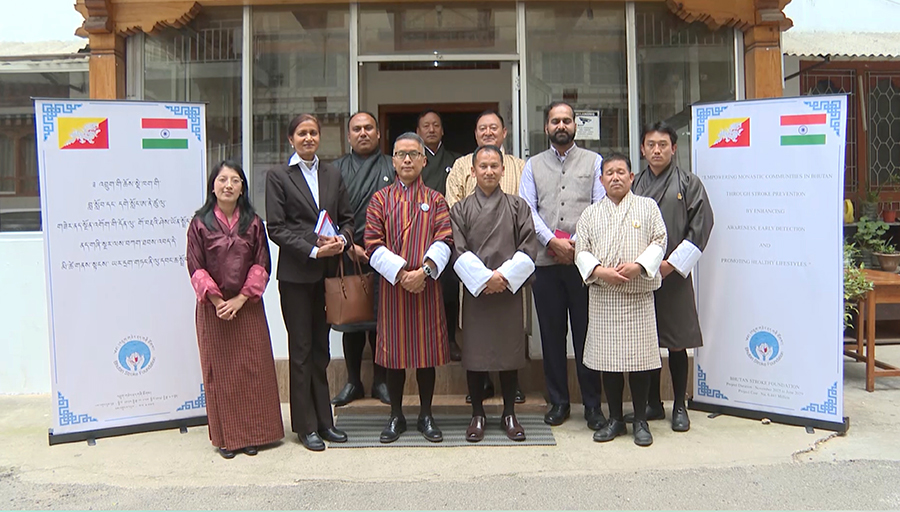
To address these risks, the Bhutan Stroke Foundation has launched a project that will provide stroke awareness programmes, health screenings, risk assessments and early detection services in monasteries and nunneries across the country.
Neurosurgeon Dr Tashi Tenzin said, “Most monastic institutions are located far from hospitals and have limited access to healthcare services. Through this project, we will be able to provide services while also generating valuable data and research.”
“The project will focus on monks and nuns. We will provide awareness on stroke, conduct basic health screenings and risk assessments, and collect data on stroke risk within this group. The findings will be shared with the Ministry of Health to support future interventions and preventive measures,” said Rinchen Khandu, the executive director of the Bhutan Stroke Foundation.
According to health officials, more than 90 per cent of strokes can be prevented through regular health screenings, healthy diets, and physical activity.
Dr Tashi Tenzin said, “Prevention is far less costly than treatment. That is why we must focus on raising awareness, encouraging healthy eating habits, and promoting regular exercise.”
The Bhutan Stroke Foundation says prevention remains the most effective defence against a disease that continues to claim lives and leave many others with lifelong disabilities.
Sangay Chozom