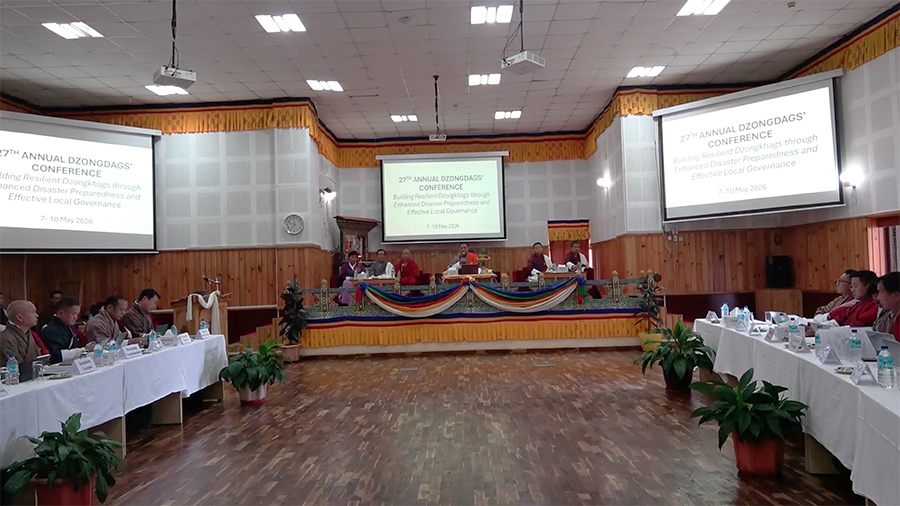
 Each year, the country spends millions on disaster relief and response efforts. In response, the district authorities are stepping up efforts to strengthen disaster preparedness. The focus remains high on the agenda at the 27th Dzongdags’ conference which began today in Tsirang. The four-day annual conference is being held under the theme “Building Resilient Dzongkhags through Enhanced Disaster Preparedness and Effective Local Governance.”
Due to its geographic location and susceptibility to climate-induced hazards, Bhutan remains highly vulnerable to disasters such as earthquakes, flash floods, landslides, and glacial lake outburst floods.
To minimise the impact and prepare for such disasters, the district heads have gathered for the annual Dzongdags’ conference.
They are expected to discuss strategies to improve governance and strengthen disaster resilience at the local level.
Discussions will also cover disaster risk reduction measures and emergency response coordination to enhance safety.
“In the past, natural disasters received little attention, and there was a general perception that we could face such calamities. As a result, we failed to remain prepared and minimise associated risks. However, for the past two years, disaster preparedness has been included in the annual Dzongdas’ conference, and it has now become part of the national discourse,” said Karma Galay, the director general of the Department of Local Government and Disaster Management.
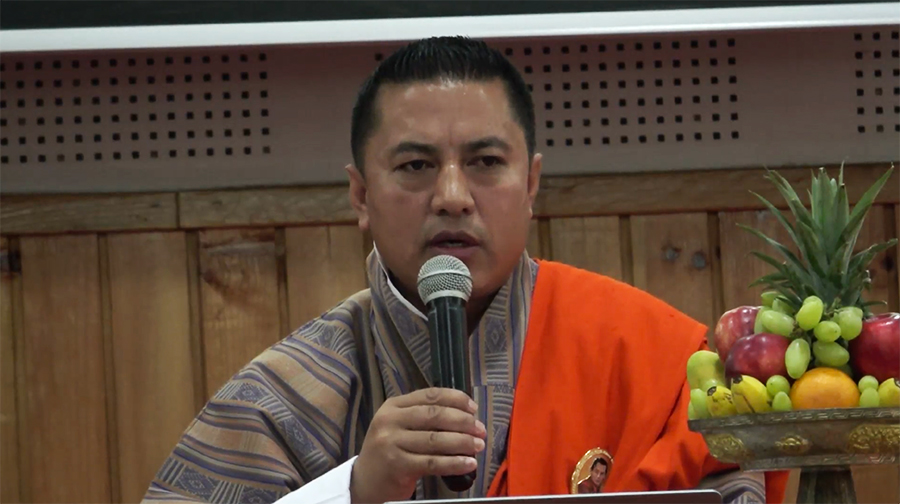 Speaking at the opening session, the Home Affairs Minister highlighted the importance of preparedness, coordination, and effective governance in ensuring the safety and well-being of communities.
The minister also shared that the government has developed the Earthquake Contingency Plan, the National Forest Fire Prevention Strategy, and the River Cleaning Plan to enhance safety and minimise disaster-related risks.
According to reports, the government had spent, on average, roughly Nu 300 M annually on disaster relief and response since 2013.
A budget of Nu 2.56bn has been allocated for disaster preparedness in the 13th Five-Year Plan.
Home Affairs Minister Tshering said, “Unlike many other countries, Bhutan hasn’t experienced severe natural disasters. Our successive Kings have granted kidu and support to affected people. However, we cannot afford to be complacent about the natural calamities as we cannot predict how and when natural disasters might hit.”
The minister also emphasised the role of Dzongdas in strengthening local administration, delivering timely public services, ensuring quality education and infrastructure development, and preservation and promotion of culture and tradition in the districts.
“Consider how frustrated you would feel if you didn’t receive services on time. The public should not be sent back due to malfunctioning printers or internet disruptions. I urge Dzongdas to ensure timely public service delivery without delays or deferment.”
The annual Dzongdas’ Conference serves as a platform for district administrations to discuss challenges, share experiences, and review policy implementation and development priorities.
Pema Tshewang, Tsirang