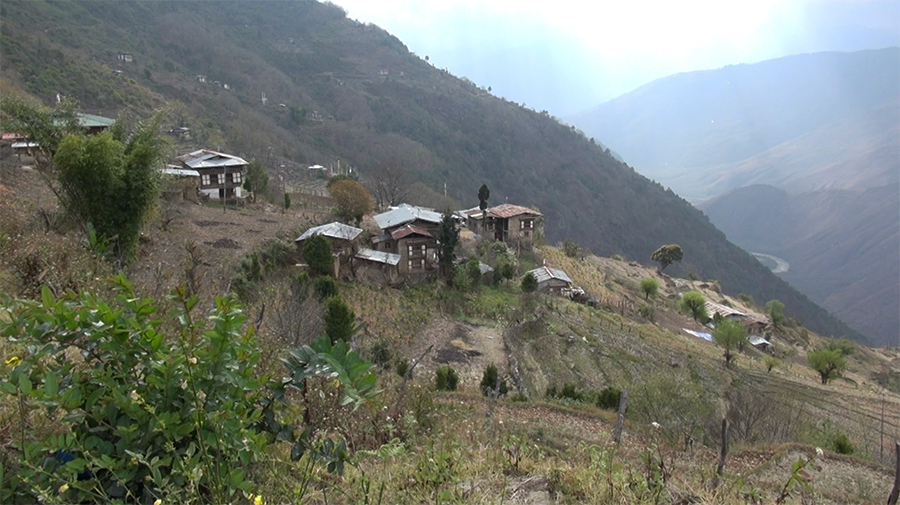
 Despite challenges, farmers of Chema_Melongkhar and Namthi_Yerphel in Trashi Yangtse are quietly rewriting the story of self-sufficiency. The communities do not have access to roads and are losing crops to wild animals. Yet, these have not kept the farmers from their land, particularly in growing their main staple, rice.
For the farmers of the two chiwogs, rice is not just a crop; it is security.
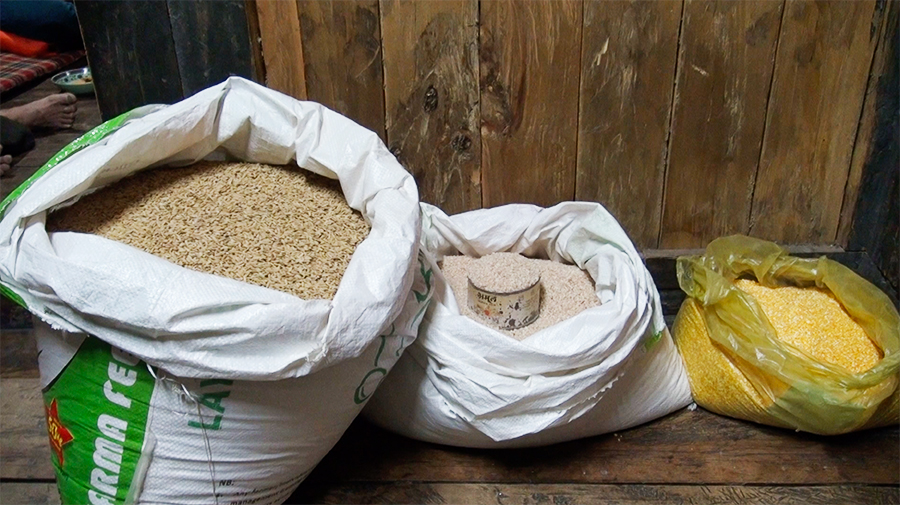 Stored carefully in wooden boxes and sacks, unhusked paddy can last for years. When supplies run low, families process what they need.
This is what self-sufficiency looks like – growing, processing, and consuming what you produce.
For many households here, rice from their fields not only feeds their families but also supports their children.
“Some of our neighbours even sell their surplus rice, but for us, it is different. We produce just enough for our own consumption and to send to our children. The only things we buy are oil and a few other essentials; everything else, we grow. We work the land, and live by what it gives us,” said Peldon, a resident of Chema.
Production here is rising.
Improved irrigation and mechanised farming, such as use of power tillers, have helped farmers increase rice yield.
Chema_Melongkhar Tshogpa Cheten said, “Rice production has now more than doubled, increasing from about 100-200 kg to over 400 kg. It’s mainly due to improved irrigation. For many, that surplus has become a vital source of income.”
But even as production increases, the losses remain substantial.
“Despite everything, farmers here still lose around 30 per cent of their crops to wild animals. For fields on the outskirts, the losses are even more. Some lose nearly half their harvest to animals that come in the night and leave nothing behind,” added the tshogpa.
“If we had chain-link fencing, animals could no longer damage our crops. We could harvest the full yield. Right now, monkeys and wild boars cause the most destruction. With proper fencing in place, they would not be able to enter our fields, and we can sell more than half of what we produce,” said Ugyen, a resident of Melongkhar.
Support has been coming, but slowly.
Electric fencing was installed in some areas with assistance from the district forest division and the Bhutan Trust Fund for Environmental Conservation. However, coverage remains limited.
Yallang Gup Sonam said, “We have requested the district administration for chain-link fencing and that the installation work be awarded to our people here. This year, Jangphutse received the fencing under a similar arrangement. We are hopeful the same support will reach us as well. That is why we have not set aside a budget for fencing this year.”
Last year, Chema_Melongkhar and Namthi_Yerphel chiwogs produced more than 1130 MT of rice.
With around 80 households, the two chiwogs are frontier communities along the northern border of Trashi Yangtse.
Sonam Darjay, Tashi Yangtse
Edited by Sonam Wangdi