
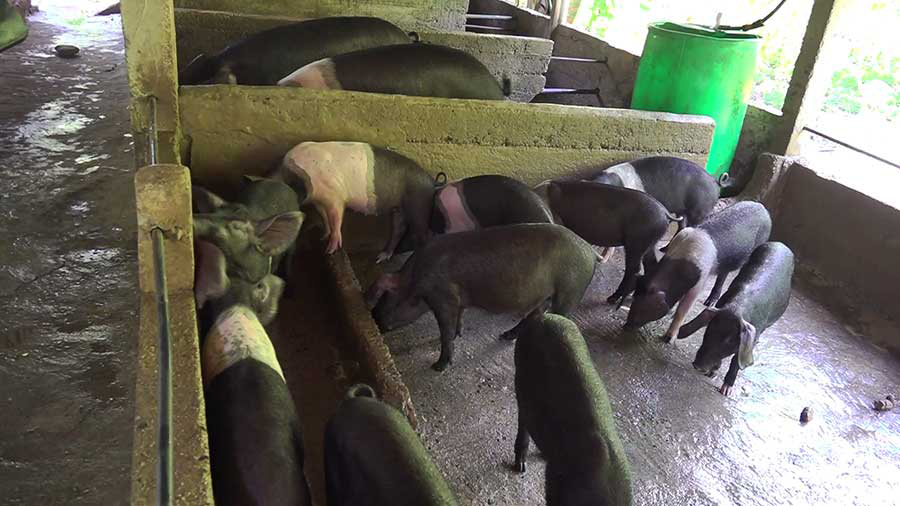
As piggery farmers in the country struggle to stay afloat, a national-level committee is assessing the problem and working out ways to support them. As reported in the National Assembly, piggery farmers are struggling to sell their product due to less market demand and declining prices while having to meet the rising feed costs and deal with recurring disease outbreaks, including African Swine Fever.
 Sergithang_Tsirang Toed Member of Parliament, Lhakpa Tshering Tamang, highlighted that many farmers have taken loans to invest in establishing piggery, but are now left with unsold pork.
“In Semjong gewog alone, there are 192 metric tonnes of unsold pork. A person had bought feed worth Nu 8.2 M on credit. He says that even if he sells his house and land, he will not be able to repay the amount. He has over 500 pigs, but the issue is that he is not able to sell the meat.”
Recently, media reports highlighted a drop in pork prices following surplus production. From Nu 650 per kilogram, it dropped to Nu 400 per kilogram in Thimphu.
Besides, the country has been experiencing recurring outbreaks of African Swine Fever, with the latest one on May 11, further impacting the piggery business.
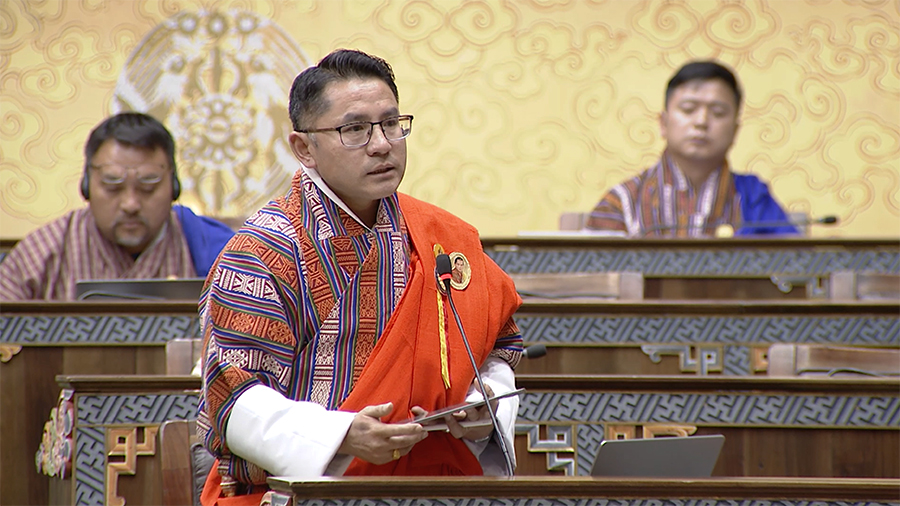 The Agriculture and Livestock Minister said the fall in the pork market is not entirely due to high production. He said meat hoarding at the source in anticipation of higher prices, high retail prices, and limited access in remote areas due to distribution challenges are other contributing factors.
To assess these factors and address them, the agriculture and livestock ministry formed a committee comprising relevant agencies, including financial institutions and the Competition and Consumer Affairs Authority.
“Within a week following the committee’s formation, we assisted in creating market opportunities for piggery farmers. For instance, the Bhutan Livestock Development Corporation Limited helped farmers sell over 85 metric tonnes of pork, which is worth more than Nu 33 M. We are working to help the farmers,” said Younten Phuntsho, Minister for Agriculture and Livestock, National Assembly.
Minister Younten Phuntsho also assured continued support for piggery farmers, including those engaged in product diversification.
“If we look at the import data, meat-related imports amount to about Nu 4bn. So, there are opportunities to diversify production and add value.”
Piggery farming in the country is concentrated in six southern and eastern districts of Chhukha, Dagana, Tsirang, Samtse, Sarpang and Samdrup Jongkhar.
As per the Integrated Agriculture and Livestock Survey 2025, Bhutan produced over 2,400 metric tonnes of pork.
Tashi Dekar
Edited by Sonam Wangdi