The foundation of Bhutan’s newest international airport is steadily coming together in Gelephu. More than half of the earthworks, the most crucial stage of construction, is now complete. Officials say the project remains on schedule as it moves toward the next stage of construction.
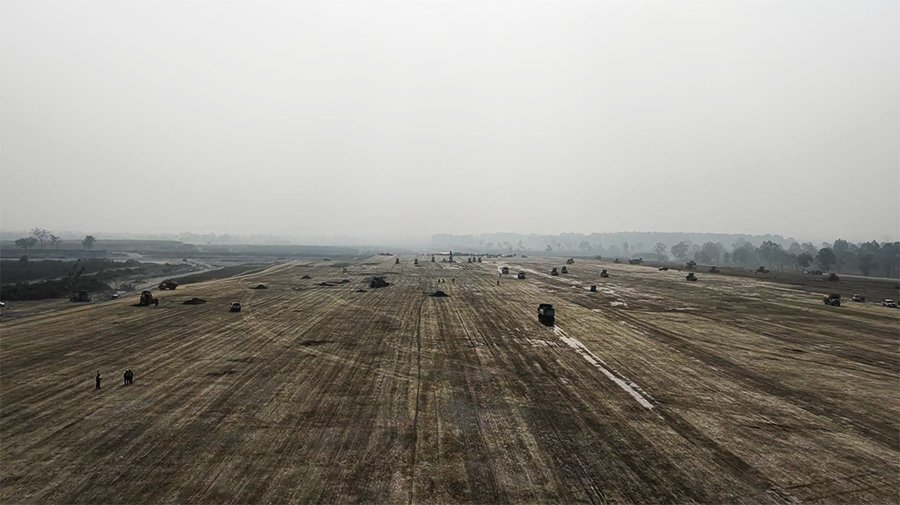 In Gelephu, the landscape is being reshaped on a massive scale, laying the groundwork for what will become Bhutan’s next international gateway.
The project is currently in its earthworks phase, which forms the foundation of the entire airport. This stage involves cutting high ground and filling low areas to create a stable, level base. Officials say about 65 per cent of this phase is now complete, marking steady progress on site.
“The construction of the Gelephu International Airport is currently progressing through its major earthworks phase. If you look at the existing ground level in Gelephu, it is uneven. We are currently doing cut-and-fill work to level the ground so that the subsequent phase of works can be taken up. We expect these works to be complete by September,” said Dorji Wangchuk, a senior engineer with City Development Office, GMCA.
Engineers are also building drainage systems across the site to support the ongoing works. Crews are constructing box culverts and U-drains to channel the Paitha River beneath the future runway. These systems will help maintain natural water flow and protect the construction area.
Dorji Wangchuk said, “Preparation for the monsoon season is an integral part of the construction planning for the Gelephu International Airport. Temporary drainage channels and water management systems have been established across the site to effectively control rainwater and maintain access for construction activities during periods of heavy rainfall. In addition, river dredging works have been carried out to help reduce potential impacts during the monsoon.”
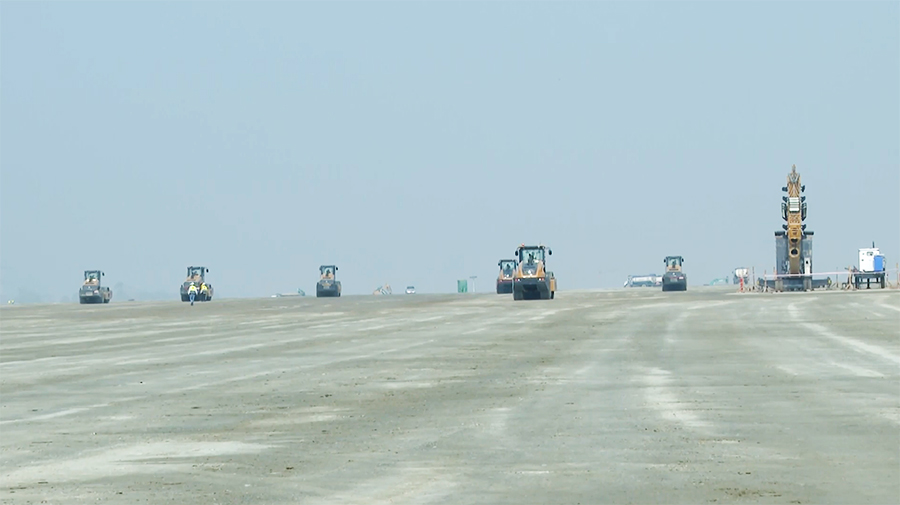 Once crews complete the earthworks phase, the project will move into its next stage of development. Construction teams will begin building other essential infrastructure.
“Once the earthworks are completed, the project will transition into the next major phase, which is the development of the airfield. This will include construction of the runway, taxiways, drainage systems, and other critical infrastructure required for safe and efficient aircraft operations. In parallel, preparations will be underway for the construction of the airport terminal building, which is expected to commence shortly after the airfield works begin, marking a significant step forward in the overall development of the airport,” said the senior engineer.
A workforce of more than 2,000 people is supporting construction across multiple work areas. Currently, the project also relies on a large fleet of heavy machinery to maintain steady progress. Around 300 dump trucks transport soil, while more than 60 excavators carry out cutting and filling works. Bulldozers, graders, and compaction rollers shape and stabilise the ground to the required standards.
With most of the first phase now complete, the project continues to move forward as planned. Once finished, the airport is expected to improve connectivity and support future development in the region.
Passang Dorji/Karma Wangdi, Gelephu