 Driving in the country may soon come under closer digital monitoring. From mid-year, the Royal Bhutan Police will introduce advanced speed detection cameras and body-worn cameras to improve monitoring, reduce accidents and ensure greater accountability on the roads. This was shared during the recent RBP’s Mid-Term Review of the 13th Five-Year-Plan.
From July, traffic police will roll out smart speed cameras capable of automatically detecting and recording vehicles that exceed speed limits. These cameras will monitor traffic without police having to stop every vehicle on the spot.
However, this does not mean fewer traffic personnel will be seen alongside the road.
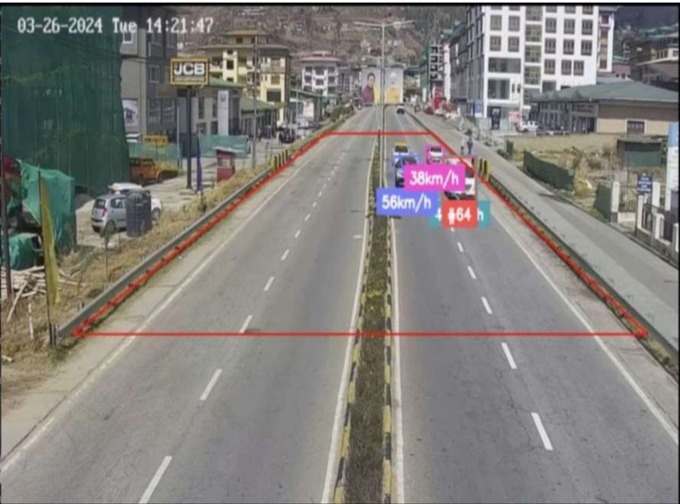
The camera, known as a Portable Automatic Speed Detection System, will capture high-resolution images of speeding vehicles and automatically link them to existing vehicle registration databases for identification.
Unlike current speed guns, which track one vehicle at a time and often struggle to capture number plates clearly at night, the new system is designed to function effectively even in low-light conditions.
Police say the new system will also help identify accident-prone areas, peak traffic hours, and violation patterns, allowing for more targeted enforcement.
The technology uses radar, sensors, and AI-based tools, with the potential to expand and detect other traffic offences in the future. Police began testing the cameras in 2024.
“One of our main priorities is to reduce road accidents, particularly fatalities. Our data shows that a significant number of these accidents are caused by speeding and drink driving. These smart cameras come with multiple features that will help address these issues. Based on accident data and records, we will deploy these cameras in high-risk locations where most traffic incidents occur,” said Chencho Gyeltshen, Superintendent of Police, Thimphu Traffic Division.
Alongside speed monitoring, traffic personnel will start using body-worn cameras.
These cameras will record both video and audio during duty, capturing interactions with motorists, traffic violations, and incidents on the ground. The footage will be stored securely and can be used as official evidence.
“The introduction of this technology is intended to protect both the public and the police. It ensures transparency and accountability for all parties involved. In the past, there have been instances where members of the public alleged misconduct or inappropriate conduct by traffic personnel during enforcement duties. The body-worn cameras are expected to help address such concerns and build trust,” added the Superintendent of Police.
Police say strict guidelines will be in place to ensure proper use of the devices, including data security and protection of public privacy.
In addition, the Police is also procuring additional alcohol breath analysers. Currently, only 22 breath analysers are in use nationwide.
The Royal Bhutan Police is spending about NU 7.1 M to procure eight smart speed cameras, five alcohol breath analysers, and five body-worn cameras.
In the first phase, the equipment will be deployed in high-priority areas, including Thimphu, Paro, Samtse, Gelephu, and Samdrup Jongkhar.
Tashi Dekar
Edited by Sonam Pem