
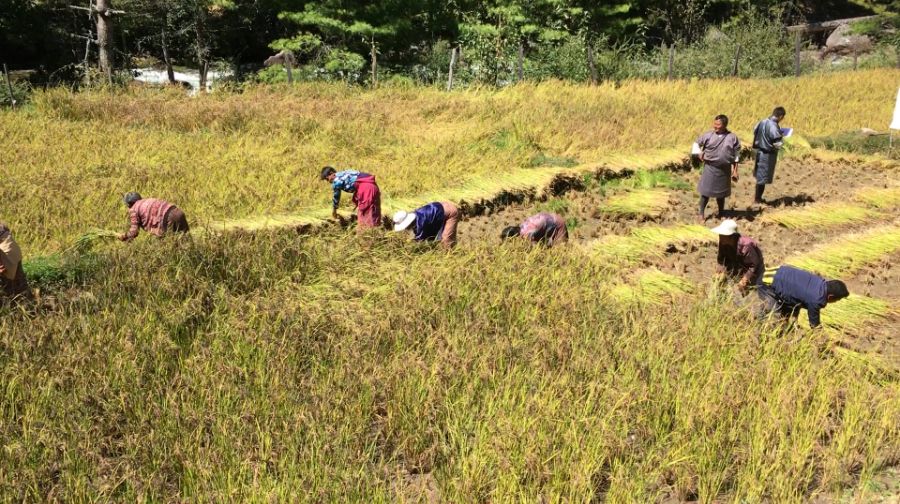
 The Ministry of Agriculture and Livestock contributed more than Nu 39.6bn to the country’s economy last year. This is about 75 per cent of its target to contribute Nu 50bn to the Gross Domestic Product by 2029. The ministry says improved productivity, product diversification, and stronger export markets helped drive the growth.
Last year, the agriculture sector’s contribution to GDP crossed Nu 39.6bn — up from just over Nu 31bn in 2023, a rise of nearly Nu 8.5bn in a single year.
The Ministry of Agriculture and Livestock attributes the growth to higher agricultural production and exports. Cardamom, oranges and potatoes were the main drivers, generating Nu 3.95bn in 2025.
Production of maize, organic asparagus and mushrooms also increased. During the Mid-Term Review, the ministry said expanded chain-link fencing and the use of improved seed varieties helped raise production. The government is now proposing to raise some production targets.
However, production of some key commodities fell short of targets under the current Five-Year Plan.
Paddy production reached about 45,530 metric tonnes, against a target of more than 54,000 metric tonnes last year.
Quinoa production stood at 39 metric tonnes, far below the 250 metric tonnes target.
Fish production was recorded at 47.4 metric tonnes, also short of the 250 metric tonnes target.
The ministry has proposed lowering these targets. The Office of the Cabinet Affairs and Strategic Coordination and the Ministry of Finance will review and finalise the proposals.
The ministry says the sector faces several challenges, including loss of agricultural land, high production costs, climate change impacts, and shortages of skilled workers.
However, it expects several programmes to support growth. These include improved access to credit, crop and livestock insurance, biodiversity action plans, and the formation of farmer groups linked to Gyalsung academies.
At the Mid-Term Review, the Prime Minister urged ministries to work with stronger coordination and focus to achieve the targets under the GMC, the 10X Economic Vision, and the Diamond Strategy.
Kinzang Lhadon