
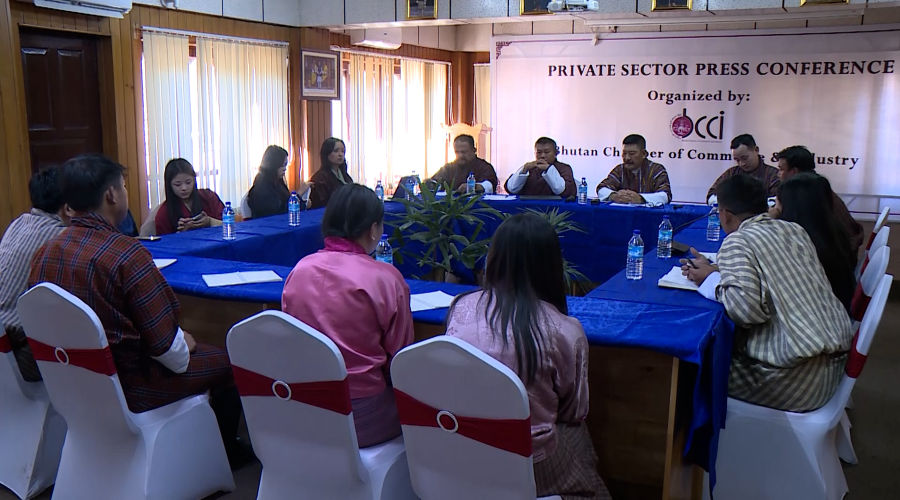
 Bhutanese agricultural and indigenous products continue to face long-standing challenges in accessing international markets due to the absence of international-standard labelling, packaging, and certification facilities within the country. To address this gap, the Horticulture Association of Bhutan has proposed the Office of the Cabinet Affairs and Strategic Coordination for the establishment of a dedicated packaging centre in the country.
Currently, due to the lack of proper packaging and labelling facilities in the country, business owners are compelled to send their products to India, or it is often done by business owners themselves.

However, officials noted that these services often do not meet required international standards, further limiting market access.
An official from the Horticulture Association of Bhutan said the establishment of such a centre would serve as a recognised facility for packaging and labelling local products in line with international standards, making Bhutanese goods more competitive in global markets.
“In our country, there are so many challenges with packaging. For example, no matter how good the product is, without good packaging, we are unable to take it to the international market. Therefore, we want to focus on good packaging. Moreover, regarding the certification, we are discussing with the relevant ministry,” said Tshering Wangchuk, President, Horticulture Association of Bhutan.
He added that while production takes place within the country, the inability to access international markets significantly constrains the success and growth of Bhutanese businesses.
“For example, during the World Expo 2025 in Osaka, Japan, many products had to be brought back as they could not meet international packaging standards. Moreover, during such events, international certification is also very important,” said Tshering Wangchuk, President, Horticulture Association of Bhutan.
Meanwhile, the Bhutan Chamber of Commerce and Industry (BCCI) said it is working to enhance expertise in this field by facilitating training programmes for entrepreneurs in India.
According to officials, feedback and recommendations from trainers are being received which will help improve packaging, labelling and certification practices.
However, officials stressed that Bhutan must also establish certification facilities within the country.
They said continued reliance on other countries for certification is costly and not sustainable in the long run, highlighting the need for domestic infrastructure to support Bhutanese products in international markets.
“In the long run, we should have our own facility within the country. Beyond that, we should also have a mutual recognition agreement so that the counterpart agency recognises certification done by our agency in Bhutan and vice versa,” said Chandra Bahadur Chhetri, Secretary General, BCCI.
Officials hope that a domestic packaging and certification facility would reduce dependency on external services and help Bhutanese products gain stronger access and recognition in international markets.
The Office of the Cabinet Affairs and Strategic Coordination is currently reviewing the proposals.
Sangay Chozom
Edited by Phub Gyem